“Four other jurists who served the communist regime” were added to a previous list.
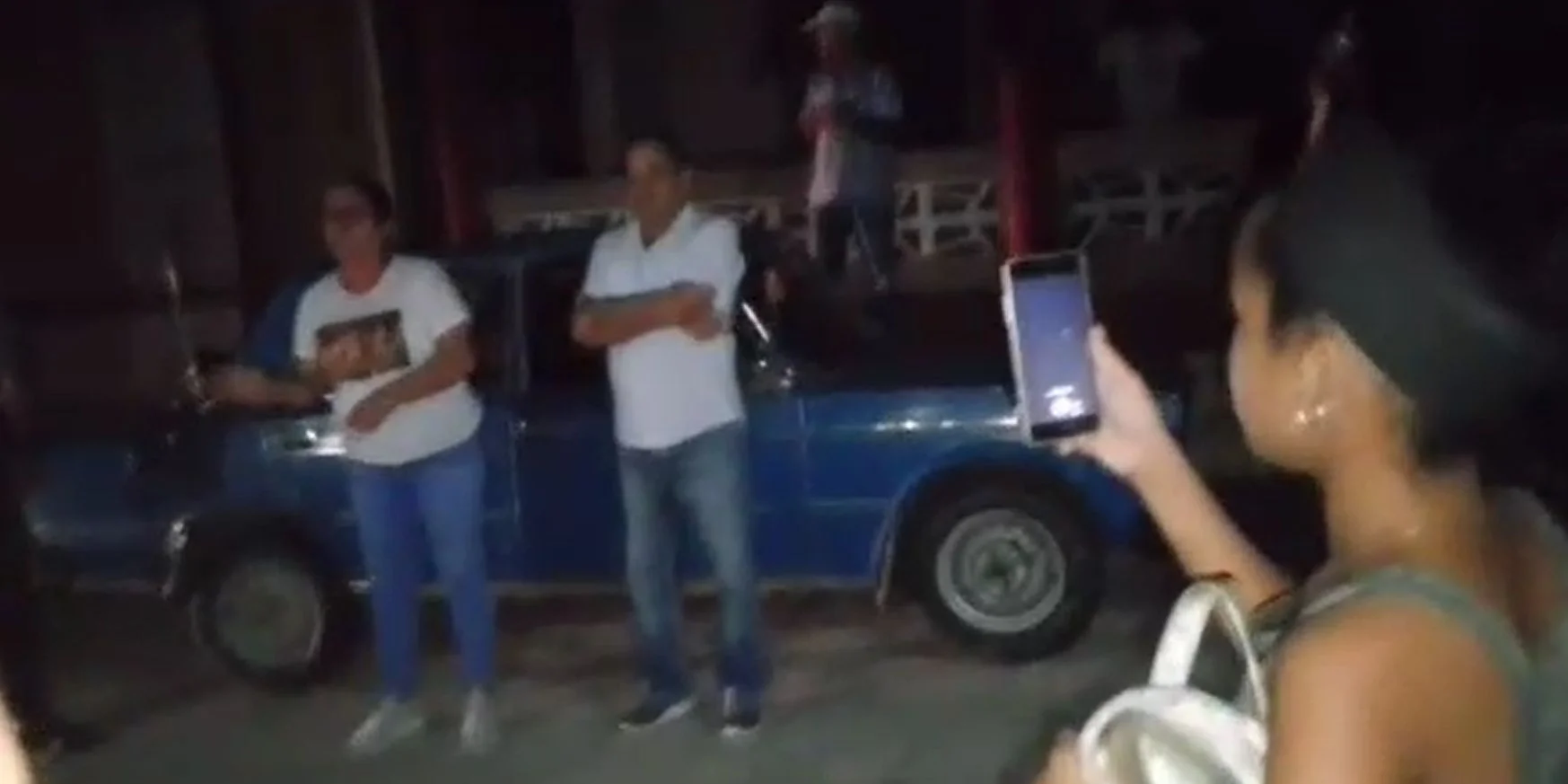
MIAMI, United States. – The project Cuban repressors of the Foundation for Human Rights in Cuba (FHRC) reported this Monday the addition to its list of “white collar repressors” of several judges and prosecutors whom it holds responsible for the sentences imposed on six residents of Encrucijada (Villa Clara) who participated in a peaceful protest on November 7, 2024 to demand the restoration of electrical service after more than 48 hours of blackout.
According to a press release from the organization itself, “four other jurists serving the communist regime” linked to “the unjust sentences of up to eight years in prison handed down on January 15” in that case were added to the list.
The FHRC identified the prosecutors among those identified Ayrebi Miranda Pérezwho had already been included on the list after presenting the provisional conclusions of the case in June 2025, and Yosmel Guevara Herreraas well as the judges Aimee Caraballé Corrales, María Teresa Domínguez Rodríguez and Justo Gustavo Faife Hernandez.
The FHRC maintained that, in “Preparatory Phase File 944 of 2024”, Miranda Pérez described as charged facts that the accused “carried and touched cauldrons and shouted ‘We want current’ in front of the municipal headquarters of the Assembly of People’s Power and the Communist Party.”
For these acts, the organization stated that the prosecutor accused them of public disorder and “requested sentences of four to nine years in prison,” requests that, it added, were presented at the trial by prosecutor Guevara Herrera, according to the statement.
Regarding the court, the press release indicated that Caraballé Corrales, Domínguez Rodríguez and Faife Hernández imposed sanctions of “five to eight years.” The Foundation cited “sentence number 4 of 2026 issued on January 15, 2026,” in which, according to the text, the magistrates stated that the defendants “decided to gather in front of the headquarters of the Government and the (Communist) Party, where once there they incited other people to join the protest and obstructed public roads.”
The statement contrasted this characterization with audiovisual materials that, it assured, circulated on social networks: “However, in videos broadcast on social networks, protesters are heard and observed peacefully demanding their rights by playing pots and demanding that they turn on the power, precisely where the government has said that protests are lawful, that is, before the authorities,” the FHRC stated.
The organization also noted that the process had “great visibility in independent and Cuban exile media,” especially due to the imprisonment of the writer. José Gabriel Barrenechea Chávez. The writer’s mother, suffering from cancer, asked to see him before she died and died without seeing him, after the request was denied by the head of the La Pendiente prison, Yurianis Speck Rosillo.
In the details of the tax requests and sanctions recorded in the press release, the Foundation listed that Yandri Torres Quintana received a request of nine years and a sanction of eight; Rafael Javier Camacho Herrera, request of nine and sanction of seven; José Gabriel Barrenechea Chávez, request and sanction of six; Rodel Bárbaro Rodríguez Espinosa, request and sanction of five; Yuniesky Lorences Domínguez, request for four and sanction of three years of correctional work without confinement; and Marcos Daniel Díaz Rodríguez, petition and sanction of five years of limitation of freedom, according to the statement.
Finally, the project Cuban repressors He estimated that, in this case, these jurists “would have committed” crimes that he described as “the crimes against humanity of imprisonment and persecution for political reasons,” in addition to “lack of procedural guarantees and violation of the right to a fair trial and an impartial tribunal, contemplated in articles 7-11 and 10 of the Universal Declaration of Human Rights,” and “the international crime of malfeasance.”