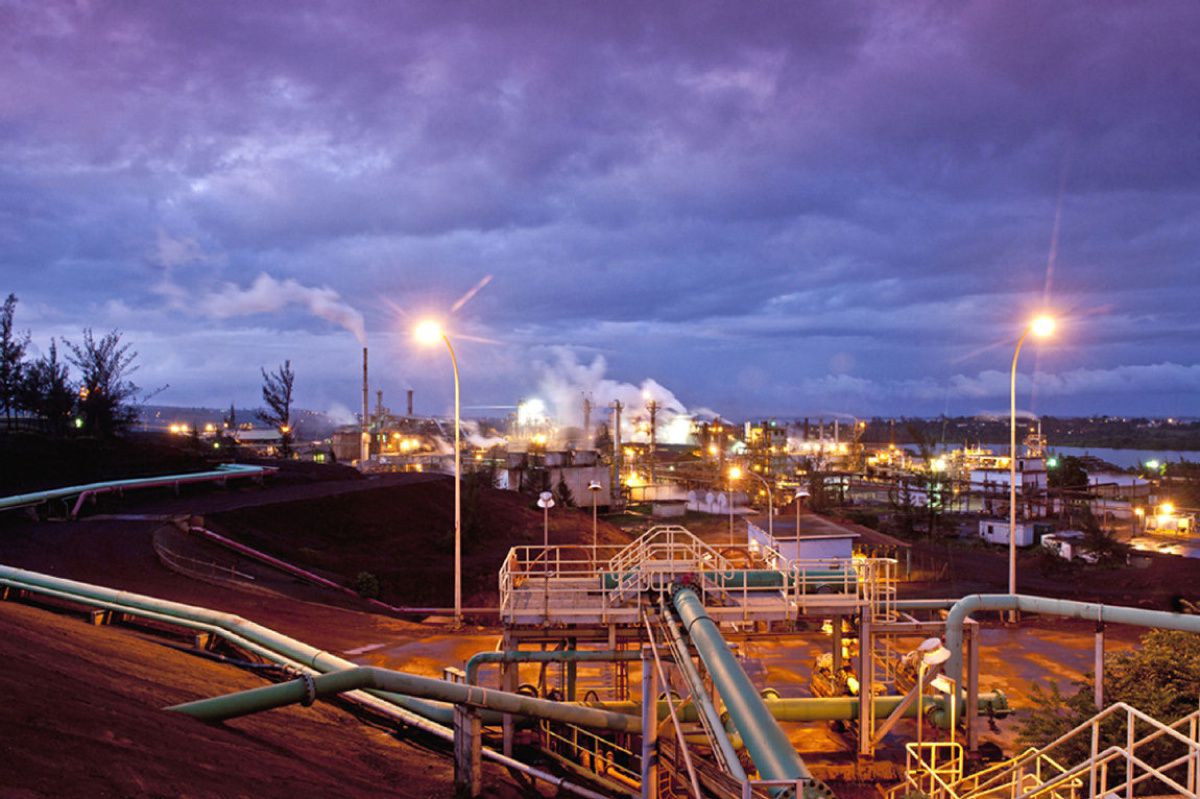
The Canadian mining company Sherritt announced this Monday contacts with the Cuban Government, a partner in its nickel and cobalt production plant in Moa to analyze the “adverse operating conditions” on the island and the geopolitical situation.
The company reported on these movements when presenting its results for 2025 as a whole, where its performance in Moa was well below both the 2024 results and the business forecasts at the beginning of the year.
Sherritt’s interim CEO, Peter Hancock, said in a statement that he has been working with his partners in the joint venture in Moa, Cubaníquel, for a “comprehensive operational change” to “address the challenges seen in 2025” and “support a return to consistent operational performance.”
“Our efforts seek to strengthen the productivity and reliability of mine operations amid heightened geopolitical uncertainty and ultimately pave the way to fully benefit from the expansion” at the plant, he explained.
The objective of the conversations with the Cuban authorities is to “stabilize” the plant, to then reevaluate the mine’s expansion program and optimize it in terms of benefits, indicated the Canadian company.
“Sherritt is actively monitoring recent regional geopolitical developments and working closely with its joint venture partner to anticipate and respond to potential risks,” the company added.
In recent weeks, following the capture of the president of Venezuela, Nicolás Maduro, the United States has increased political and economic pressure on the Government of Cuba.
The company cited among the main problems that the Moa plant faced in 2025 a lack of supplies, delays, the prolonged blackouts that affect the entire island and the effects of Hurricane Melissa, which crossed eastern Cuba at the end of October as a category 3 (out of 5) on the Saffir-Simpson scale.
Thus, if the company expected to extract between 31,000 and 33,000 tons of nickel last year, it only achieved 25,240, which is almost 17% less than what was achieved in 2024.
Sherritt with “full operational capacity” in Moa, but warns of “risks” and “uncertainties”
For its part, at the beginning of 2025 it expected to extract 3,300 tons of cobalt, but it remained at 2,729 at the end of the year, about 15% less in the year-on-year comparison.
Sherritt and the Cuban state counterpart have a mine and a plant in Moa, as well as a metals refinery in Alberta (Canada). This mixed initiative is one of the largest foreign investments in Cuba.
Cuba is the seventh or eighth country in the world for nickel reserves, according to different studies. Sherritt has been operating on the island for 30 years in a joint venture with a state-owned company.
Nickel and cobalt are considered strategic metals in the new green economy and are essential for the manufacture of batteries, although their extraction generates global doubts regarding their environmental and social sustainability.