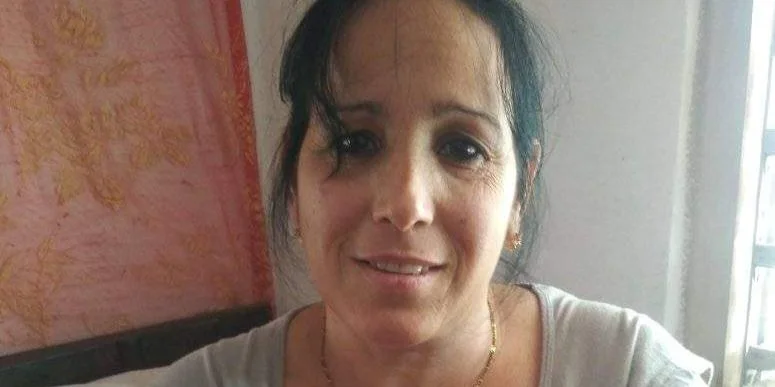
The victim had been reported missing.
MIAMI, United States. – A woman identified as Mileidys Dueñas Pérez was allegedly murdered by her ex-partner in the municipality of San Juan y Martínez, Pinar del Río, according to reports published on social networks. The complaint names the victim’s husband, Lorenzo Eduardo García Castro, as a suspect.
The information was disseminated by activist Niover Licea through his Facebook page Child reporting a crime. CubaNet confirmed the crime independently with local sources.
Licea indicated that the victim was a native of Pilotos, in the Pinar del Sur municipality of Consolación del Sur, although the incident would have occurred in San Juan and Martínez. Sources consulted by this media said that the events occurred on the outskirts of the community known as Obeso.
Reports on social networks highlight that the victim had been reported missing and mention that the alleged attacker is “a well-known bricklayer in the area.”
Just this Monday, now another feminicide had been reportedunrelated, in the municipality of San Juan y Martínez. The victim was identified as Yanicel Valdés, as also reported by the page Child reporting a crime and could confirm CubaNet.
The woman was murdered and buried in a garbage dump in San Juan y Martínez. According to preliminary information and testimonies from neighbors cited by Nio…the main suspect in the crime is the victim’s own romantic partner.
In the first two weeks of January, the magazine’s Gender Observatory Tense Wings (OGAT) and the Yo SíTeCreo Femicide Observatory in Cuba (YSTCC) confirmed two femicides. Since 2019, both platforms They have verified at least 300 sexist crimes on the Islanddespite operating in a context marked by the criminalization of feminist activism, limited access to institutional sources and the absence of a specific classification of feminicide in Cuban legislation.
While the authorities use expressions such as “murder for gender reasons” or “extreme gender violence”, independent groups insist on the need to name the problem as feminicide and demand the creation of public registration protocols and a comprehensive law against gender violence.
The Cuban State does not systematically publish annual statistics with detailed methodology nor does it offer disaggregated data with an intersectional approach accessible to citizens. This institutional opacity continues to be an obstacle to measuring the true magnitude of the phenomenon.
The OGAT and YSTCC maintain support lines and a mechanism for reporting and verifying femicides and attempts, supported by citizen complaints, media coverage and work in the territory. Its methodology—based on community verification and public documentation—is available in its institutional channels.