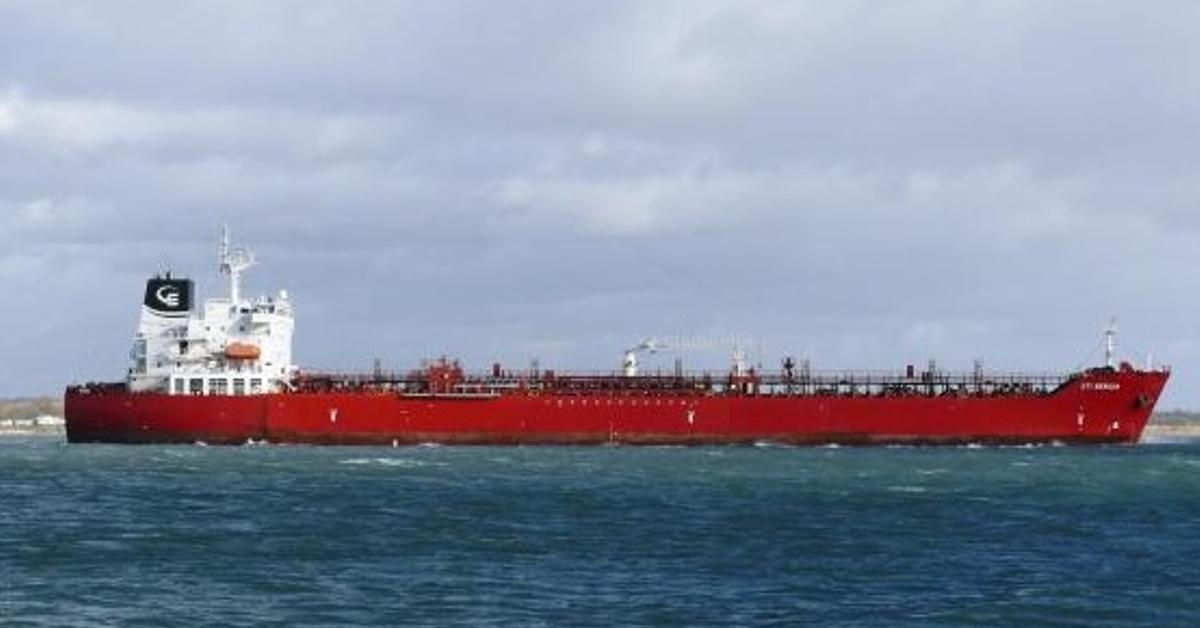
Madrid/An oil tanker flying the flag of the Marshall Islands, Mia Graceleft this Monday from Lomé, capital of Togo, and will arrive in Havana on February 4. The movement, warned 14ymedio by University of Texas energy expert Jorge Piñonshows how, in the face of pressure exerted by the United States After the capture of Nicolás Maduro over Venezuelan oil, the main supplier of fuel to the Island in the last 25 years, Cuba is trying to look for supplies elsewhere, in this case, Africa.
Piñón ventures that it may be a “cash purchase” of Cubametales, a state-owned company dedicated to the import and export of oil sanctioned by the United States, “through a European intermediary.” Likewise, the specialist says that the quality of the load is not known with certainty, but he speculates that it could be diesel or fuel oil. “Togo does not refine oil, but it exports refined oil and has an extensive logistics and maritime transit infrastructure,” he details.
Taking into account the capacity of the ship, 50,000 tons, and the draft that Piñón observes on the ship monitoring pages, he explains: “It seems that it is not fully loaded.” He Mia Grace It could carry either 314,500 barrels of diesel or 280,500 barrels of fuel oil, the expert calculates.
This Sunday a new day of darkness was experienced slightly interrupted throughout the Island
The weeks remaining until that shipment arrives seem to be dramatic. This Sunday a new day of darkness was experienced slightly interrupted throughout the Island. In today’s part, the Electrical Union (UNE) acknowledged that the service was affected the previous day “for 24 hours.”
This is reported by Cubans from the capital and the province. Havana remained almost completely shut down since yesterday afternoon. “They took off our electricity for 14 hours in a row,” protests a neighbor from El Vedado. In Sancti Spíritus, the cut was slightly lighter, 10 hours, but equally desperate. “However, in the streets you see people in campaign uniforms, I suppose because of the State of War, which I don’t think is because of the Americans, but because of electricity and to repress the people when they have to turn everything off,” laments a resident from Sancti Spiritus.
The deficit reached this Sunday during peak hours, of 1,943 megawatts (MW), was greater than expected due to the departure from the system of a unit of the Mariel thermoelectric plant (CTE) – which already had another damaged block – and a “real” demand that also “exceeded the forecasts.” The “significant” contribution of renewables that the UNE points out in its statement – 473 MW – only occurred in the midday hours, as it was the solar parks.
In addition to the breakdowns at the CTE Mariel, two units at the Carlos Manuel de Céspedes plant (Cienfuegos), one at the Felton plant (Holguín), another at the Antonio Maceo plant (the Renté, in Santiago de Cuba) and another at the Santa Cruz del Norte thermoelectric plant (Mayabeque) are out of service.
Most of the distributed generation plants – 101 of the more than 150 that exist in the country– are affected by lack of fuel, the same thing that occurs with the stoppage of the patana of Melones, and an additional 156 MW are “unavailable due to lack of lubricant.” Thus, a high impact is expected for this Monday, again: for a maximum demand of 3,280 MW, only 1,405 MW will be available – that is, a deficit of 1,875 MW – which will end up giving a real impact of 1,905 MW, almost 60% of what is necessary.
The black panorama is not solved even by other partners of Havana, such as Mexico, which in recent days sent the oil tanker Ocean Marinerfrom Veracruz (Mexico), with 80,000 barrels of crude oil. This same Monday, the digital Political Animal reveals that the Government of Claudia Sheinbaum exported oil products to the Island in 2025 worth 10,000 million Mexican pesos (556 million dollars), four times more, says the Mexican newspaperwhich the Administration of President Enrique Peña Nieto (2012-2018).
The comparison was relevant due to the explanations given by the current Mexican president on January 7 to the question about the value of what Pemex exported to Cuba. “There is no more oil being sent than has been sent historically, there is no particular shipment,” Sheinbaum asserted in the morning conference that Wednesday. “For many years oil has been sent to Cuba for different reasons, some are contracts, others are humanitarian aid, even in the time of Peña Nieto, for example, a debt owed to Cuba was forgiven.” However, he did not provide specific figures, promising to give them “later,” since the state oil company was developing “the historical trend for several years.”