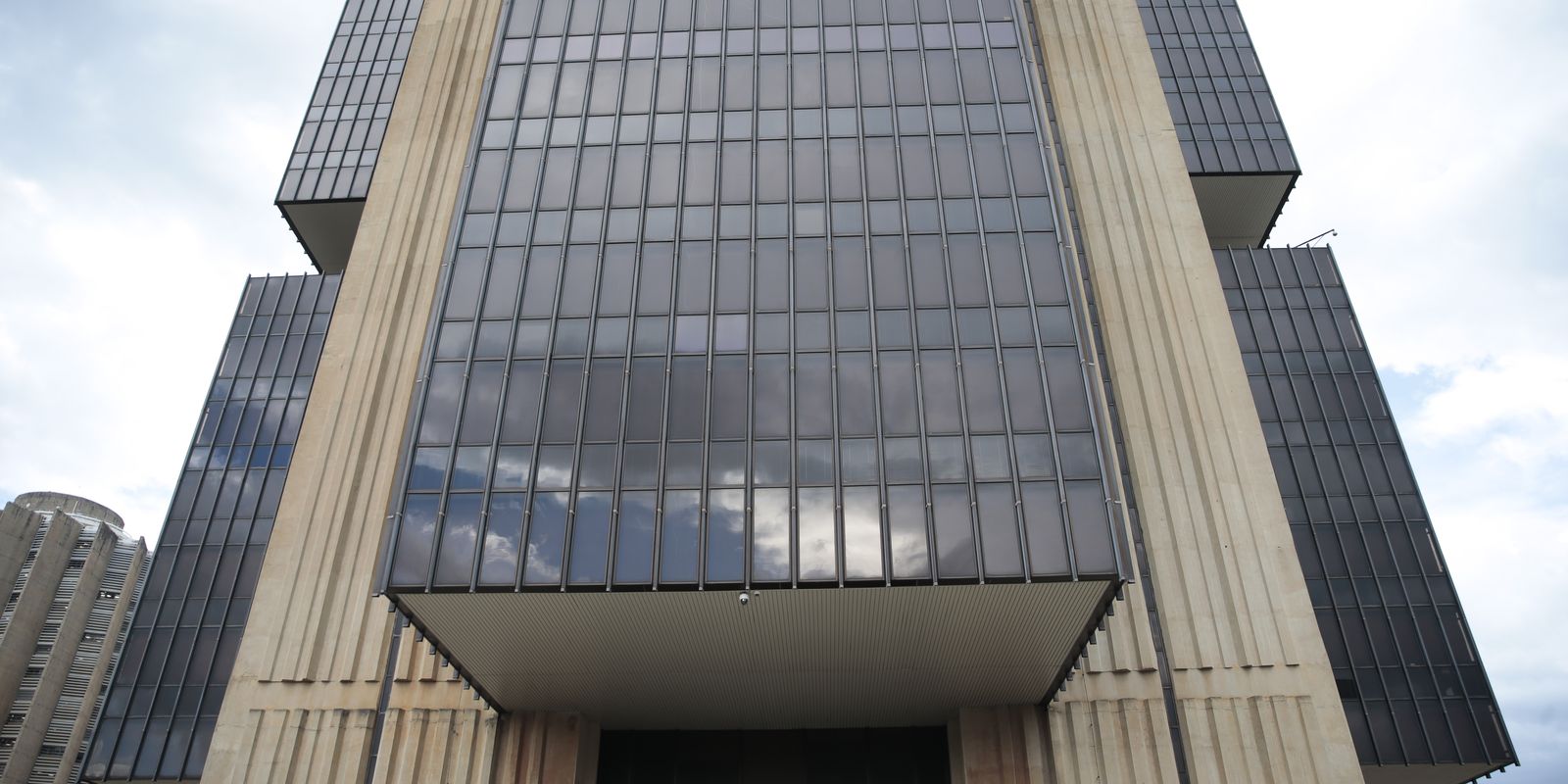
The financial market revised downwards inflation expectations in Brazil in 2026. Released this Monday (19) by the Central Bank (BC), in Brasília, the Focus Bulletin projects that the Broad Consumer Price Index (IPCA) will close the year at 4.02% – a percentage lower than the 4.05% projected a week ago; and the 4.06% estimated four weeks ago.
The IPCA is the index that serves as a reference for the country’s official inflation. For 2027 and 2028, inflation projections have remained stable for 11 consecutive weeks at 3.80% and 3.50%, respectively.
Inflation target
Defined by the National Monetary Council (CMN), the inflation target for 2025 and 2026 is 3%, with a tolerance range of 1.5 percentage points up or down. In other words, the lower limit is 1.5% and the upper limit is 4.5%.
According to the Brazilian Institute of Geography and Statistics (IBGE), inflation measured in December increased by 0.33%, compared to 0.18% in the previous month. As a result, the 2025 IPCA was within the government’s target: 4.26%, therefore.
Fees
The other indices announced by the Focus Bulletin are stable compared to previous weeks.
In the case of the basic interest rate (Selic), the financial market maintains the 12.25% estimated for the end of 2026, a percentage calculated four consecutive weeks ago. Currently, Selic is at 15%, the highest level since July 2006 when it reached 15.25%.
For 2027, the financial market’s expectation is that the Selic will fall to 10.50%, a percentage that has been repeated in projections for 49 consecutive weeks. For 2028, the market revised its expectations for the basic interest rate upwards, going from the 9.88% projected last week to 10%.
This upward trend in expectations for the Selic in 2028 has been observed in some of the previous bulletins. Last week, a Selic projection of 9.88% for 2028 was presented. Four weeks ago, projections pointed to a Selic of 9.75%, also for 2028.
Selic variations
When Copom increases the Selic, the purpose is to contain heated demand; This has an impact on prices because higher interest rates make credit more expensive and encourage savings. Therefore, higher rates can also make it difficult for the economy to expand.
Banks also consider other factors when defining the interest charged to consumers, such as risk of default, profit and administrative expenses.
When the Selic rate is reduced, the tendency is for credit to become cheaper, encouraging production and consumption, reducing control over inflation and stimulating economic activity.
Dollar
Regarding the Gross Domestic Product (GDP – the sum of all goods and services produced in the country – expectations are that the Brazilian economy will grow 1.80% in 2026, the same percentage that has been repeated for six weeks.
For the following years, the financial market projects growth of 1.80% in 2027 and 2% in 2028.
Financial market expectations related to the dollar indicate a price of R$5.50 for the United States currency at the end of 2026 – a percentage that has been maintained for 14 weeks, also projected for 2027. For 2028, the dollar is estimated at R$5.52.