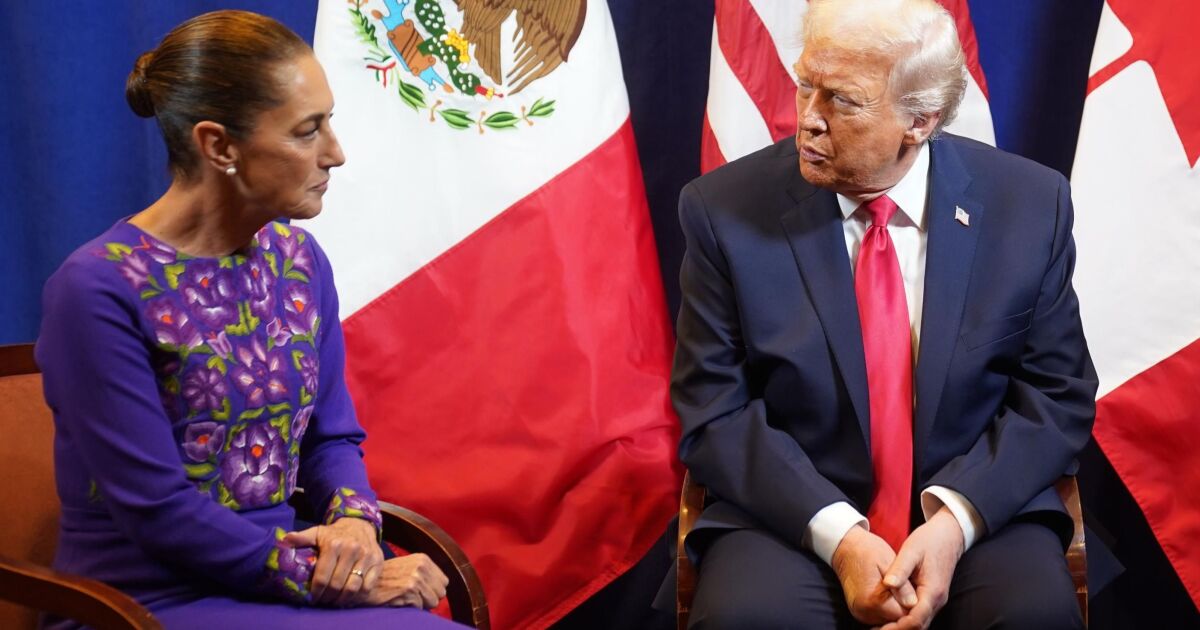
Legitimacy not only strengthens Mexico’s institutional position, it also affects the psychological level of the negotiation. Trump quickly detects when an interlocutor is internally weakened. In the case of Sheinbaum, she is not facing a president in search of validation, but rather a president with political margin to support her own line.
Added to this element is another relevant factor to take into account, which is Sheinbaum’s political ideology. Coming from the Mexican left, his political career has been marked by a clear conception of sovereignty as a non-negotiable limit. This does not mean absolute rigidity or rejection of dialogue, but rather the existence of a well-defined policy.
Sheinbaum has been consistent in conveying that message. He does so not with stridency or inflammatory rhetoric, but with clarity. Sovereignty is not a temporary bargaining chip. That conviction reduces Trump’s margin of pressure, because it eliminates the expectation of a quick concession in exchange for lessening the conflict.
Here appears an uncomfortable, but real, component of psychological analysis. Trump exercises power from a markedly masculine and hierarchical vision, where dominating implies imposing rhythm, tone and scenario. In this framework, being contained, without direct confrontation or spectacle, by a woman with political legitimacy and clear convictions represents an additional challenge to her logic of power.