Two key dates mark Haiti’s political calendar in 2026. February 7 officially concludes the mandate of the Presidential Transition Council (CPT). On August 30, according to the Provisional Electoral Council, the first elections should be held elections general in a decade.
On paper, the country is looking towards an institutional solution long awaited by its people and by the international community. In practice, the scenario is much more uncertain.
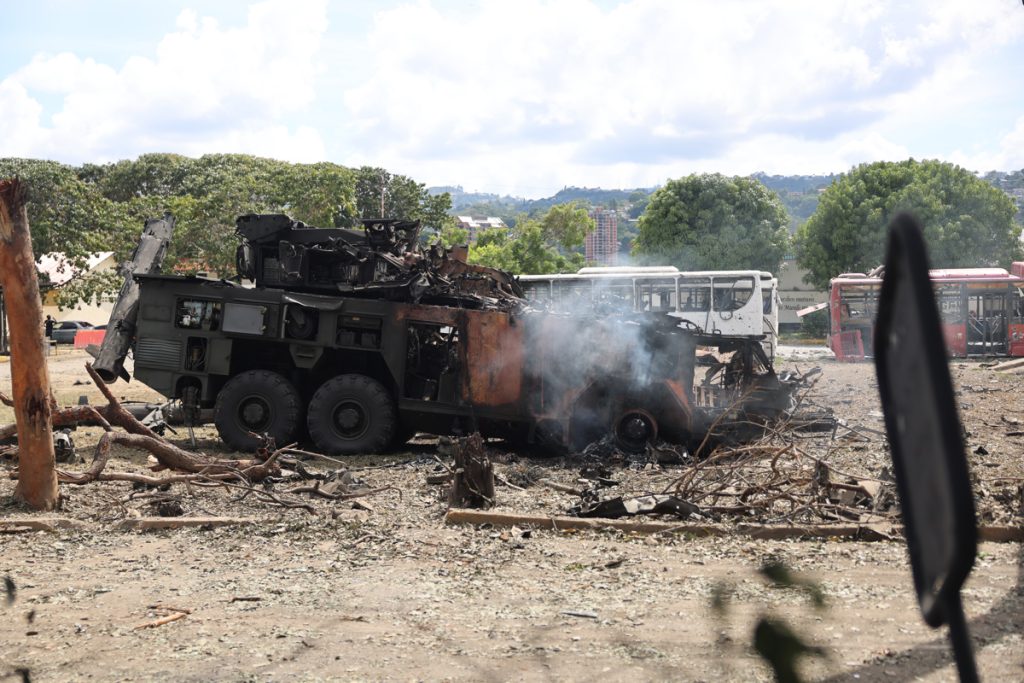
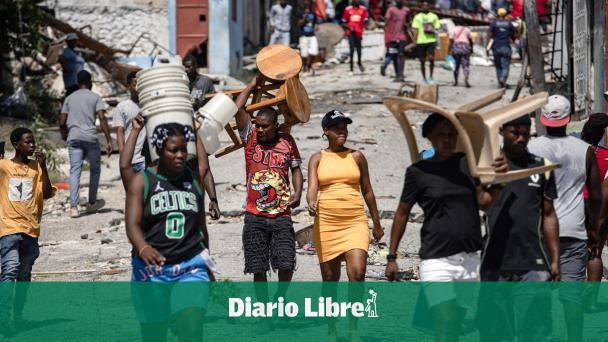
Port-au-Prince and its surroundings continue to be plunged into chaos. Since the beginning of 2022, more than 16,000 people have died from the violence of the gangsaccording to the United Nations Organization.
The armed insecurity It crosses all areas of daily life and has direct consequences on access to education, health and basic services.
Faced with this reality, a good part of the population developed a kind of armor that combines resignation, fatigue and skepticism against any promise of political order.
“There is no clear path”
A month and a half ago, the journalist Germina Pierre Louis She emigrated to Canada, leaving her husband and daughter in Haiti. From a distance, he describes his country as a dysfunctional statefar from the democratic path promised after the fall of the Duvalier regimes.
“There is no stable projection about what will happen. We cannot predict, we cannot imagine. There is no clear path”Haitian journalist
For Pierre Louis, the death toll they fail to reflect the real dimension of the tragedy.
“They’re not just numbers: they’re someone’s husband, someone’s wife, a daughter, an aunt. Every person counts,” he explains. Furthermore, it regrets that the repetition of statistics anesthetize the collective sensitivity in the face of hundreds of raped women, destroyed families and interrupted lives.
No results
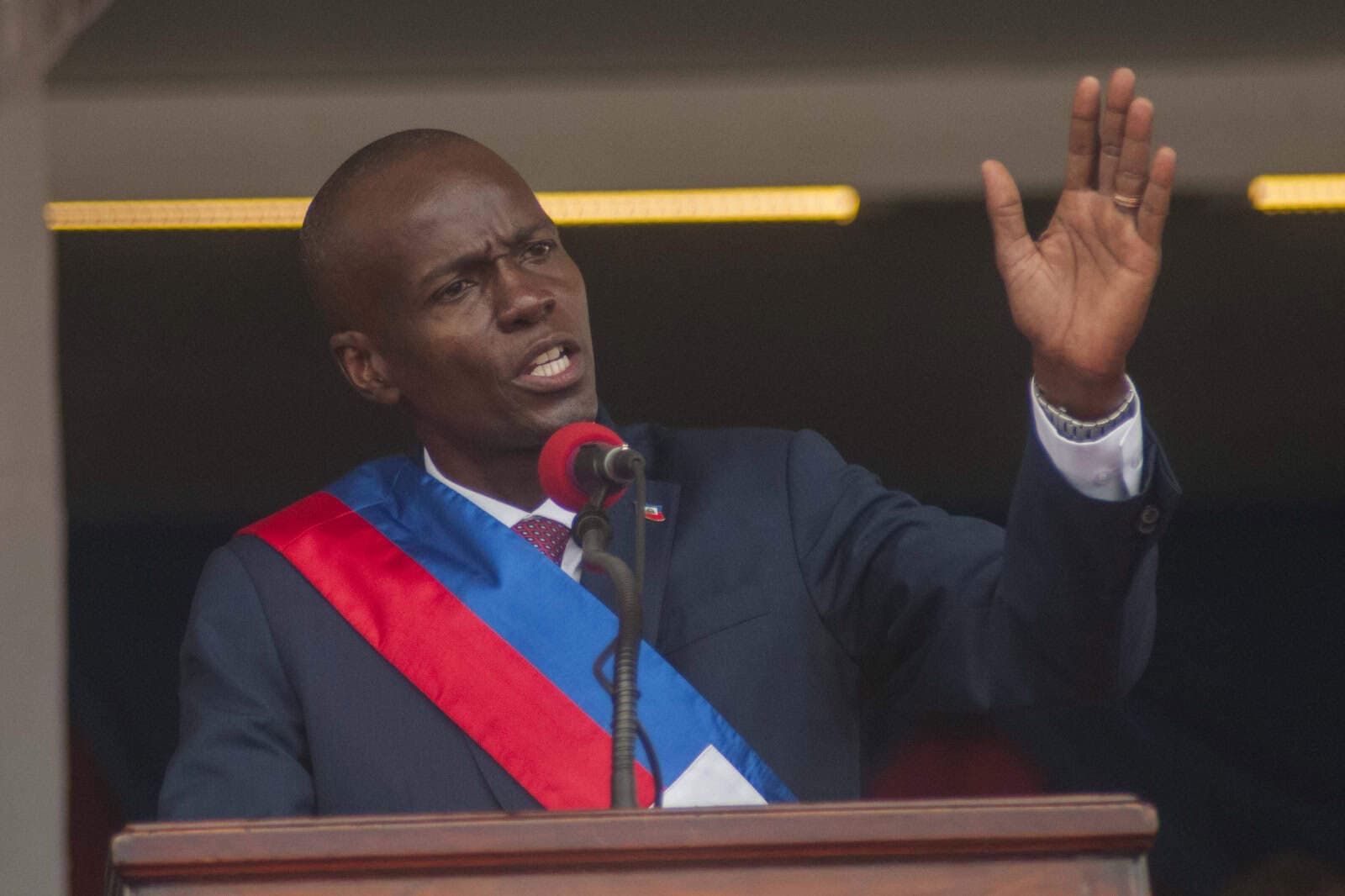
Since the assassination of President Jovenel Moïse, in July 2021, Haiti has gone through a succession of governments and figures of transition such as: Ariel Henry, Gary Conille and the current Prime Minister, Alix Didier Fils-Aimé.
He CPT Its mission was to “reestablish security in the territories controlled by armed gangsorganize electionscall a constitutional referendum and reactivate the economy.”
Many of these objectives were not achieved.
The main electoral places of the country are under gang control. Neighborhoods of Port-au-Prince such as Cité Soleil, Bel Air, Carrefour-Feuilles and sectors of Delmas are high risk areas. In Artibonite, considered the second most important electoral enclave, the presence of armed groups also compromises any participatory process.

![[object HTMLTextAreaElement]](https://resources.diariolibre.com/images/2026/01/19/ap21204638215320-5140a9ee.jpg "General elections in Haiti 2026: an uncertain path to peace")
Although there are more than 100 registered party groups, only between eight and ten have a history. Three major currents dominate politics in recent decades: Fanmi Lavalaslinked to Jean-Bertrand Aristide; the left grouped in platforms like Fusion; and the PHTKemerged after the earthquake and associated with former president Michel Martelly.
under siege
The violence directly hits the educational system. Marcendly Saint Justeactivist and president of the Haitian Students Association at the UASD, explains that numerous schools closed in areas controlled by gangs. Some were looted or burned, and thousands of students were displaced with their families.
Added to this is the exodus of teachers who fled the country due to the insecurity.
In it university level, several institutions operate irregularly, moving activities to areas considered less dangerous such as Pétion-Ville or Haut-Delmas. “They are limited solutions that exclude a large part of students,” says Saint Juste.
The crisis also affects the access to health. He General Hospital of Port-au-Prince it is inaccessible. Many families lack drinking water and electricity due to the presence of gangs in strategic areas such as the Péligre dam.
Saint Juste criticism of CPT: “He had 24 months to restore security and organize electionsbut he limited himself to managing his power no results concrete”. In his opinion, a transition More realistically, it would have required an interim president with social legitimacy and a prime minister capable of managing state institutions.
The economic collapse
Jean Willem Loisan economist living in Delmas, describes a daily life marked by prudence. “People go out, walk, try to live,” he says. However, the majority survive thanks to remittances.
- More than two million people live on less than five dollars a day, and the informal trade dominates the economy.
The capital continues to be the economic hub of the country.
Willem warns that when Port-au-Prince collapses, the impact is felt in all provinces. The prices increase each month, despite the relative stability of the dollar internationally. “Haiti depends on more than 40% of goods from the Dominican Republic, largely through the informal trade“he specifies.
![[object HTMLTextAreaElement]](https://resources.diariolibre.com/images/2026/01/19/26092025-mercado-binacional-dominico-haitiano-luduis-tapia6-6ceeb54b.jpg "General elections in Haiti 2026: an uncertain path to peace")
Fragmented country
Guytaud Petit Tona merchant and designer living in the Dominican Republic for two decades, was born in Artibonite. Today he cannot return to his town, surrounded by armed gangs.
He hasn’t traveled to Haiti in three years.
When possible, send goods by courier, with a bus that travels from Elías Piña and crosses the regions of Las Caobas and Mirebalais. “The bandits have tolls. If the trucks manage to pass, they must pay large sums,” he explains.
He does not believe in the success of the transition nor in the realization of elections.
“To vote you have to pacify the country. Those who turn 18 must be given their voting card. There are almost two million displaced people. “How do you campaign in those conditions?” he asks. He also warns about the corruption and the weight of drug trafficking. “Only Haitians can solve Haiti’s problem,” he says.
International community
For Edwin Paraisonformer consul of Haiti in the Dominican Republic and director of the Zilé Foundation, the announcement of elections In August it did not have a great impact on the population.
Although it did generate movements in the political class, where some figures seek to reposition themselves. The process is part of a roadmap promoted by the Organization of American Stateswhich includes technical, logistical and financial support.
However, Paraison warns that there are no firm commitments of financing. Which is worrying because the proposal requires significant resources for security, governance and elections. There is also no clarity on the deployment of international troops nor about him financing necessary for its maintenance.
“Some sectors of civil society promote an alternative: that power temporarily falls to the Court of Cassation and that the cabinet be made up of technical figures and not party representatives”Former Consul of Haiti and director of the Zilé Foundation
Resist so as not to disappear
Other citizens, such as Milo Milfortfounder of the medium Enquête Action, emphasize that, despite the insecurity in key areas, much of the country works. For example, only 27% of the population has access to electricitywhich drives the use of solar panels. “When faced with any problem, Haitians look for alternatives. They resist,” he says.
Manuel Yvesjournalist for Radio Télévision Scoop FM, agrees that the insecurity and political instability are the main obstacles.
Recognize that there is expectation around the Gang Elimination Force, although a deep skepticism. “There are those who expect a solution from outside and others who are more nationalistic and believe that it must emerge from within,” he summarizes.