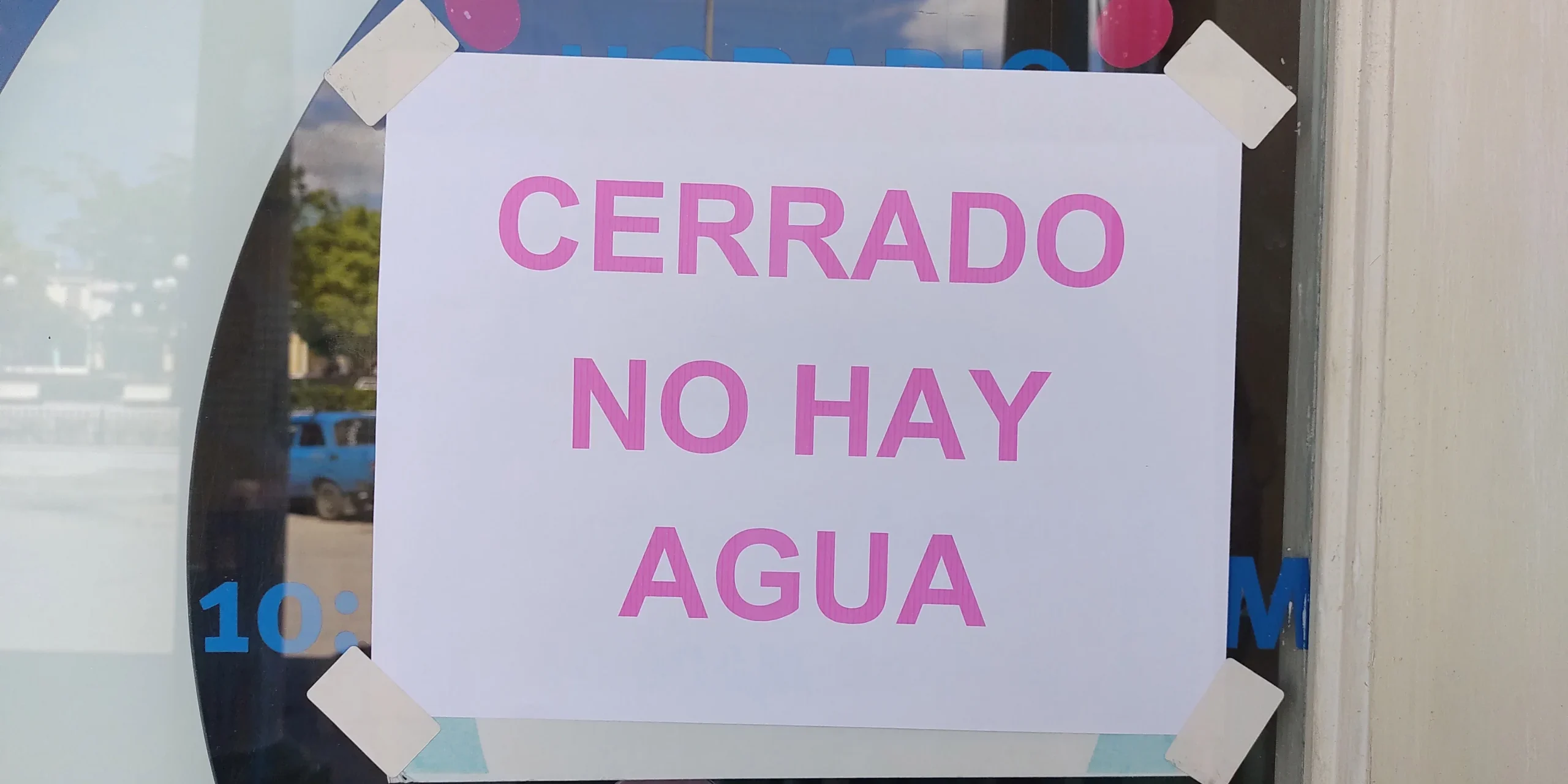
The San Luis municipality has one of the most “complex” situations, aggravated by the lack of electricity that generates greater pressure.
LIMA, Peru – Authorities in Santiago de Cuba recognized this weekend that the lack of water supply persists in the eastern province, with emphasis on the current shortage experienced by the San Luis municipality.
A report from the state media Sierra Maestra He described the distribution of the liquid in the territory as “complex”, recognizing that San Luis depends on supply sources that dry up or lower levels, a situation that is aggravated by the complexities with electricity that generate greater pressure.
According to the report, two specialized brigades from the province are currently working in the municipality, working on breakdowns in the pumping of the Paquito Rosales Lagoon that supplies the Dos Caminos district and at the Guaninicum station that supplies water to a large part of the municipal seat.
Eyder Luis Hernández, first secretary of the Municipal Committee of the Communist Party, and Rafael Muñiz Guillén, president of the AMPP San Luis, declared that the work must be concluded promptly, without providing an exact date for the distribution of water in Dos Caminos and San Luis.
“Today the distribution cycles are very high, coupled with this the complex energy situation forces us to pump for longer to the same area, lengthening the cycles even more, and the supply by pipes is unstable and insufficient, making access with quality of service difficult,” Hernández admitted.
According to the leader, “alternative solutions are being sought and work is being done to change the energy matrix in pumping; however, in the long term, hydraulic investments in Santiago de Cuba will have to be projected through the comprehensive rehabilitation of the aqueduct, which is very deteriorated and old, and the construction of a safer supply source.”
In September of last year, hydraulic resources specialists on the Island assured that 99% of the national territory was affected by the meteorological drought. This is the driest period on the Island since 1901.
For its part, the lack of precipitation in the eastern region of the Island had caused what specialists described as “the most severe drought in the last decade” in Santiago de Cuba. In the head municipality of that province alone, nearly half a million inhabitants were affected by water scarcity.
Not even the rainfall that came to the country with the cyclonic season could reverse the shortage of service in Cuban homes. For example, although the reservoirs in Guantanamo reached “historic levels” of filling after Hurricane Melissa, Guantanamo residents were still unable to access the supply.
A report from the state media we will win He recognized in mid-November that the situation was “paradoxical” and warned that 180,000 Guantanamo residents are affected by pumping failures, lack of electrical energy and water quality problems.