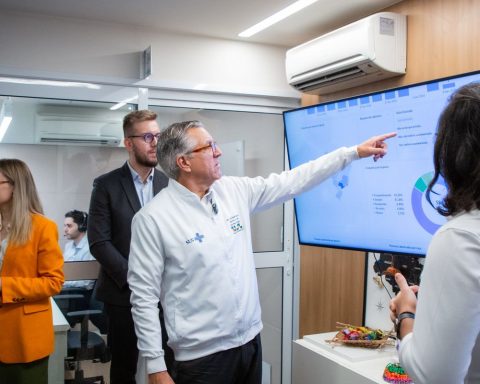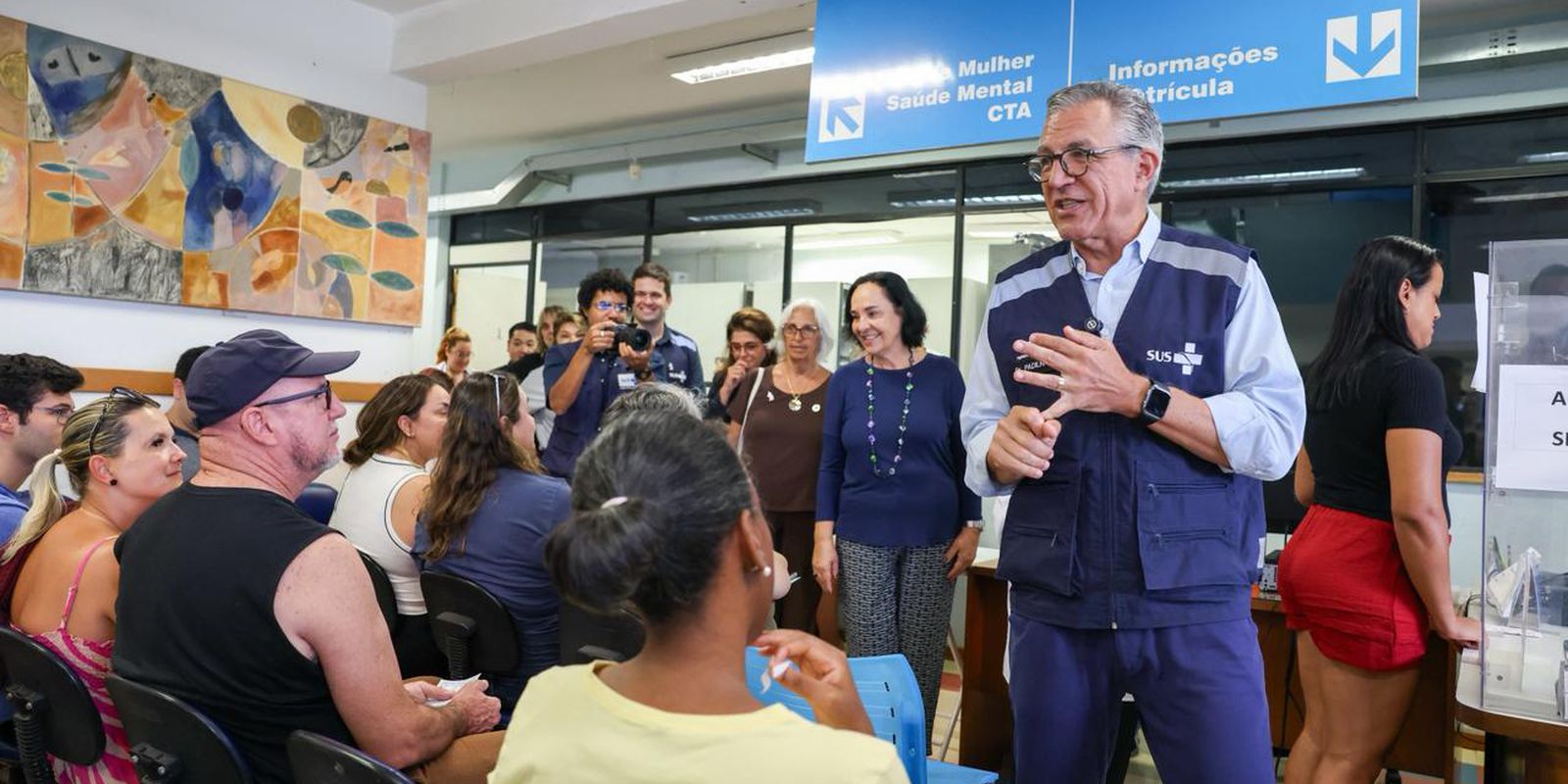
The Minister of Health, Alexandre Padilha, announced this Sunday (18) that around 1.1 million professionals working in primary health care across the country will be able to be immunized, starting February 9, with the Butantan-DV vaccine, with 100% national technology, developed by the Butantan Institute. The vaccine against arbovirus is the first single-dose vaccine in the world.
“These are the professionals who work in basic health units, who visit families, they are the first professionals to receive those who have signs and symptoms of dengue fever”, announced the Minister of Health.
“The first care is provided by doctors, nurses, nursing technicians, community health agents, professionals and multifunctional teams who are registered in basic health units”, he added.
The minister explained that vaccinating this public will be possible with the arrival of more doses of Butantan-DV. The Butantan Institute must produce and deliver around 1.1 million additional doses of this national dengue vaccine by January 31stto guarantee the immunization of professionals working on the front lines of the Unified Health System (SUS).
Butantan-DV antibodies offer protection against the four serotypes of the dengue virus. Clinical studies indicate an overall efficacy of 74% for the Brazilian vaccine, with a 91% reduction in severe cases and 100% protection against hospitalization due to the mosquito-borne disease Aedes aegypti.
Production of more doses
The federal government wants to gradually expand single-dose vaccination across the country, for people aged 15 to 59, which depends on the availability of new units of the Butantan-DV vaccine, which were commissioned last month by the Ministry of Health.
To accelerate the large-scale manufacturing of the vaccine, the minister announced that the Butantan Institute has signed a technology transfer partnership with the company WuXi Vaccines, from China.
With the partnership, the Ministry of Health’s expectation is that Chinese production of the vaccine with Brazilian technology will be expanded by up to 30 times.
“They [diretores da WuXi Vaccines] committed to a production and delivery schedule. Our expectation is to have, this year, around 25 to 30 million doses [da vacina Butantan-DV]”, estimated the Minister of Health.
The portfolio holder predicts that as new imported doses arrive, The Brazilian government’s next step will be to carry out national vaccination of the public aged 15 to 59, starting with the oldest population (59 years old) and progressing to the youngest public (15 years old).
“As we start to have a large production, this will enter the official calendar [de vacinação] permanently”, projects the minister.
To monitor the production of doses of the vaccine developed by Butantã, in March this year, technicians from the Ministry of Health must travel to China. “We want to see these vaccine doses as quickly as possible here in Brazil.”
Alexandre Padilha also explained that the Butantan Institute already has authorization from the National Health Surveillance Agency (Anvisa) to carry out the evaluation of the Butantan-DV vaccine in the public over 60 years of age and Recruitment of volunteers from this audience has already begun.
“We are optimistic that it will also be a safe vaccine for those over 60 years of age, which will be very important for the fight against dengue,” said Health Minister Alexandre Padilha.
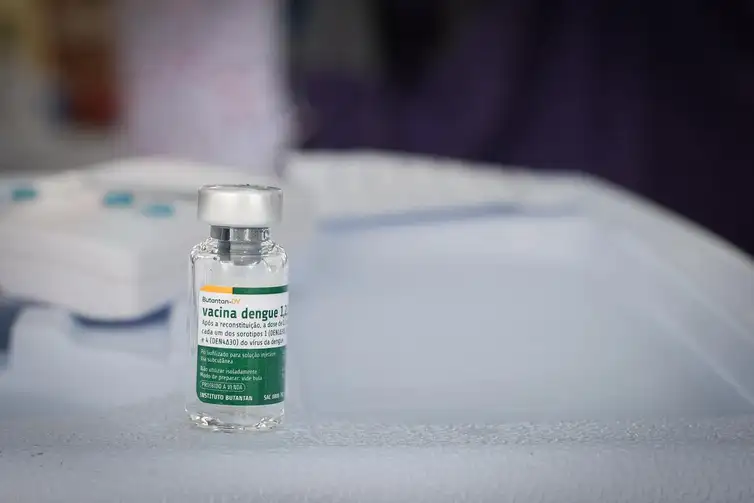
Single-dose dengue vaccine, developed by the Butantan Institute. Photo: Walterson Rosa/MS
The statement was given by the minister in Botucatu (SP), at the beginning of the mass vaccination campaign for the population aged 15 to 59 in this municipality. The pilot initiative has also been taking place in the cities of Maranguape (CE) and Nova Lima (MG), since last Saturday (17). The objective is to evaluate the impact of immunization with the new vaccine.
“I have no doubt that this 100% Butantan vaccine can be a great international weapon to combat dengue in other countries around the world”, said Alexandre Padilha.
QDenga across the country
For people aged 10 to 14, SUS offers the international QDenga vaccine free of charge, with a two-dose vaccination schedule.
The Ministry of Health states that Brazil is the first country in the world to offer the vaccine in the public health system.
This Sunday (18), the Minister of Health, Alexandre Padilha announced the expansion of the application of the Japanese vaccine to this same age group throughout the country. The expansion occurs through the acquisition of more stocks from the Japanese pharmaceutical company Takeda.
“We purchased 9 million doses, for 2026; another 9 million doses, for 2027. In total 18 million [de doses]. Which allows us to distribute it in all Brazilian municipalities.”
Approved in 2023 by the National Health Surveillance Agency (Anvisa), QDenga was initially made available in 2024 to children and adolescents in 2,100 municipalities considered priorities by the Brazilian government.
With the increase in stocks, QDenga vaccination will be carried out in basic health units (UBS) of the SUS in more than 5,500 Brazilian municipalities, exclusively for people aged 10 to 14 years old.
The minister reports that around 10 million doses of QDenga were distributed and applied in Brazil, in 2024 and 2025, for children and young people.