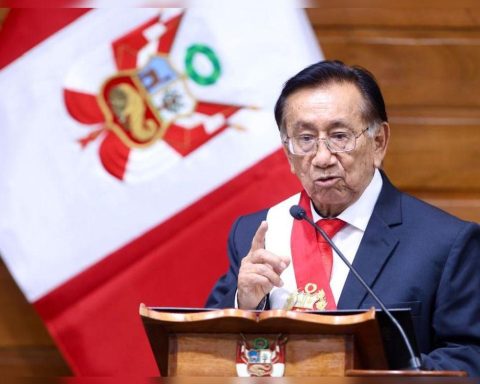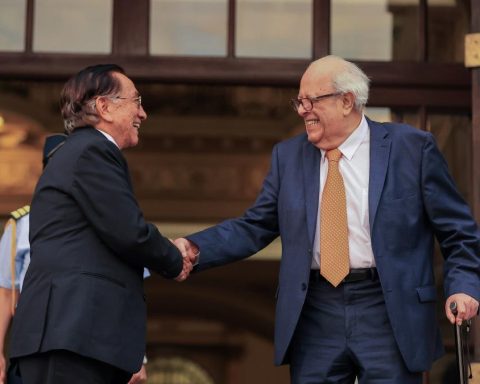
On October 10 of last year, the accelerated vacancy of Dina Boluarte placed the then head of the Congress of the Republic, José Jeríat the head of a Transitional Government that reaches its 100th day tomorrow, in the midst of deep citizen dissatisfaction due to the lack of results in the fight against insecurity and suspicions and misgivings due to a secret meeting of the president with the Chinese businessman Zhihua Yang – a partner in an illegal ceramics factory, as reported Peru21—, outside the Government Palace and outside the official agenda.
One hundred days is almost a third of the 291 that her mandate will last in total, which began auspiciously and gave a 180-degree turn to the strained relationship that her predecessor maintained with the population, which came with the commitment to declare war on hitmen, extortions and assaults, and who asked for forgiveness “for the mistakes we have made.”
Unfortunately, it has finally been 100 days of unfulfilled promises, of much flourish and spectacular appearances in prisons, police stations and operations, and of several, many, isolated measures and hard work by some PNP generals, but none that makes us think that — as Jerí said when sworn in — “we are going to win the war once and for all” against crime. And as icing on the cake, once again, her meeting, in secret, with a businessman of dubious interests.
Insecurity: Main liability
“The president is about to complete 100 days in office, it is a milestone that is usually an occasion for balance, (but) in this case it finds him in a rather uncomfortable situation. It is true that, according to the latest measurements, his popularity is still important. At the beginning of his administration he said: ‘we are going to stop being defensive, we are going to go on the offensive’, but now he himself has gone on the offensive because there is no occasion in which he is not asked about his meeting with the Chinese businessman,” he told Peru21TV the political analyst José Carlos Requena.
In his assessment of the presidential administration, the expert said that it is “mixed,” although he outlined more shadows than lights. Regarding the first, he warned that “insecurity continues to be Jerí’s main liability.” Even more so, he added, considering that Vicente Tiburcio “arrived with a good sign” to the Ministry of the Interior. “In fact, when compared to the ministers that Boluarte had, one could expect some redirection. These promises that certain legislation is going to be passed, that there is no time when it will happen, this recurrence of attacks on the population, on the transporters…; there is a justified unease on the part of the population,” he stressed.
Regarding the positive aspects of this first government section, Requena mentioned the departure of Dina Boluarte. “This government, with all the complications it has and with these gray areas that are appearing, has given some respite,” he noted.
Another positive point, however, is also the decision to reorganize Petroperú, the state company that year after year has generated million-dollar losses and uncontrolled spending for the State.
Jerí: More of the same
Carlos Morán, former Minister of the Interior, meanwhile, recalled that of the 2,200 homicides recorded last year, about 400 correspond to Jerí’s period, which – he noted – “although the tone of the presidential message changed” has proven so far “to be more of the same because it has only been based on already failed recipes.”
“The declaration of the state of emergency is a salute to the flag because homicides have increased equally in that period and we have reached what we currently have, more than 25,000 cases of extortion in 2025, therefore, it has not had a significant impact on the reduction of crime or on the perception of insecurity that all Peruvians have until now,” he pointed out.
He insisted on the need to implement a plan that gives results. “Let’s not focus on cheap speeches or media presentations to the press, but on results that are what the population wants. The country’s main problem is citizen insecurity and the increase in crime that translates into 69 drivers and five conductors who have lost their lives; that is a wake-up call to the policies we follow in citizen security,” he continued.
Morán also warned that “if we continue in this already growing trend, in which extortion or homicides increase 10% a year, then we are not doing the task correctly.”
Added to all this is the fact that we are in an electoral scenario, so the next government – Morán considered – will have a “complicated task because it will inherit this liability of insecurity that does not benefit the country in any way.”
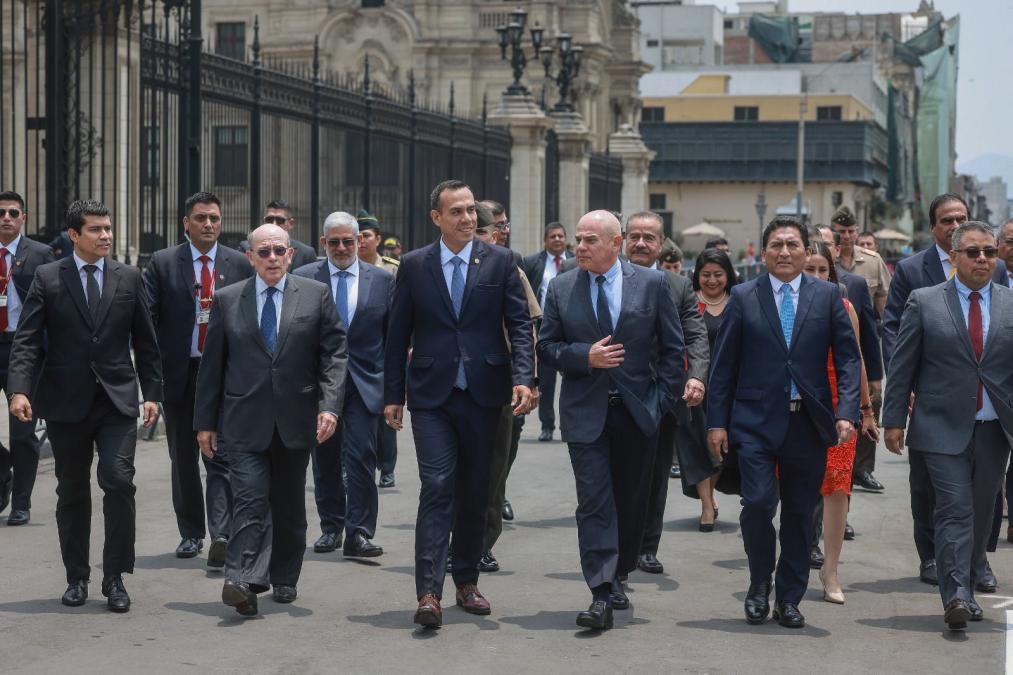
Meanwhile, José Jerí’s government continues to fend off rumors of a cabinet change, which are intended to dispel with group photographs of a cabinet overshadowed by the president’s media overexposure. At the end of the day, “Peru at full speed” ends up being just a slogan that does not apply when it comes to governing.
I KNEW THAT
Héctor Valer, spokesman for the Somos Perú bench—a party in which José Jerí is a member—accused the president of being part of a “gear of corruption.”
The congressman reported that the president processed his license before the bench on Tuesday, so he will not be able to be subjected to a disciplinary process for his secret meeting with Chinese businessman Zhihua Yang. “The investigation has been removed,” denounced Valer.
Subscribe for free to the most prestigious Gastronomic Guide in the country. SUMMUM, the weekly newsletter. http://bit.ly/4imAPEI