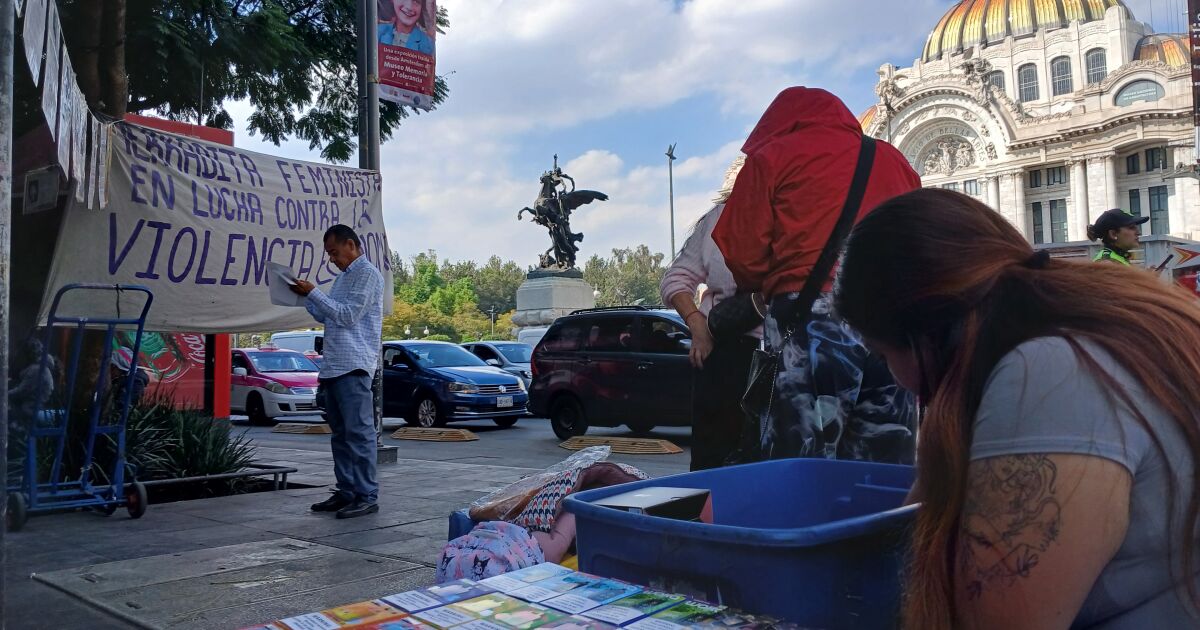
Three stalls installed in the Angela Peralta Corridor, next to the Palacio de Bellas Artes, offer vapes for 100 pesos each, which are displayed on canvas on the floor. One more stall is located on the sidewalk of Avenida Juárez.j
(Photo: Special)
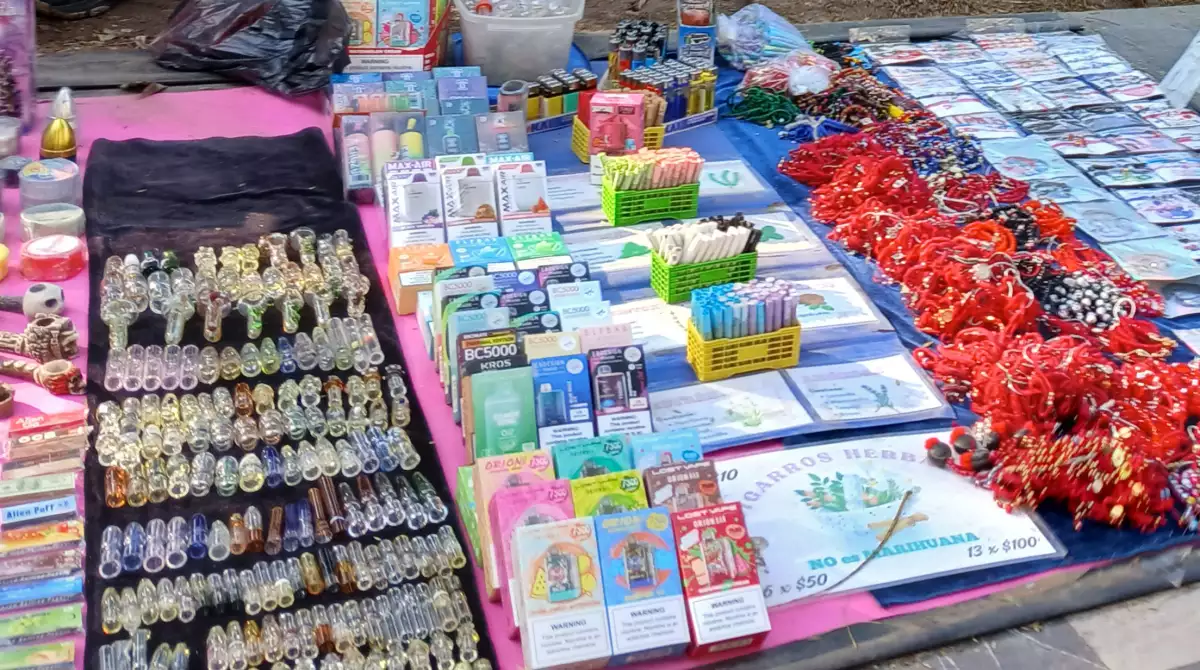
At these stands, vapers range from 5,000 to 7,500 “puffs” or puffs, with flavors ranging from mint and peppermint to strawberry, watermelon, black cherry and caramel ice cream, among others.
(Photo: Special)
The fifth stall installed with a table is located on the corner of Avenida Juárez and Eje Central, in front of the intersection with Madero, where around 150 people pass by per minute. At this point, in addition to vapers with up to 20,000 puffs, others are offered with screens with games in neon colors, which cost up to 400 pesos.
In December, the sale, distribution and production of vaping devices was prohibited nationwide, with the reform of the General Health Law approved by the Chamber of Deputies and the Senate of the Republic.
Anyone who commits these acts could be sentenced to one to eight years in prison, as well as a fine of 100 to 2,000 times the Measurement and Update Unit (UMA), which for 2026 is equivalent to between 11,731 and 234,620 pesos, considering these devices as a “threat to public health.”
At the time, deputies from the PRI, PAN and Citizen Movement (MC) criticized that this would mean the criminalization of consumers, however Morena defended that vaping users are not sanctioned, only those who manufacture, distribute and market them.
Vapers are also prohibited by the federal Constitution with the reform published in January 2025.
According to the report “Smoke, vaping and power: the new business of organized crime”, the illicit tobacco market (including cigarettes, vaping devices and other products) amounts to between 15,000 and 20,000 million pesos in Mexico.
The ban on vaping devices has led to this market being taken over by organized crime, the investigation indicates.
“With its commercialization, criminal groups obtain a ‘petty cash’ that finances weapons, ammunition, vehicles and telecommunications equipment that are used to commit crimes in Mexico – kidnapping, extortion, hitmen – and abroad, such as drug trafficking to the United States and other countries,” says the report by journalist Óscar Balderas and the organization Defensorxs.