
The National Confederation of Industry (CNI) presented a survey that shows that the trade agreement between Mercosur and the European Union (EU), when it comes into force, will increase Brazilian access to the global goods import market from 8% to 36%. This is because the European Union alone accounted for 28% of global trade in 2024.
The analysis was released this Saturday (17), after the signing of the treaty by representatives of the European bloc and Mercosur member countriesin a ceremony in Asunción, Paraguay. The Brazilian industrial entity assesses the formalization of the agreement as a strategic turning point for Brazilian industry.
The survey also indicates that 54.3% of traded products, which correspond to more than five thousand items, will have tax zero in the European Union as soon as the Mercosur-EU agreement comes into force. On the Mercosur side, Brazil will have longer deadlines, between 10 and 15 years, to reduce tariffs on 44.1% of products (4.4 thousand items), ensuring a gradual and predictable transition.
“Based on data from 2024, 82.7% of Brazil’s exports to the EU will enter the bloc without import tariffs from the beginning. On the other hand, Brazil has committed to immediately eliminating tariffs on just 15.1% of imports originating in the European Union, reinforcing the difference in favor of the country”, assesses the CNI.
After signature, the text will still be submitted for ratification to the European Parliament and the national congresses of each Mercosur member country. The entry into force of the commercial part of the agreement depends on legislative approval, with gradual implementation expected over the next few years.
Still according to the entity’s analysis, Brazil will have, on average, eight additional years to adapt to the tariff reduction, compared to the European bloc’s deadline and considering bilateral trade and the schedule provided for in the Mercosur-EU Agreement.
“The signing of the agreement is a historic milestone for the strengthening of Brazilian industry, the diversification of the export agenda and the country’s international integration into global trade”, says the CNI.
“Under negotiation for more than 25 years, this is the most modern and comprehensive treaty ever negotiated by Mercosur and goes beyond reducing tariffs by incorporating disciplines that increase regulatory predictability, reduce costs and create a more favorable environment for investments, innovation and job creation”, assesses the entity.
>>Understand the Mercosur–EU agreement in 13 points
Job generation
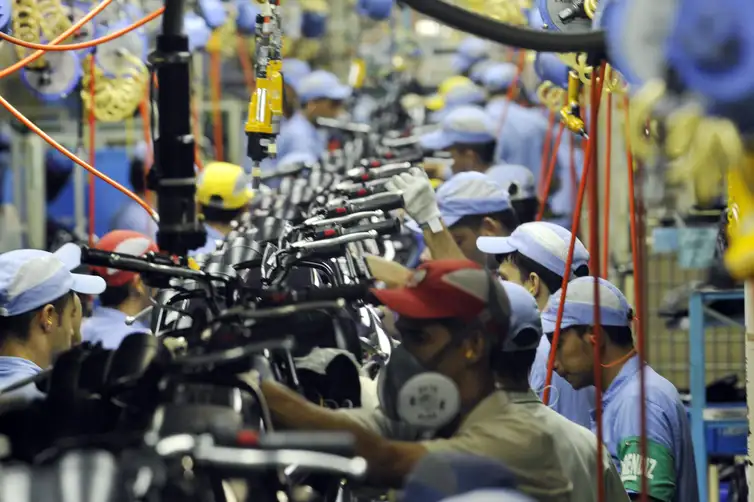
In 2024, according to the CNI, for every R$1 billion exported from Brazil to the EU, 21,800 jobs were created – Photo: José Paulo Lacerda – CNI/José Paulo Lacerda/Rights reserved
In 2024, according to the CNI, for every R$1 billion exported from Brazil to the EU, 21,800 jobs were created and R$441.7 million in wages and R$3.2 billion in production were generated.
In relation to the agro-industrial sector, the agreement also brings positive results, since negotiated quotas favor key sectors and, in the case of beef, are more than double those granted by the European Union to partners such as Canada and more than four times higher than those allocated to Mexico. The rice quotas exceed the volume currently exported by Brazil to the bloc, expanding the potential for access to the European market.
Technological cooperation
The signing of the treaty also creates a favorable environment to expand research and development projects aimed at sustainability and technological innovation, points out the CNI.
“The new regulatory and market requirements drive opportunities in industrial decarbonization technologies – such as carbon capture, use and storage, use and mineralization of CO₂, electrification with low-emission hydrogen, hybrid-flex engines and recycling of batteries and critical minerals –, and in the development of bio-inputs for a more resilient agriculture. The articulation of these fronts strengthens technological cooperation, accelerates the transition to a low-carbon economy and increases Brazil’s competitiveness in the European market”, points out the entity.
In 2024, the European Union was the destination for US$48.2 billion of Brazilian exports, equivalent to 14.3% of the country’s total exports, and remains Brazil’s second main foreign market, behind China. In the same period, the bloc accounted for US$47.2 billion of Brazilian imports, 17.9% of the total.
Almost all (98.4%) of Brazilian imports from Europe corresponded to products from the manufacturing industry, while 46.3% of Brazilian exports to the EU were industrial goods. Considering industrial inputs, the share of trade in 2024 was 56.6% of imports originating in the bloc and 34.2% of exports from Brazil to the European Union, according to the CNI.
“This complementarity contributes to the modernization of the Brazilian industrial park, increasing the competitiveness of the industry. The EU is also highlighted as the main investor in Brazil. In 2023, the bloc accounted for 31.6% of the stock of foreign productive investment in the country, totaling US$321.4 billion. Brazil was the largest Latin American investor in the European Union: the bloc was the destination for 63.9% of Brazilian investments abroad.”