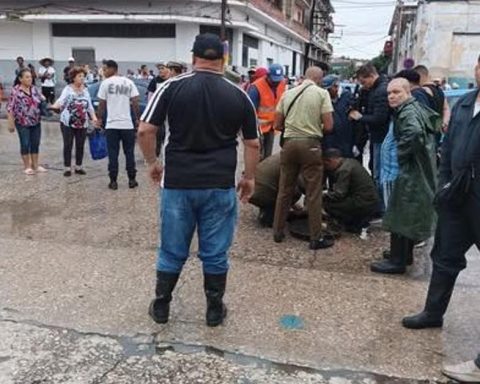
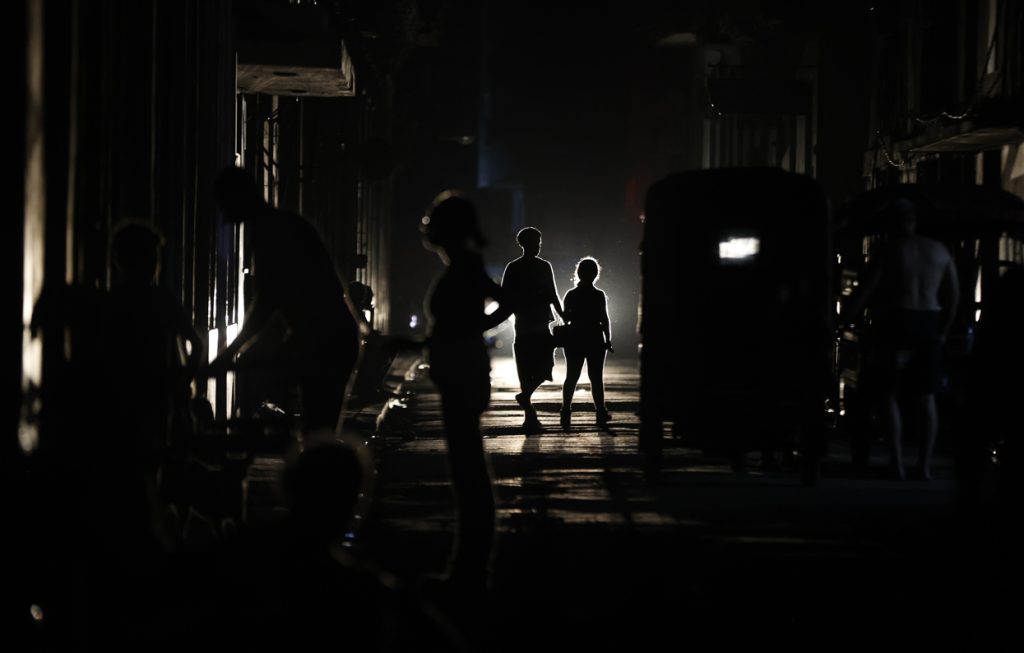
San José de las Lajas/The morning at the Havana National Bus station, in Plaza, has a particular noise: suitcases dragging on the floor, voices that ask the same thing with different desperation and a constant murmur that increases in volume every time someone mentions a route. There, between thermoses of watered-down coffee, inflated bags and backpacks that act as pillows, patience is exhausted in the face of constant delays in departures.
The bus on the Havana-Matanzas route must leave at 9:20 am. The board announces it, but does not guarantee it. At 9:40, at 10:10, at 11:00, no one knows for sure where the bus is or why it is not moving. The workers there respond with phrases that are already part of the landscape: “it is about to enter”, “it is on its way”, “we have to wait”. A lady fans herself with the ticket. A man looks at his watch and snorts: “in Cuba, time also breaks.”
The delay is not surprising; what irritates is custom. “You already come mentally prepared,” comments a passenger who has done the route several times. The problem is that this “normality” has spread throughout all the stations in the country and causes constant late arrivals of passengers to their destinations, family celebrations that are postponed, funerals that arrive once they are finished, and permanent uncertainty among travelers.
The delay is not surprising; what irritates is custom. “One already comes mentally prepared”
In San José de las Lajas, the delay becomes even more visible, because there the bus does not “go out”: it passes when it wants, and picks up when it has free capacity. “He must pass through San José at 10:30, but lately he shows up whenever he wants,” says Eloísa, who usually takes that bus to Madruga. There is no surprise in her voice, but a mixture of resignation and mischief: she knows the real rules of the trip.
Heloísa does not have a ticket, but she brings the learned strategy. “Even if you don’t have a ticket, you can always talk to the drivers,” he says. Talking, in this route, means paying. “The other day one of them asked me for 500 pesos and I had no choice but to pay it. I made the entire journey sitting on a small wooden bench, near the stairs.” He tells it like someone describing a repeated scene, without scandal. “With a few bills in your hand they will even put you on the wheels.”
Around Heloísa, four other people wait with backpacks on their backs and few belongings. Large pieces of luggage are viewed with suspicion because the trunk also has its own rules: “they put them without ticket and then a briefcase is lost and you can’t complain to anyone.” The fear of something disappearing without explanation adds to the fear of being left stranded.
After 12:30 noon, the Yutong bus finally arrives in San José. Those who have a reservation and also those who paid to go “wherever” get on.
“I bought my ticket in advance to make the trip comfortable, not to have people glued to my seat in the middle of the aisle,” Orlando protests. According to his story, the bus had left Havana with more than half of the seats unoccupied. “We were already late from the Plaza terminal, but the biggest delay was to fill the car with the waiting list in Villanueva, where employees and drivers left with a good cut.”
Every time the bus stops, the hallway narrows and the air thickens.
The route then becomes a string of stops. Where there is someone with money, there is a possibility of stopping. Every time the bus stops, the hallway narrows and the air thickens. The standing passengers pile up, rubbing against bags, backpacks, and sweaty arms. “I understand that we all have the same need,” Orlando concedes, “but I have paid for a comfort that is disrespected from compliance with the schedule to the conditions of the trip.” For him, part of the disorder is explained by the lack of inspectors: no one monitors and no one punishes.
The journey between San José and Matanzas, calculated for one hour and 40 minutes, stretches like a piece of gum. The continuous pick-ups and drop-offs of passengers, who pay different prices depending on the place where they were picked up, turn the trip into a rolling market. Meanwhile, the air conditioning is barely felt. “It hardly gets cold,” complains Elba, an elderly woman who goes to visit her son. As the Matanzas interprovincial terminal is still closed, she does not know where they will leave her. “The drivers don’t even give that information at the beginning of the trip,” he emphasizes.
Two and a half hours after the established arrival time, the bus enters Matanzas territory and, as happens so often, the information arrives late and through the mouths of other passengers: the last stop will be at the interprovincial terminal that is in danger of collapsing in Pueblo Nuevo. “There is no employee there to dismantle the briefcases,” warns a man who makes his way towards the door, calculating how to get his luggage out without getting lost in the final chaos.
The only thing that matters to Elba is getting off. Her son waits for her and the hug, when it finally happens, relieves her of the rigors of the journey. The woman, now with her feet on the ground, sums up in a few words her feelings after traveling on a National Bus Yutong, between Havana and Matanzas: “Take advantage of me now, because it will take me a while to come later, no one makes this trip every time.”