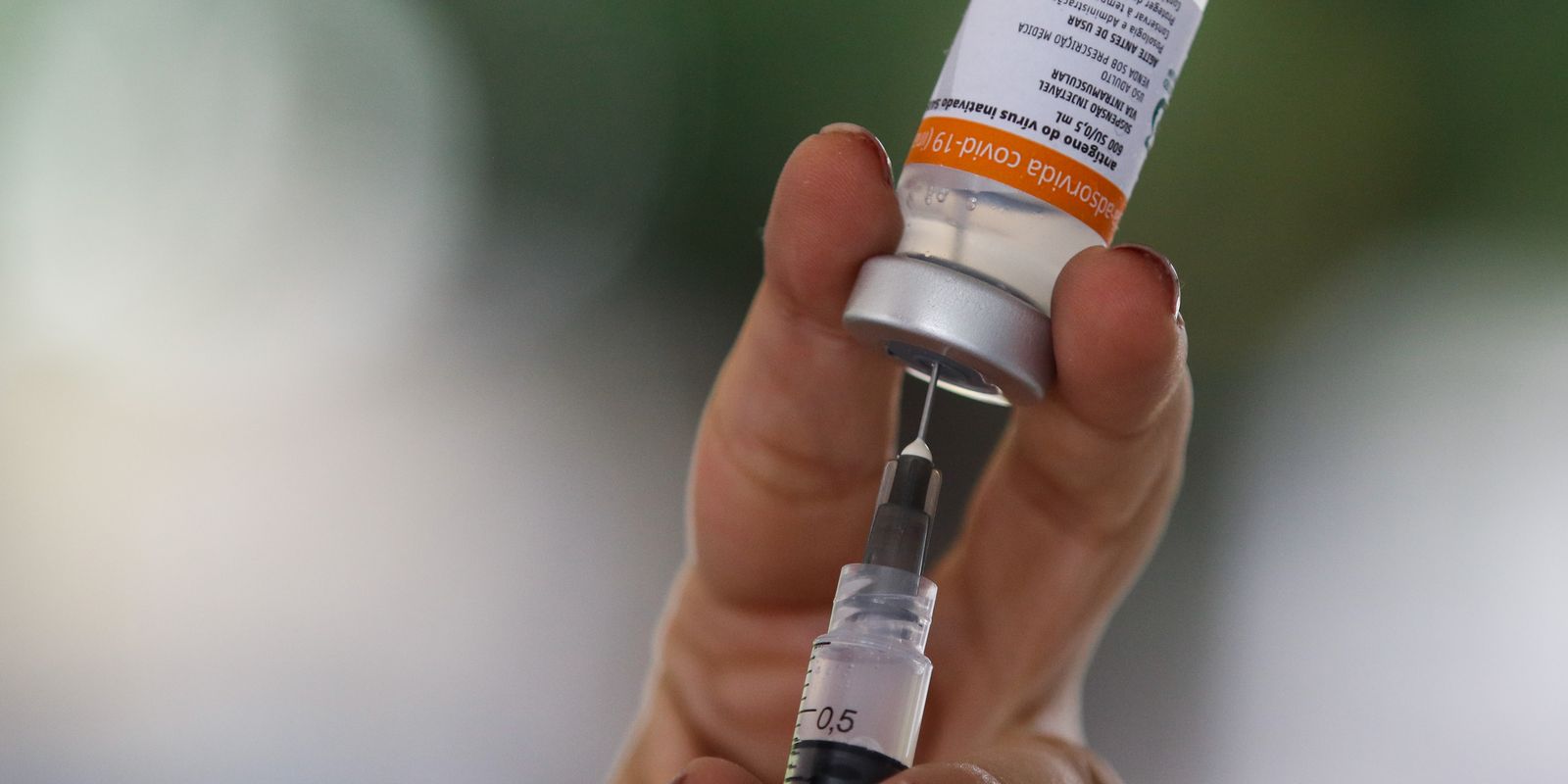
5 years ago, Brazil took its first steps towards ending a nightmare. On January 17, 2021, shortly after the National Health Surveillance Agency (Anvisa) approved the emergency use of two vaccines in Brazil, São Paulo nurse Mônica Calazans became the first Brazilian to be vaccinated against Covid-19.
Mônica was chosen for this historic moment because she participated in the clinical trials of the Coronavac vaccine, carried out at the end of 2020 to prove the safety and effectiveness of the vaccine. At the time, she worked at the Instituto de Infectologia Emílio Ribas, a hospital specializing in infectious diseases and a reference for the disease, which treated more than 40 thousand patients during the pandemic.
The nurse says she was on duty that Sunday when she was told by her boss that she should go to the ceremony site, where authorities were awaiting Anvisa’s decision to begin vaccination immediately. When she found out that she would be the first to receive the vaccine, she couldn’t hold back her tears:
“I cried a lot! I really did! Because we were going through a traumatic moment, and my brother had Covid at the time. And I also cried with emotion, with joy, because science was taking an important step towards ending that tragedy that was plaguing the world.” “
When I received the vaccine, I brought hope to people. My clenched fist was a message of hope and victory. That we would overcome this terrible phase “
Already vaccination in the rest of the country began the following day, January 18thafter the distribution of a first batch of 6 million doses produced in China and imported by the Butantan Institute, which subsequently began to process the vaccine in Brazil, using the active ingredient sent by the company Sinovac.
A few days later, on January 23, the campaign was boosted by the first 2 million doses of the Oxford/Astrazeneca vaccineinitially imported from India by the Oswaldo Cruz Foundation (Fiocruz), which then gradually incorporated the technology and began producing the vaccine on national soil.
The campaign prioritized the most vulnerable audiences, starting with frontline health workers, the elderly and people with disabilities who lived in institutions and indigenous people. At this time, Brazil was experiencing the peak of the Gamma variant of the coronavirus, which proved to be more aggressive and lethal than those that had previously spread.
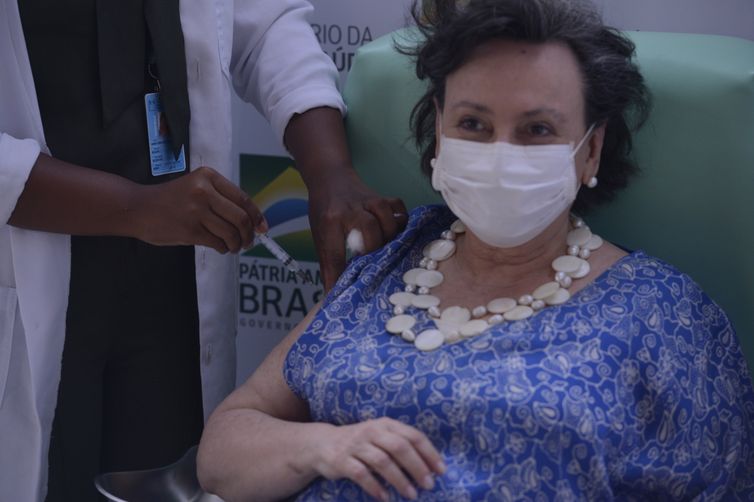
The pulmonologist at the Professor Helio Fraga Reference Center, at Fiocruz, Margareth Dalcolmo receives the dose of the Oxford/AstraZeneca vaccine at Fiocruz in January 2021 – Tomaz Silva/Agência Brasil
Given the limited number of doses, immunization progressed slowly until it reached other groups that were also very vulnerable, such as the elderly in general. In the city of Rio de Janeiro, for example, people aged between 60 and 70 years only received the vaccine during the months of March and April 2021.
Still, the benefits of vaccination did not take long to appear. Data from the Covid-19 Brazil Observatory show that from April onwards, hospitalizations and deaths among the elderly began to fall sharply.
Researchers believe that In the first seven months of the campaign alone, 165,000 hospitalizations and 58,000 deaths among the elderly were avoided.
In the following months, both Butantan and Fiocruz began finalizing and packaging vaccines in Brazil, which enabled a significant increase in doses, together with the arrival of immunization agents purchased from private companies.
In one year, 339 million doses were applied, serving 84% of the Brazilian population. Experts calculate that this prevented 74% of serious cases and 82% of expected deaths in Brazil, meaning that more than 300,000 lives were saved..
Delays
However, the same study by the Covid-19 Brazil Observatory that calculated the lives saved by the vaccine also concluded that “an additional contingent of 104,000 hospitalizations could have been avoided if vaccination had started earlier” and “another 47 thousand lives could have been saved if the Brazilian government had started the vaccination program earlier”only among the elderly.
The vice-president of the Association of Victims and Families of Victims of Covid-19 (Avico), Paola Falceta, believes that her mother, who passed away in January 2021, is in these statistics. For her, there is no doubt that there was a delay in the start of vaccination in Brazil, and that it is the result of negligence by the federal government at the time.
“We couldn’t save everyone, obviously, because the vaccine depends on the person’s own will and there would still be that group that wouldn’t take the vaccine.”
“But the majority of people wanted access to the vaccine, and many of those who died were people who could have taken the vaccine before and were unable to do so. And this lack was imposed by the management itself, which decided not to buy, not to negotiate all types of existing vaccines.”
Paola’s assessment is corroborated by a study by the Federal University of Minas Gerais. If vaccination in Brazil had started 40 days earlier, on the same date it started in the United Kingdom, with more doses, and associated with isolation and protection measures, Brazil could have avoided 400,000 deathsthe researchers conclude. This is more than half of the approximately 700,000 deaths caused by the disease in the country.
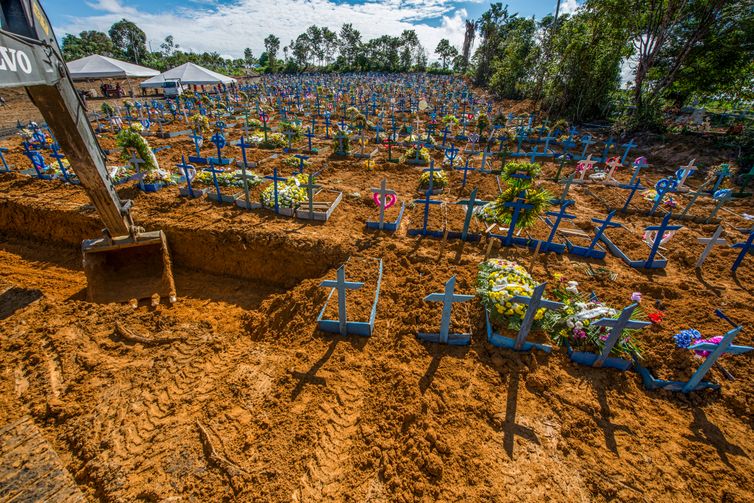
Nossa Senhora Aparecida Public Cemetery, in Manaus, had to increase the number of graves for victims of covid-19 Photo: Alex Pazuello/Semcom/Arquivo
Behind the numbers, there are stories like those of Paola and Ana Lucia Lopes, who lost her partner in May 2021.
“A month after Cláudio passed away, I went to get vaccinated. We were the same age, so he was going to get it at the same time. And it’s very revolting to think that, that he didn’t have that opportunity. Imagine how many people could have taken the vaccine, and had the chance to survive.”
The Covid-19 CPI, carried out in 2021, also concluded that the federal government imposed a “shortage” of vaccine doses, which was decisive in increasing the number of cases and deathsand enable the spread of new variants. One of the pieces of evidence considered were the sales proposals made by the pharmaceutical company Pfizer in August 2020, offering 1.5 million doses to be delivered in the first year of the pandemic. The Brazilian government didn’t even respond.
“The acquisition of immunization agents should have been the main measure in the process of preventing the spread of the new coronavirus and, consequently, protecting people’s health, but, unfortunately, this measure was neglected. However, the negotiations and the conclusion of negotiations by the federal government suffered unjustifiable and intentional delays, which directly impacted the purchase of vaccines and the immunization schedule for the Brazilian population”, says the CPI’s final report.
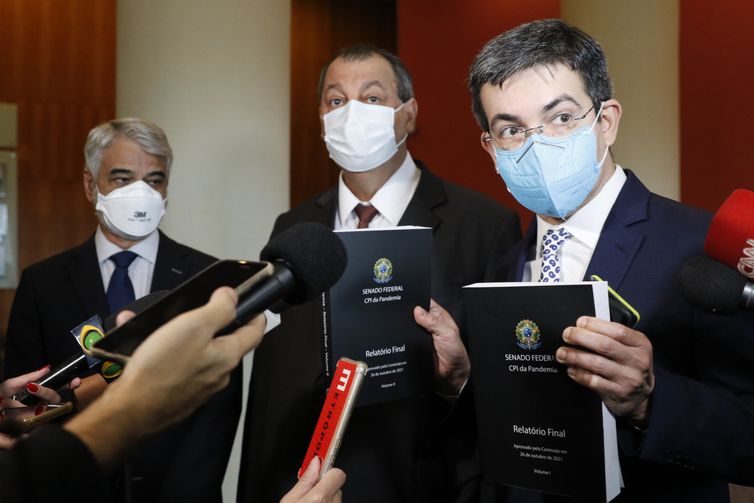
Senators working in the Covid-19 CPI deliver the final report of the commission’s work to the Public Ministry of Rio de Janeiro (MPRJ) – Fernando Frazão/Agência Brasil
The commission also suggested the indictment of 68 people, including former president Jair Bolsonaro and former health ministers Eduardo Pazuello and Marcelo Queiroga. The request, however, was archived at the request of the Attorney General of the Republic at the time, Augusto Aras, in July 2022.
Last year, however, the minister of the Federal Supreme Court Flávio Dino ordered the opening of an investigation at the Federal Police to investigate the facts reported by the CPI.