Havana/On a dusty sidewalk in Kampala, Uganda, a young man claims that there is something that can connect him with his friends even if the Government shuts down the internet: an application that works without mobile data and without Wi-Fi. It’s called Bitchat, it was created by Jack Dorsey, co-founder of Twitter, and it has gone from being an almost unknown tool to a digital lifeline for many people living under governments that are increasingly resorting to internet shutdowns in response to internal crises.
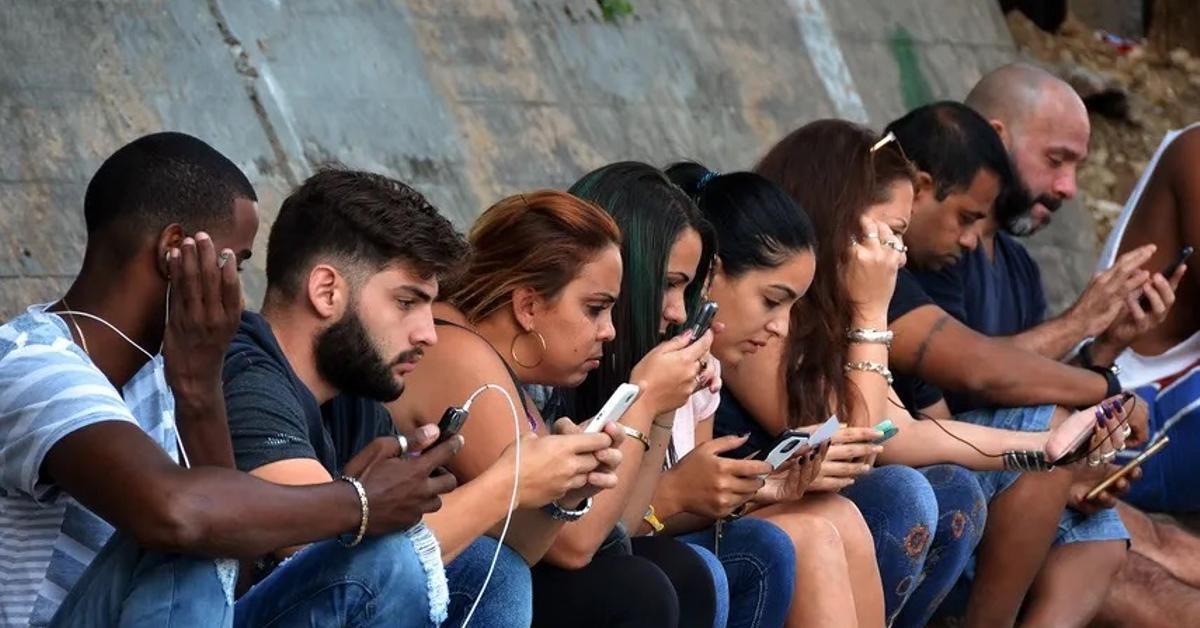
What happens in Uganda It is also similar to what happened recently in Iran, where Bitchat downloads multiplied after massive internet outages during popular protests. Both cases raise questions about the usefulness of the tool in countries like Cuba. On the Island, web browsing is also marked by high costs, deteriorated infrastructure and recurring censorship.
Unlike apps like WhatsApp, which rely on an active connection, Bitchat operates over a Bluetooth mesh network. If a cell phone does not have internet, it can send messages to another nearby cell phone, which in turn retransmits them to another cell phone, and so on, until the message reaches its destination. There is no login, there are no telephone numbers that can be blocked by the State or direct dependence on telephone providers. This technology is reminiscent of old community radios but adapted to the digital present.
This same pattern of blackouts to control information at critical moments for the regime is repeated in Cuba
In Uganda, this tool has become especially valuable in the run-up to the elections that were held this Thursday. The Government cut off web access, placed limits on mobile services and restricted communication just at a time when citizen organization was crucial to tracking potential fraud. In that country, Bitchat has quickly climbed the download rankings, with thousands of users turning to the app to exchange texts and voice, while social networks have been silenced by the authorities.
A similar phenomenon was observed since the end of December in Iran, where internet blackouts during social protests forced citizens to look for alternatives to conventional platforms. Reports from several data researchers indicate that Bitchat downloads tripled in the Persian nation, according to the Reuters agency, just in the days when the blocking of web browsing became stricter.
This same pattern of blackouts to control information at critical moments for the regime is repeated in Cuba.
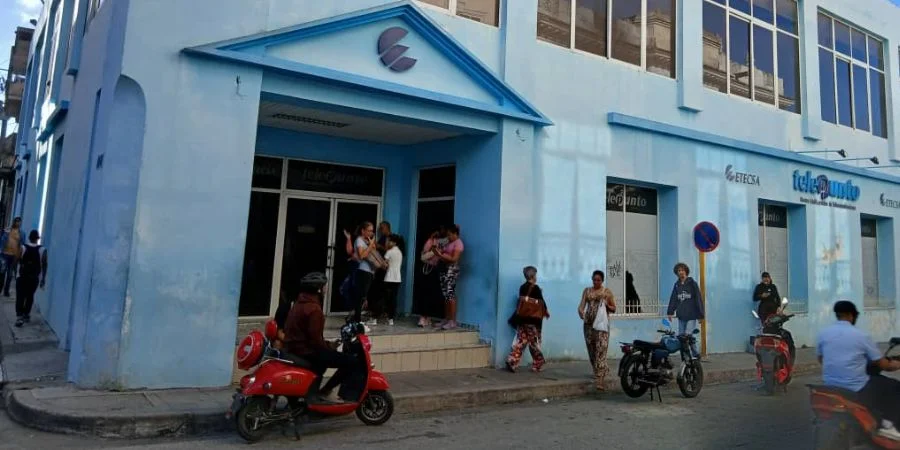
Internet access on the Island has been a territory of political control since its inception, but also an unstable and expensive service. In 2025, after an increase in shipping rates imposed by Etecsa, the only telecommunications company in the country, many Cubans saw the cost of connecting multiply. He great rate meant that access to data packages went from being a moderate economic barrier to a serious obstacle for broad sectors of the population.
Beyond costs, infrastructure remains poor. Telecommunications towers suffer frequent outages; The signal is easily degraded, and the browsing experience is often disrupted, even without direct government intervention. On key days, such as December 10, Human Rights Day, or immediately after the mass protests of July 11, 2021, authorities implemented deliberate internet shutdowns that affected activists, independent journalists and ordinary citizens.
Technically, Bitchat works well in environments where phones can get close to each other and form small community networks.
During those days, digital communication became intermittent or disappeared, complicating the transmission of information and the coordination of those seeking to share photos, videos or simple messages to reassure their relatives outside the Island. In this context, the appearance of tools like Bitchat opens up hope. Can this app offline alleviate the limitation that Cubans suffer from censorship and deficient infrastructure?
The answer is not simple. Technically, Bitchat works well in environments where phones can get close to each other and form small community networks. In street protests, neighborhood meetings or small towns, dense enough for devices to relay messages to each other, their use can be effective. A student in El Vedado could send a text to a friend in the El Cerro neighborhood if there are enough intermediaries. A group of activists would be able to coordinate the points of an agreement without depending on data or wi-fi.
But the app has clear limitations: physical distance remains a factor. The Bluetooth signal has a range of between 10 and 100 meters, depending on the power of each device. In dispersed urban areas, as is the case in many neighborhoods on the outskirts of Havana and Santiago de Cuba, it would be impractical without a large concentration of users or without a deliberate community strategy of “nodes” that relay messages.
Still, Bitchat’s appeal is in its simplicity: It doesn’t require personal accounts, it’s not easily logged on servers that can be blocked, and its decentralized network makes it harder for a government to disrupt it through conventional internet censorship mechanisms. It is, in essence, digital resilience.
Perhaps Bitchat’s real value is not in replacing large global networks, but in rewriting the map of the possible
For many Cubans, however, the challenges are not only being able to exchange texts during a blackout or an intentional outage. The groups and relationships already established on social networks such as Facebook and Instagram make the majority of the population very dependent on these means to communicate and little inclined to explore other options. In the computing communities and gamers The search for one’s own and less crowded paths is common, but activism and independent journalism needs to explore less controlled tools more effectively and constantly.
On the other hand, while Bitchat could be useful in times of complete disconnection, it does not replace the more familiar forms of video streaming and live protest reporting that require wider bandwidths. “Being able to send messages without the internet is better than nothing,” says a reporter from Havana, “but to document abuses, record interviews or transmit visual evidence we still depend on connections that are often not available.”
However, the examples of Uganda and Iran show that, where authorities block the internet in response to political tensions, Bluetooth networks become part of the citizen response. In Cuba, with its combination of prohibitive costs, fragile infrastructure and tactical censorship, tools like Bitchat could serve as a complement to keep basic communication on between nearby groups of people.
Perhaps Bitchat’s real value lies not in replacing large global networks, but in rewriting the map of what is possible when the fragile threads of the conventional internet break. For a mother who wants to know if her son is okay in Marianao when the internet goes down throughout Havana, being able to send a text offline It can be the difference between a night of anxiety and one of relief.