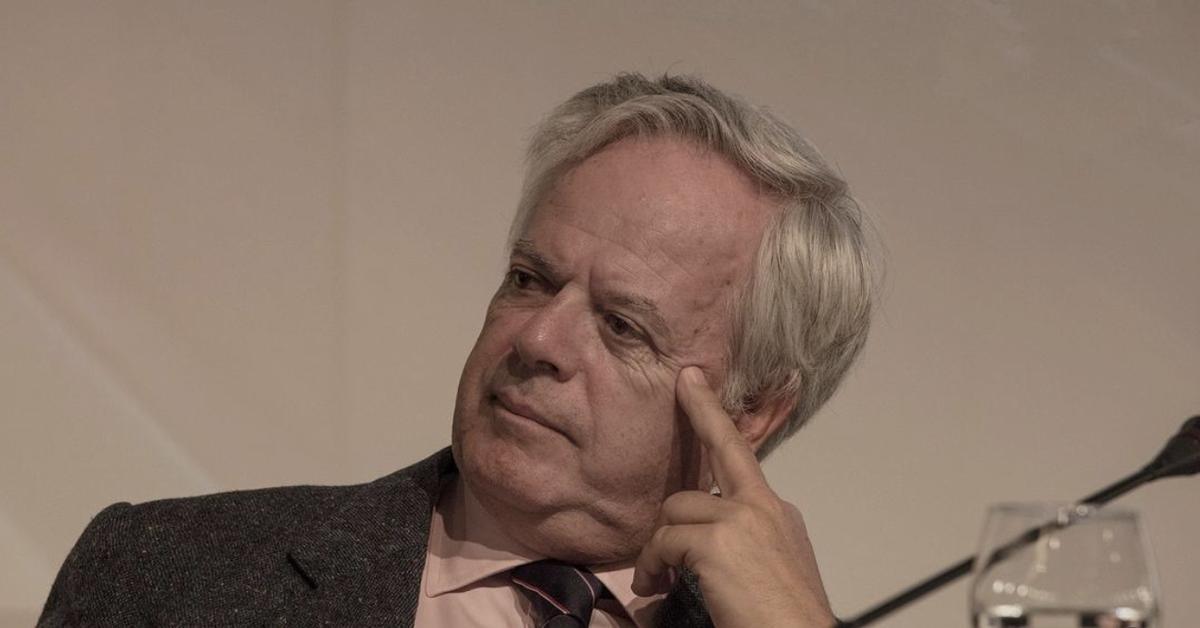
Madrid/The Basque historian and politician Guillermo Gortázar Echevarría died in Madrid last Wednesday at the age of 74 due to the cancer he suffered from. Founder in 1996 of the Hispanic Cuban Foundation, Gortázar maintained a constant commitment to the Cuban cause throughout his public life, to which he dedicated a substantial part of his political, intellectual and editorial work from Spain.
Gortázar was one of the main promoters of the Hispanic Cuban Foundation, created in Madrid with the support of the Cuban-American National Foundation and the dissident writer Carlos Alberto Montaner. In his first years he served as general secretary and, from 2006, he assumed the presidency. Under his direction, the institution consolidated itself as a reference for Cuban exile in Spain and as a space for critical reflection on Spanish policy towards Havana.
The Foundation was born with the objective of defending democracy and freedoms in Cuba, as well as strengthening the historical and cultural ties between both countries. For years he organized conferences, book presentations, public debates and intellectual meetings focused on the Cuban political reality, in addition to providing support to opponents, activists and exiles.
The Foundation was born with the objective of defending democracy and freedoms in Cuba
Through articles, essays and public statements, Gortázar repeatedly maintained that the normalization of relations between Spain and Cuba had to be accompanied by verifiable advances in rights and freedoms. He defended that Spain could not limit itself to a routine diplomatic relationship with the Cuban regime and frequently appealed to the historical responsibility derived from the deep human, cultural and linguistic ties between both countries.
Husband of Pilar del Castillo, Minister of Education in the Executive of José María Aznar between 2000 and 2004, he was especially critical of the policy followed by the different Spanish Governments with respect to the Island, both the Popular Party and the Socialist Party. In his opinion, both had opted for years for an attitude of pragmatism and understanding that relegated the human rights situation on the Island. In 2018, after the arrival of Pedro Sánchez to the presidency of the Government, he publicly denounced that this line was maintained without substantial changes.
Gortázar also promoted the Hispanic Cuban HC Magazinea publication that for years brought together texts by Cuban and Spanish authors and gave space to historical reflections, political analysis and testimonies absent from the official media of the Island.
Although his academic work focused mainly on the contemporary history of Spain, Cuba occupied a permanent place in his political thought. From Madrid, Guillermo Gortázar contributed for decades to maintaining attention on the Cuban reality in the Spanish public debate and to building bridges between exile and broad sectors of European civil society.