The General Elections 2026 are around the corner and the Peruvian electoral system has updated the amounts of sanctions and economic benefits for citizens. After the officialization of the Tax Tax Unit (UIT) for 2026 at S/5,500the National Elections Jury (JNE) and the National Office of Electoral Processes (ONPE) have defined the scheme that will govern this process.
Below, we detail everything you need to know about the fines for not voting and the remuneration that those who do their duty at the polling stations will receive.
YOU CAN SEE: Absalón Vásquez has a conviction for corruption, owes S/1 million and cannot be a candidate
How much is the fine for not going to vote?
In Peru, voting is mandatory for all citizens from 18 to 70 years old. Not attending the polls generates a fine that is calculated according to the poverty level of the district recorded in the DNI, according to the classification of the National Institute of Statistics and Informatics (INEI).
For 2026, the updated amounts are as follows:
- Non-Poor District: S/110 (equivalent to 2% of the UIT).
- Non-Extreme Poor District: S/55 (equivalent to 1% of the UIT).
- Extreme Poor District: S/27.50 (equivalent to 0.5% of the UIT).
What happens if I am a board member and do not attend?
The penalty for polling station members (regulars and substitutes) who do not fulfill their duties is higher. If you were drawn and do not show up to set up the table, the single fine is S/275 (5% of the ITU).
It is important to emphasize that the fines are cumulative. If a citizen is elected polling station member and does not fulfill his or her duties, and also does not vote, he or she must pay both fines (for example: S/275 + S/110 = S/385 in non-poor districts).
How much will they pay the board members?
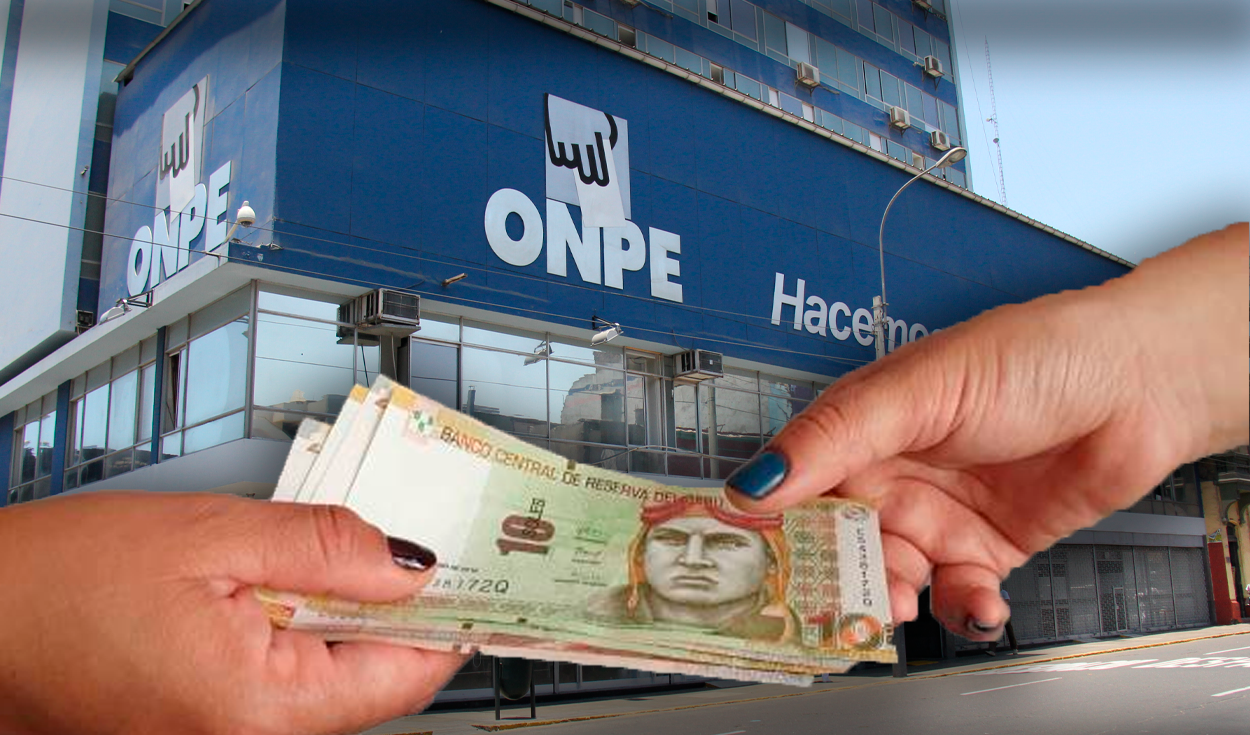
As an incentive for citizen participation and recognition of the work involved on election day (which includes installation, voting and counting), the Peruvian State grants financial compensation.
For the General Elections 2026the ONPE has confirmed that the board members who hold the position will receive financial compensation of S/160. In the event of a second presidential round, the same polling station members must attend again and will receive a second payment for the same amount.
Furthermore, citizens who fulfill this function have the right to a paid rest day on the Monday following the election, applicable to both the public and private sectors.
To collect this amount, citizens must previously register on the virtual platform enabled by ONPE, where they can choose the payment method (bank deposit, digital wallets such as Yape or Plin, or collection at the window).