Venezuela went from being a stable democracy to a failed state. That justifies that few missed the recently overthrown
Venezuela Time
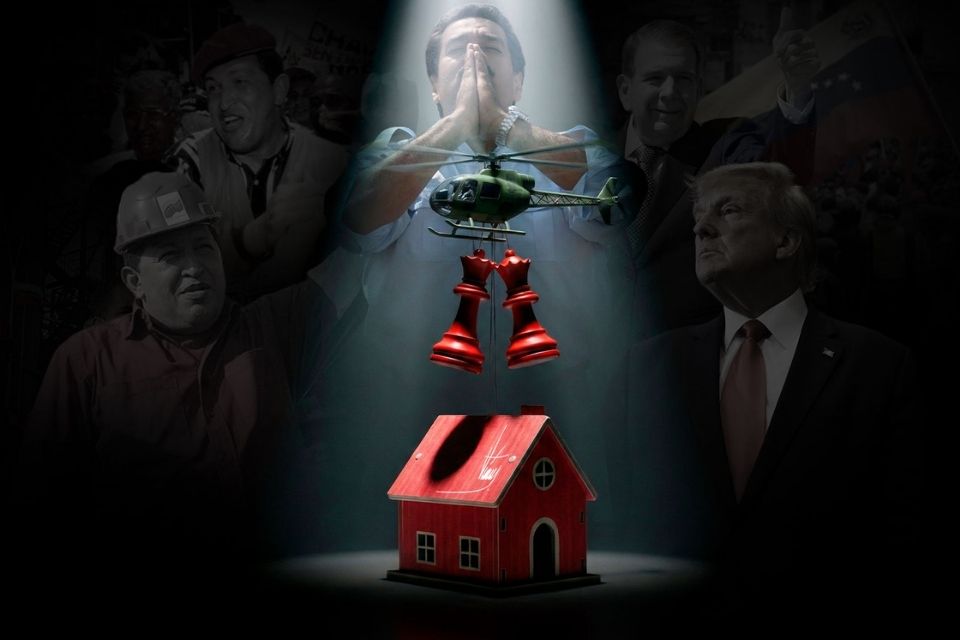
On January 3, 2026, the end of an era came not with a speech, but with the sound of helicopters over Fuerte Tiuna. Nicolás Maduro, the man who days before danced in front of the cameras, ended up escorted by North American soldiers to be transferred to a prison in New York.
There are many in the world who cannot explain how the intervention of a foreign power that openly declares that it is only interested in oil can be celebrated by millions of Venezuelans. But behind Maduro’s removal and the jubilant reactions, there are years of abuses by power against the people and a fight to rescue democracy that was systematically ignored by power and that only served to screw it even more, with the consent of an international community that preferred to say that this was a Venezuelan problem that Venezuelans had to solve.
I. The seduction of absolute power (1999-2003)
It all began with the controlled demolition of the social pact that had worked in Venezuela for 40 years. The Bolivarian Revolution came to power to disrespect the rules of coexistence with the rest of society. “Either you are with me or you are against me” was the slogan with which Chavismo advanced during its first years
- The “Constituent Assembly”: Hugo Chávez used his charisma to replace a Constitution that he declared “moribund”, eliminating through legal means the checks and balances of the State and justifying acts that already showed an authoritarian mood.
- The business of the Revolution: With Plan Bolívar 2000, the military began to manage cash without audits, discovering that politics could be a lucrative business.
- Social cornering: Control over the press and private companies justified the outbreak of April 2002 and the oil strike at the end of the year, which only served as fuel to radicalize the process.
II. The consolidation of the model (2004-2012)
After surviving a turbulent start politically, Chávez accelerated the dismantling of the State, financed by a barrel of oil at $100.
- political apartheid: The Tascón List separated the country between “loyalists” and “traitors.” Whoever signed against the president lost their right to public employment and suffered institutional extortion.
- Mass expropriations: Under the slogan “Exploit yourself!”, the State forcibly took over food, fertilizer, airline and hotel companies, most of the time without any compensation.
- The Boliburguesía: While the common citizen suffered shortages of basic products and gasoline, a new elite multiplied fortunes through the benefit of exchange control and briefcase companies.
- The end of free TV: In 2007, the closure of RCTV consolidated the communications monopoly. Faced with defeat in a referendum that same year, Chávez simply forced a new consultation in 2009 until imposing an indefinite re-election that he could not enjoy because terminal cancer prevented him from doing so.
III. The heir and the abyss (2013-2019)
After Chávez’s death in 2013, Nicolás Maduro inherited a country with torn seams. Without charisma, his administration was supported by a sophisticated repressive apparatus. At the same time, the country’s economy was sinking and citizens suffered the consequences.
- The imaginary of terror: The protests of 2014 and 2017 were responded to with torture, judicialization of non-existent cases and the use of paramilitaries called “colectivos.” Centers like “La Tumba” and “El Helicoide” became names feared by any citizen.
- End of institutionality: When the opposition won the National Assembly in 2015, Maduro used the Supreme Court to declare it in “contempt” and annul all of its laws.
- Complex humanitarian emergency: In these years, Venezuela went through the most acute period of its economic crisis, which led to a Complex Humanitarian Emergency (CHE). This phenomenon was not caused by natural disasters or traditional war conflicts, but by the collapse of institutions, hyperinflation and the fall in national production. Income poverty rose from 48% in 2014 to more than 90% in 2018 and extreme poverty reached over 60%, levels comparable to nations in sub-Saharan Africa. The deterioration of basic services such as electricity, drinking water, domestic gas and transportation aggravated multidimensional poverty.
- Isolation and exodus: In a context marked by repression, persecution, hunger and violence, more than 7 million Venezuelans fled the country, giving rise to the cruelest exodus the region has ever known.
- More political crisis: After fraudulent presidential elections in 2018, Maduro was unknown by 60 countries. The “Interim Government” of Juan Guaidó emerged, which never managed to take power. The political crisis led to more persecution, arbitrary arrests and massive electrical blackouts for days and up to a week in some regions that claimed lives.
IV. Kleptocracy and Final crisis (2020-2025)
In recent years, the regime focused on rent extraction and impunity.
- The small economic opening to alleviate the suffocation that occurred last decade especially benefited those close to the regime. With the consent of the State, the “enchufados” began to do business and take possession of economic sectors without competing or bidding. The economic gap in Venezuela was increasingly noticeable and propaganda efforts to normalize the situation could barely withstand superficial scrutiny.
- In 2023, it was revealed that $21 billion disappeared in cryptoasset transactions, causing an internal purge within Chavismo. The PDVSA-Cripto plot is still one of the most mysterious corruption episodes in the country’s history.
- On July 28, 2024, Venezuelans defied fear. Despite the obstacles, Edmundo González, with the support of the disqualified María Corina Machado, obtained an overwhelming victory that the opposition proved with minutes in hand. The fraud committed by the regime was so crude that Maduro lost his last traces of legitimacy.
- Repression became the main protagonist. At least 2,000 people ended up in prison for demanding respect for the popular will and fear settled in the Venezuelan psyche.
V. The Outcome: The Extraction (January 2026)
The intervention of US special forces ended the Maduro era, but has left the country in a “tragic realism.”
- The present and the four “presidents”: Delcy Rodríguez heads an interim presidency under the supervision of Washington, the former ruler is imprisoned in the United States. Edmundo González proclaims to the world that he is the “elected president” with the endorsement of the minutes of July 28 and Donald Trump ironically says that he is the interim president of the country.
- The wait: While Maduro awaits his trial in New York, Venezuelans, those inside and those outside, process the end of the nightmare on television.
Venezuela went from being the most stable democracy on the continent to a failed state, not due to lack of resources, but due to the systematic dismantling of the law in favor of absolute power.
*Journalism in Venezuela is carried out in a hostile environment for the press with dozens of legal instruments in place to punish the word, especially the laws “against hate”, “against fascism” and “against the blockade.” This content was written taking into consideration the threats and limits that, consequently, have been imposed on the dissemination of information from within the country.
Post Views: 155