Miami/“I grew up surrounded by the Cubanness of my home.” That phrase, said in the first person and without grandiloquent emphasis, is heard in the first seconds of Children of the diasporathe documentary by Cuban-Spanish filmmaker Lunes Oña. It is not a line thrown at random: it functions as a declaration of principles, as an access key to a work that is moved more by shared emotion than by academic discourse, and that understands Cuban identity not as a fixed territory, but as a state in permanent displacement.
From its first minutes, the documentary He makes it clear that he does not intend to explain the Cuban diaspora from statistics or slogans. Your bet is another: listen. Hear from those who grew up far from the Island, but never outside of it. To those who inherited a domestic Cuban identity, made of accents, foods, songs, silences and duels, while they learned to inhabit foreign countries. This tension runs through the entire footage and gives coherence to a choral work that brings together the testimonies of 21 young Cubans raised in nine different countries, from Scotland to Ecuador and Angola.
The structure of the documentary is simple, almost austere, but effective. Oña does not interrupt, she does not correct, she does not lead visibly. Let the voices chain together, creating an emotional cartography where individual stories end up drawing a collective experience. The protagonists speak of the house as a symbolic refuge, of the language as a non-negotiable inheritance, of the clash between school and home, of the weight of a national history that is transmitted even when it has not been experienced firsthand.
There is no victimization or idealization here. There is, however, an honest look at everyday uprooting, at the discomfort of not being “from here” or “from there.”
One of the greatest successes of Children of the diaspora It is his ability to avoid the pitiful or epic tone that usually dominates stories about the Cuban exile. There is no victimization or idealization here. There is, however, an honest look at the daily uprooting, at the discomfort of not being “from here” or “from there”, and at the fatigue of having to explain an identity that does not fit into immigration forms or simplified debates.
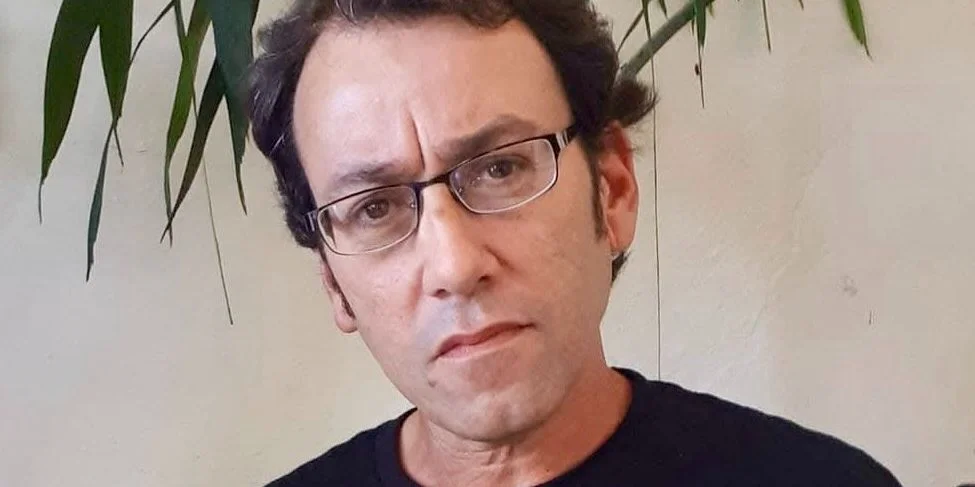
Oña himself embodies that hybrid condition that the documentary explores. Born in Madrid, raised in Panama and settled in Miami, the director talks about his experience as a creative starting point. “The concept came from my own life,” he confesses in one of the film’s most revealing moments. Children of the diaspora It is, in that sense, an exercise in expanded self-portrait: a personal search that finds echo in dozens of parallel stories. The result is an “emotional map of a fragmented identity”, as he himself defines it.
From a formal point of view, the documentary opts for a sober staging. There are no visual tricks or invasive music. The camera remains close, respectful, allowing the face and the word to be the true protagonists. This choice reinforces the feeling of intimacy and prevents the viewer from placing themselves in a position of distant consumption. Here you don’t observe the diaspora from the outside: you enter it.
The impact of the film has not remained in the emotional realm. Since its digital launch, Children of the diaspora It has exceeded 50,000 views on YouTube in less than two weeks, a significant figure for an independent documentary with an identity theme. The United States leads the audience with more than 29,000 views, followed by Spain, but it is especially revealing that more than 3,200 people in Cuba have managed to see it, despite blackouts and connectivity limitations. This data, more than statistical, is deeply political and emotional: the fruits of emigration returning, even if virtually, to the country that originated them.
In an ecosystem where access to culture is usually mediated by economic or geographical barriers, Oña opts for openness
The conversation generated on social networks and cultural spaces also confirms that the documentary has struck a sensitive chord. In comments and reviews an idea is repeated: many viewers do not simply feel represented, but recognized. That difference is key. The audiovisual does not talk “about” a group; speaks “from” a shared experience, even when the geographies are different. Hence it has also found an audience in Mexico, Canada, Brazil, Germany, France, the United Kingdom and Australia, among many other countries.
Before its online circulation, the film had a notable tour of theaters and cultural centers: the Tower Theater and the American Museum of the Cuban Diaspora in Miami, the Koubek Center, the University of Miami, Oxford College of Emory University in Georgia, the Cuban Cultural Center in New York and Casa de América in Madrid. This itinerary confirms its value not only as an audiovisual work, but as a cultural document capable of generating intergenerational dialogue.
The fact that the documentary is available for free on YouTube It is not a minor detail. In an ecosystem where access to culture is usually mediated by economic or geographical barriers, Oña opts for openness. This decision dialogues with the very spirit of the film: an identity that is shared, that is transmitted, that is not closed.
Children of the Diaspora is thus part of a recent tradition of Cuban audiovisuals that looks at exile without easy slogans or nostalgia, but with a deep emotional charge. It is a work that does not offer closed answers, but rather uncomfortable questions: what does it mean to be Cuban when you have never lived in Cuba? What is inherited and what is lost? How is belonging built in permanent transit?
At the end of the documentary, there is the feeling of having attended a necessary and long-delayed conversation. A conversation that does not seek consensus, but understanding. And in times of fractures, that is already a lot.