On the same day that the president of the United States, Donald Trump, received the Venezuelan opposition leader María Corina Machado at the White House, his spokesperson Karoline Leavitt publicly praised the cooperation of the president in charge of Venezuela, Delcy Rodríguez, emphasizing that “so far she has complied with all of Washington’s demands.”
The contrast marked a day of crossed gestures in the American capital, where the Venezuelan opposition sought support while the Republican Administration consolidated a rapprochement with the interim authorities that emerged after the capture of Nicolás Maduro.
Meeting at the White House
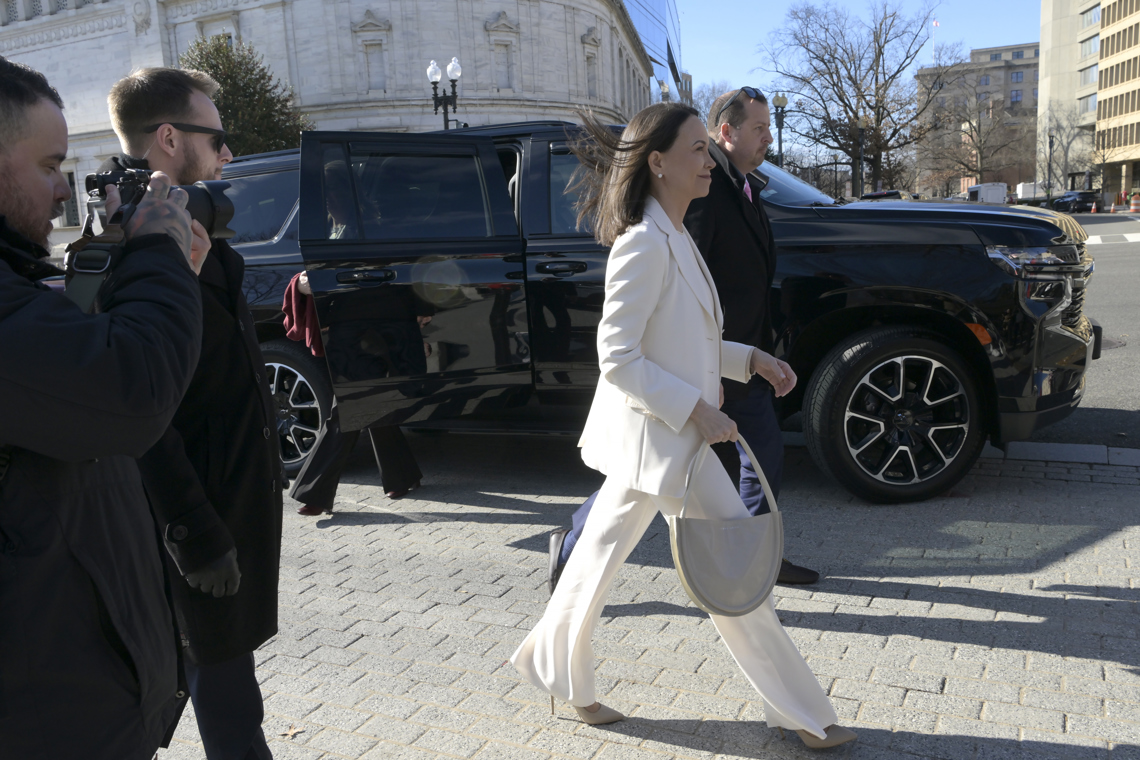
Machado, Nobel Peace Prize winner in 2025, arrived at the presidential residence this Thursday to share a private lunch with Trump.
The meeting, held in one of the White House dining rooms, lasted more than two hours and took place without access to the press. Upon leaving, the opposition leader limited herself to describing the meeting as “very good” and “great,” avoiding answering whether she had given the president the Nobel medal, a gesture that she had suggested in the past and that Trump had openly coveted.
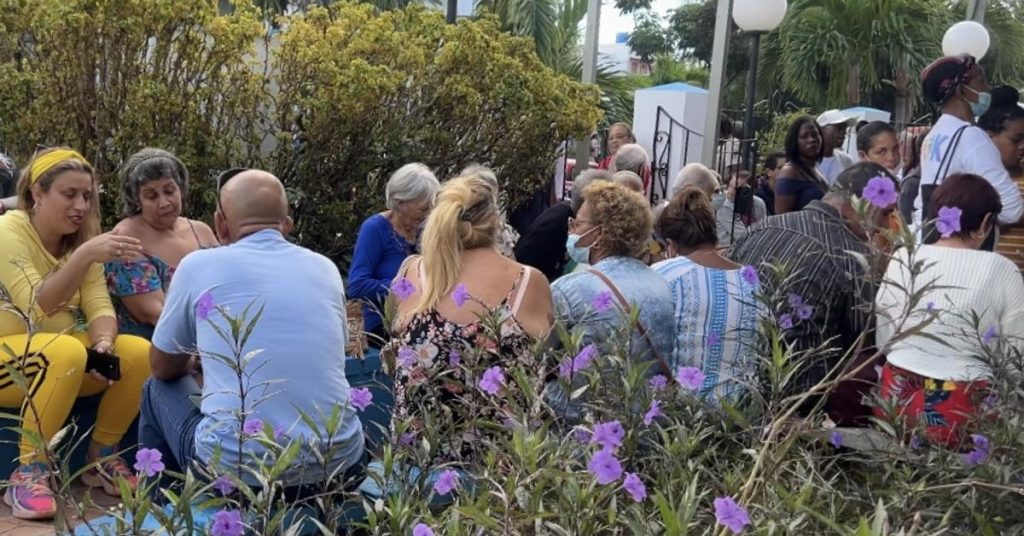
Before heading to the Capitol to meet with senators and congressmen, Machado greeted a group of Venezuelan protesters gathered in Lafayette Square.
“We are counting on President Trump for the freedom of Venezuela,” he stated to his followers, reinforcing the idea that his visit sought to strengthen ties with Washington at a time of uncertainty about the political future of the South American country.
According to Machado, President Trump is totally “committed to the freedom of political prisoners in Venezuela and all Venezuelans.”.
Meeting in Congress
The president in charge of Venezuela, Delcy Rodríguez, “is part of the criminal structure. She is a communist and part of the structure,” said María Corina Machado, during her meeting with Democratic and Republican senators at the Capitol.
“We are going to turn Venezuela into a free and safe country, and the strongest ally that the United States has ever had in this region,” he added, in statements collected by the Vente Venezuela platform.
Leavitt has praise for Rodríguez and coins his continuity in power
While the Venezuelan opposition leader was at the White House, spokeswoman Karoline Leavitt offered a press conference in which she described Rodríguez as “extremely cooperative” and “complying with all the demands” of the United States.
According to Leavitt, the interim president had facilitated the release of five U.S. citizens detained in Venezuela and had contributed to a $500 million energy deal.
“The president is pleased with what he is seeing and hopes that cooperation will continue,” said the spokeswoman, who insisted that the Trump administration valued Rodríguez’s willingness to work with Washington after the military operation that captured Maduro on January 3.
Trump maintains reservations about Machado
Despite the cordial meeting, Trump did not modify his critical view of Machado. Hours after the military operation that removed Maduro from Venezuela, the president declared that “it would be very difficult for her to be the leader” due to lack of internal support. That assessment, reiterated by Leavitt, remained unchanged. “It is a realistic assessment based on what the president has heard and seen from his advisors,” the spokeswoman said.
Machado has been a face of resistance in Venezuela for two decades. However, in its pragmatic vision, the White House plays the card of Rodríguez, Maduro’s former vice president, given her control of the military leadership and the irregular security forces.
An industrial engineer and daughter of a steel businessman, the opposition leader has followed a careful and sometimes pathetic course to avoid directly confronting Trump, to whom she even offered to share the Nobel Prize, a proposal rejected by the Nobel Institute. His strategy seeks to keep open the door to dialogue with Washington.