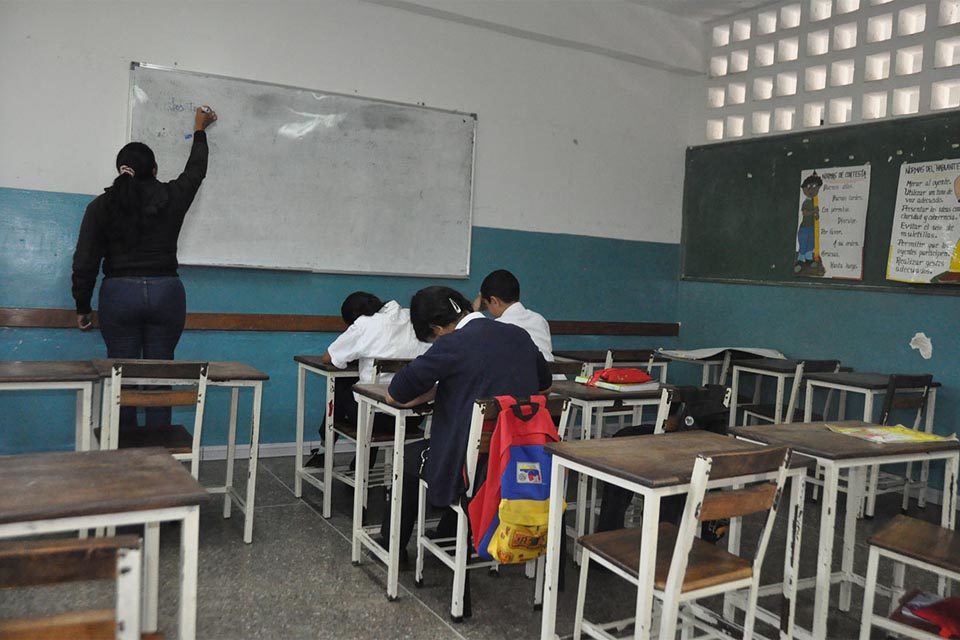
The educational system classes restarted on Monday the 12th January in Venezuela, almost 10 days after the United States military attack and in the middle of a state of emergency. While the Ministry of Education reports a school attendance rate of over 97%, teachers, unions and parents assure that attendance was medium to low, marked by fear, increased fares and the presence of security forces on campuses.
Government reports “normality” and high schooling
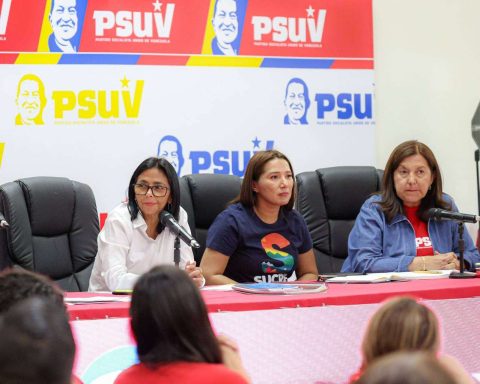
The Minister of Education, Héctor Rodríguez, assured that the return to classes in Venezuela after the December holidays occurred with an exponential increase in schooling, which exceeded 97% of enrollment in the public system.
“The remaining 3% is associated with situations of extreme poverty, catastrophic diseases or addictions, and for that we are designing specific plans,” said the official during the reopening ceremony of the school year, led by the acting president Delcy Rodríguez and broadcast by Venezolana de Televisión (VTV).
From a school in Catia La Mar, in the state of La Guaira, Rodríguez highlighted that the School Feeding Program (PAE) serves nearly 2 million children and adolescents daily, and assured that its expansion, estimated at 36%, has been “determining” for the growth of enrollment.
Classes in Venezuela under state of exception
The restart of classes in Venezuela occurs 10 days after the United States military attack, which led to the capture of Nicolás Maduro and the declaration of a state of external commotion, still in force.
“We are starting this second period of classes to end the school year with very good news,” said Delcy Rodríguez, who stated that the Executive prioritizes social areas and allocates oil revenues to them, despite the sanctions and international blockade.
On Sunday the 11th, The government also ordered the reinforcement of police patrols in the vicinity of educational centers.as part of a security operation for the return to classrooms.
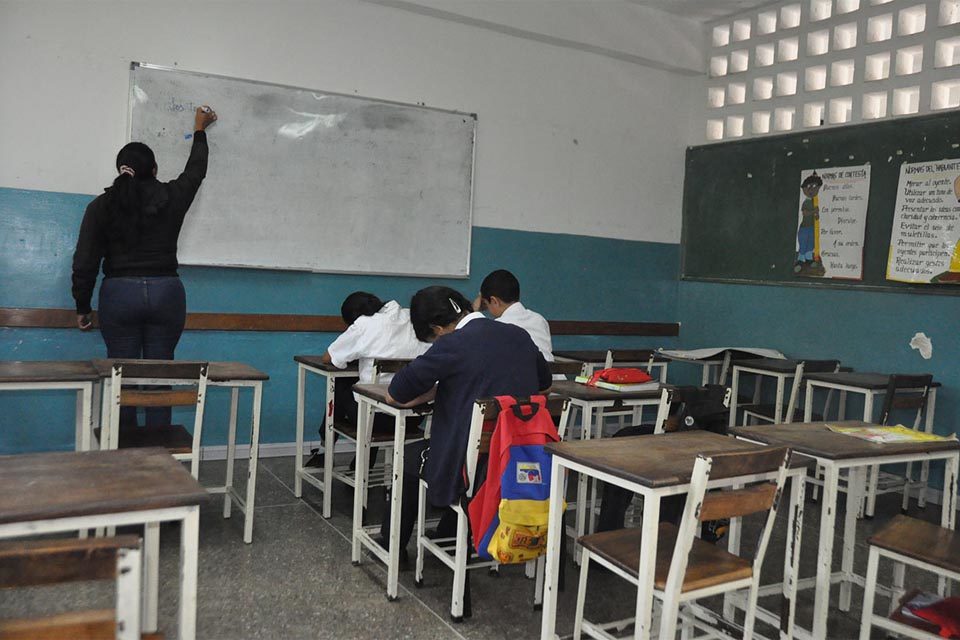
In contrast to the official version that points to normality in the classrooms, Parents, teachers and unions reported average to low student attendance on the first day of school.
Parents and representatives expressed fear of the police patrols announced by the government and the feeling of instability that still persists in much of the country, according to testimonies collected on social networks.
The president of the Fordisi union organization, Griselda Sánchez, pointed out that preliminary records point to an incorporation of only 30% of students in public schools, although close to 90% of teachers did go to their jobs.
In the private sector, according to the leader, attendance was around 60%.
The president of the Capital District Teachers Union, Edgar Machado, pointed out that The increase in fares aggravated the situation. “A teacher can spend almost a fortnight just on transportation to get to and from school,” he warned.
The NGO Cecodap warned that Venezuela does not have the minimum security conditions for a general return to classrooms and recalled that the rights of children and adolescents are not suspended in states of emergency.
The organization asked to avoid the militarization of school environments and demanded clear and differentiated guidelines for each educational community.