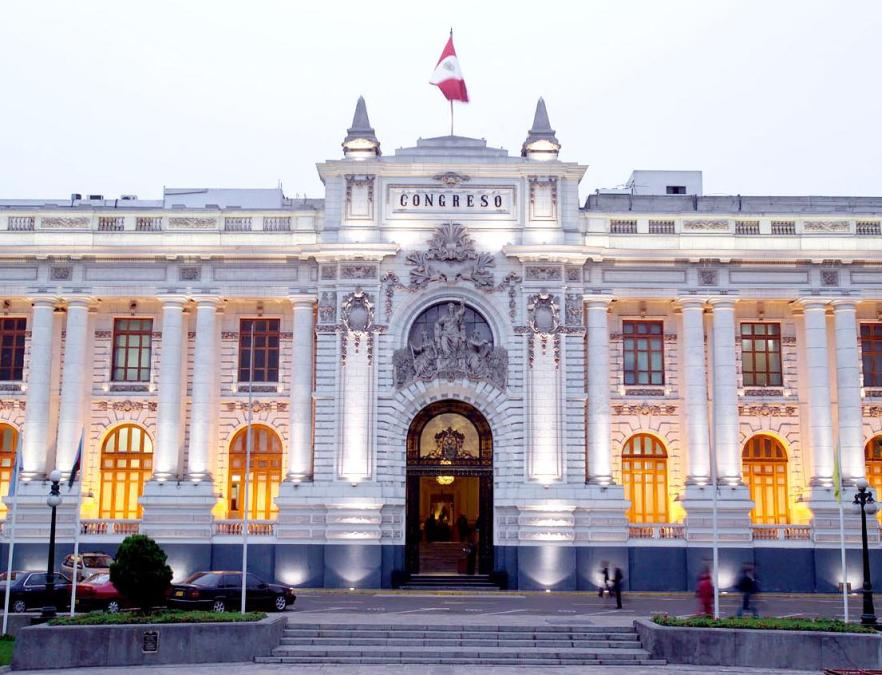
In recent days there has been talk of Petroperú’s “golden payrolls”, but this is not the only State institution that enjoys great benefits. According to data from the Private Competitiveness Council (CPC), in the Congress also a significant expense in salaries.
According to information from the CPC, to which it had access Peru21spending on payrolls and social obligations in Parliament increased 114% in 2025 when compared to what was recorded in 2021, that is, it grew by S/506 million, being the institution with the highest percentage increase.
Likewise, he revealed that the amount allocated per worker in the Legislature was S/241,717 last year, which meant a growth of 85% when compared to what was recorded 36 months previously. That is, in that period alone, spending has increased by S/111,218 per person.
The amount allocated per worker in Parliament is even higher than the S/176,955 registered in the National Elections Jury (JNE), or the S/158,090 of the collaborators of the Constitutional Court (TC).
What’s more, the information reveals that the annual expenditure per public worker in 2025 was S/62,007, a figure that, although it represented an increase of 24% compared to 2021, is still below what was recorded in the Legislature.
The CNP information also indicates that the Economically Active Population (EAP) in the national government registers a drop of 0.4% in four years. However, some sectors did register increases, such as the Public Ministry (22%), the Ombudsman’s Office (17%), and Parliament (15%).
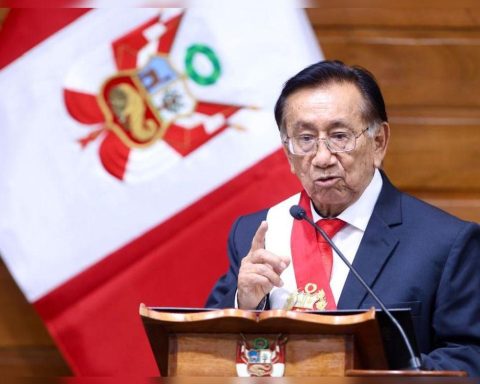
In this regard, the president of the CPC, David Tuesta, indicated that salaries in the public sector have increased, and even today they are 13% above what is recorded in the private sector. “This has no correlation with productivity,” he added.
“Is the public sector more productive than the private sector? Do citizens feel that this increase in expenses is consistent with the public services we have? No, on the contrary, what we find is worse services, more bureaucracy,” he highlighted.
For the former Minister of Economy and Finance, Congress is a clear example of the “privileges” that some public sector workers have.
WASTE IN RETURN
On the other hand, the CPC report revealed that, in 2025, the budget for personnel expenses and social obligations within the State amounted to S/86,610 million, that is, almost S/20,000 million more than what was recorded in 2021.
In that sense, David Tuesta explained that only during José Jerí’s administration has Parliament approved an increase in public payrolls for approximately S/1,000 million for the coming years.
In that sense, he questioned that although the president of the Council of Ministers, Ernesto Álvarez, indicated at the time that they would go to the TC when Parliament approves an opinion that generates spending initiatives, so far no actions have been taken.
“All the fragmentation that politics has suffered, this scenario of weak governments, the permanent vacancies, has generated a kind of search for survival by the Executive and this has occurred at the cost of handing over the fiscal coffers to the requests made by different parties,” he highlighted.
Receive your Perú21 by email or WhatsApp. Subscribe to our enriched digital newspaper. Take advantage of the discounts hereYo.
RECOMMENDED VIDEO