Madrid/The United States Government will not prevent Mexico from supplying oil to Cuba, Energy Secretary Chris Wright said in a interview with CBS.
Despite the words of President Donald Trump, who on Sunday he said on his social networks that “there will be no more oil or money for Cuba: zero”, the official stated that the policy will be to “allow” Mexico to continue bringing crude oil to Cuba.
In addition, another official told the network, under anonymity, that the Administration is not seeking the Government to collapse, but rather to “abandon its communist system.”
The United States considers, this official affirms, that a total cutoff or embargo on Cuba would be a “shock for the already overloaded and decrepit electrical network”, which maintains deficits of more than 1,500 megawatts (MW) almost daily. This same Monday, an impact of more than 1,700 MW was planned for peak hour and the main cause was, as usual, the lack of fuel, which left 1,020 MW out of service.
The United States considers, this official states, that a total cutoff or embargo on Cuba would be a “shock for the already overloaded and decrepit electrical grid.”
“Cuba’s economic condition is serious,” the official told CBS News, reminding that the island has been selling Venezuelan oil to China to obtain some liquidity. With the fall of Nicolás Maduro, after the US attack on January 3, there was total uncertainty about whether the US would allow crude oil to continue arriving.
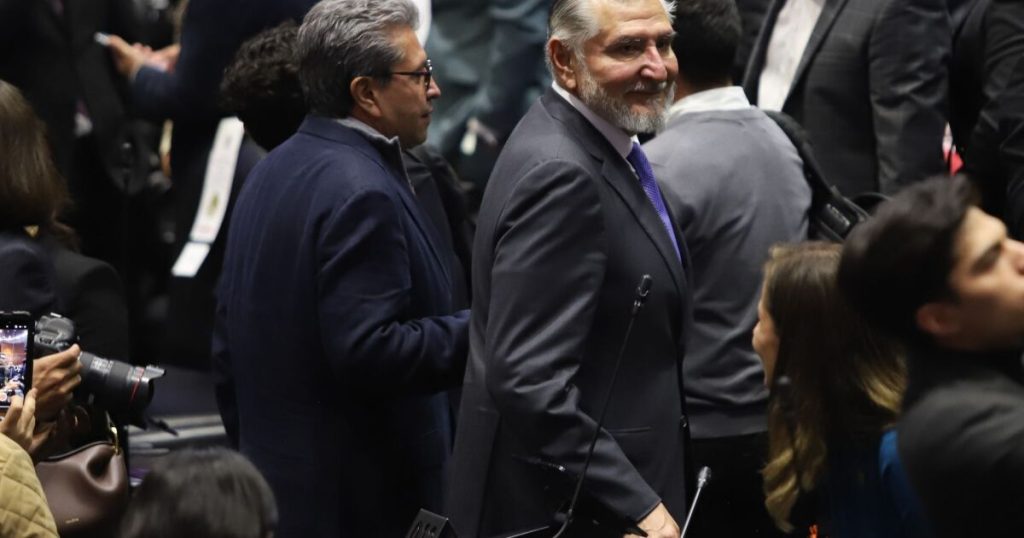
Mexican President Claudia Sheinbaum held a conversation this Monday with her American counterpart in which they discussed security issues, just days after Trump threatened to attack Mexican cartels on the ground. “We had a very good conversation with the president of the United States, Donald Trump. We talked about different topics, including security with respect to our sovereignty, the decrease in drug trafficking, trade and investments,” the president said in a message published on her social networks early in the morning.
Shortly after, asked during her morning conference, Sheinbaum offered herself as a “vehicle of communication” between the United States and Cuba, a topic that, as she herself clarified, was not part of the issues addressed.
“Obviously, if Mexico were to become a vehicle for communication between the United States and Cuba, then both parties have to accept it, obviously,” he said.
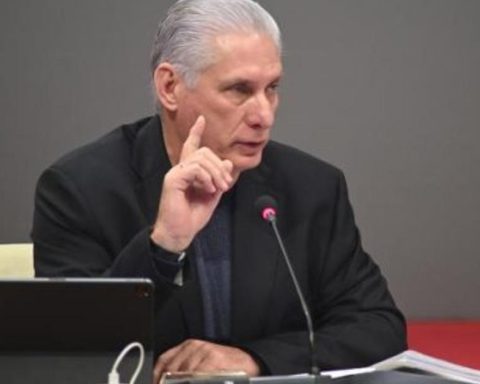
Trump had said on Sunday that there were talks with Cuba and that more would be known soon, but hours later, Miguel Díaz-Canel assured that there are currently no such contacts, except for the usual conversations that both governments have on immigration issues.
“We have always been willing to maintain a serious and responsible dialogue with the different US governments, including the current one, on the basis of sovereign equality, mutual respect, principles of International Law, reciprocal benefit, without interference in internal affairs and with full respect for our independence,” he added.
Not hindering oil shipments from Mexico could be a US mechanism to force negotiations in which, in light of the officials’ comments, the Cuban Government should open itself to eventual democratization and/or economic opening.
Not hindering oil shipments from Mexico could be a US mechanism to force negotiations in which, in light of the officials’ comments, the Cuban Government should open itself to eventual democratization.
This January 9, the oil tanker arrived at the port of Havana Ocean Mariner, with around 85,000 barrels of fuel coming from Veracruz in what is the first shipment of Pemex crude oil this year to Cuba.
In 2023, exports amounted to about 16,000 bpd of oil and derivatives (worth about $300 million). In 2024, the collaboration rose to 20,100 bpd, 20% more (although derivatives fell 18%), with a joint value estimated at 600 million dollars.
Between January and September 2025, Mexico supplied the Island – through the subsidiary of Pemex Gasolinas Bienestar – around 19,200 barrels per day to Cuba, distributed, according to official documentsin 17,200 of crude oil and 2,000 of derivatives. The expert from the University of Texas, Jorge Piñón, estimates that in the first 13 months of the Sheinbaum Administration (between October 2024 and November 2025) the average was 8,700 barrels per day.
Sheinbaum has stated on more than one occasion that all the governments preceding his own have supplied oil to the Island, including those of Enrique Peña Nieto or Felipe Calderón, and that the commitment to Cuba is “historical”, not ideological.