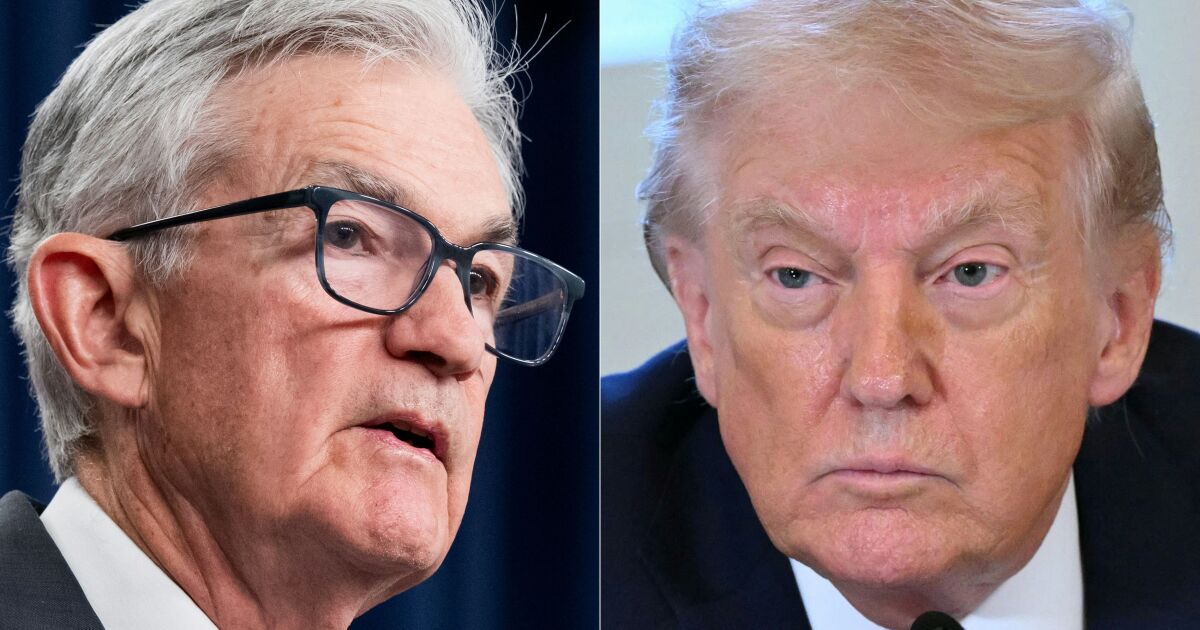
“The criminal investigation to the chairman of the Federal Reserve, Jay Powellis an unprecedented attempt of using procedural attacks to undermine that independence” of the governing entity of US monetary policy, noted the text that was also signed by other former senior officials in the economic area.
Among the signatories are the former heads of the Fed Alan Greenspan, Ben Bernanke and Janet Yellen.
Powell reported Sunday that the institution received a citation of the Department of Justice and framed that decision in President Donald Trump’s pressure campaign.
Powell said in a statement that the central bank received subpoenas on Friday related to his testimony before the Senate in June, in which he testified about a major renovation project at the Fed’s offices.
But he downplayed the possible threat of criminal prosecution over his testimony or the project itself.
“The threat of criminal charges is a consequence of the Federal Reserve setting interest rates based on our best assessment of what will serve the public, rather than following the president’s preferences,” Trump said Powell in the statement.
For Powell, the summons occurs in the midst of pressure from the US president on the institution, in order for the Fed to drastically lower interest rates, when inflation remains above its 2% objective.
Trump has regularly criticized Powell, calling him an “airhead” or a “moron.”
On Monday, White House spokeswoman Karoline Leavitt told Fox News that Powell “has shown that he is not very good at his job.”
“As to whether he is a criminal, that is an answer that the Department of Justice will have to find,” he said.
dangerous game
For David Wessel, a researcher at the Brookings Institution, “Trump realized that Americans were worried about the cost of living and is doing everything he can to show that he is looking to improve things,” particularly by promising lower interest rates.
If Trump manages to influence the Federal Reserve, the US economy could experience “more inflation, and the willingness of global investors to lend money to the Treasury will decrease to some extent,” Wessel told AFP, alluding to lower yields on the world’s leading debt securities.
It is a dangerous game, the expert estimates, to the extent that the markets, like his own Republican Party, can rebel.
This new turn has surprised investors, who generally value the reductions in reference rates but also the independence of the Fed, a pillar to combat inflation and unemployment, its two mandates.
On Monday, Wall Street opened lower and the dollar lost ground against other currencies. Gold and silver, safe haven values, reached new records.
Frictions between Republicans
Several Republican parliamentarians have begun to publicly express their disapproval of this situation, in a ruling party that until now has offered little resistance to the White House initiatives.
“The risks are too high to look the other way: if the Federal Reserve loses its independence, the stability of our markets and the economy as a whole will suffer,” wrote Alaska Senator Lisa Murkowski in X.
Like his colleague Tom Tillis, he warns that he will not endorse any of Donald Trump’s nominees for a position at the Fed while this matter continues.
The head of state must announce the name of the person he wants to succeed Jerome Powell, whose term at the head of the central bank ends in May.
Since his return to power in January, Trump has called for cutting benchmark rates to reduce borrowing costs and support growth. The tycoon considers fears about inflation unfounded.
He had appointed Powell to head the Fed during his first term in the White House.