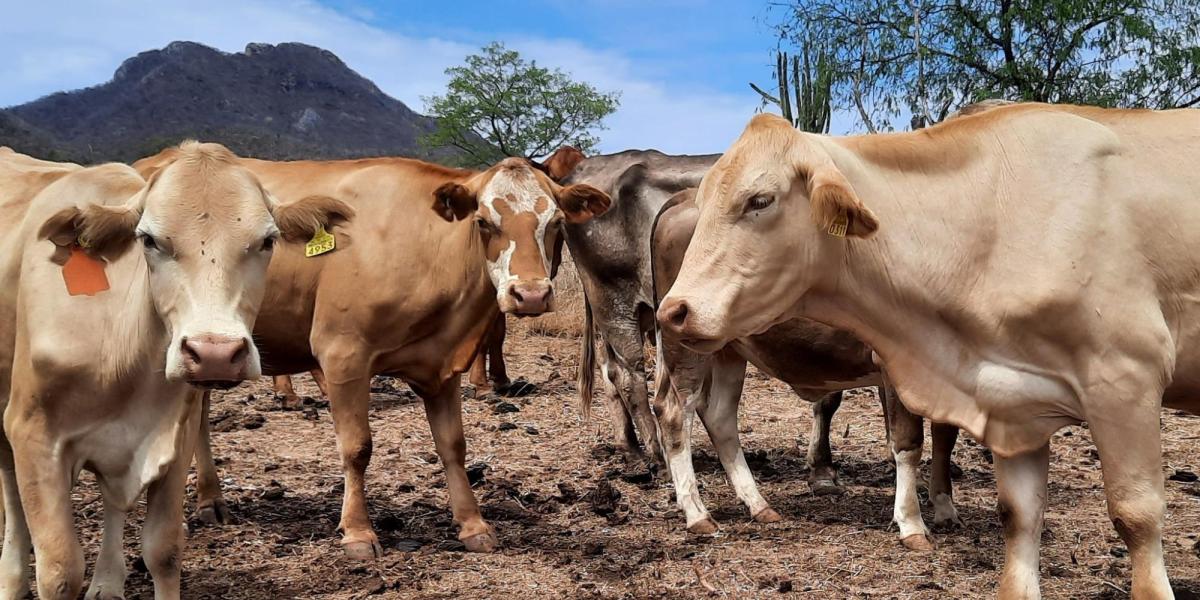
Federal and state authorities agreed on a new special action plan to contain and control the advance of the screwworm of cattle (GBG) in the center and north of Veracruz, as well as in Tamaulipas.
The agreement was sealed after working meetings headed by the Secretary of Agriculture and Rural Development, Julio Berdegué Sacristánin the company of the governor of Tamaulipas, Américo Villarreal Anaya, and the secretary of Agricultural, Rural and Fisheries Development (Sedarpa) of Veracruz, Rodrigo Calderón Salas.
The central purpose of these meetings, which included the participation of livestock leaders and the governing body of the National Agri-Food Health, Safety and Quality Service (Senasica), is implement immediate actions in the coming weeks. Key measures include strengthening control of livestock movement, forming 20 new field brigades totaling 170 people to expand coverage, increasing the release of sterile flies, and intensifying training and the number of traps. From Veracruz, the reinforcement of animal health verification points and the implementation of four mobile inspection modules was proposed.
Secretary Berdegué Sacristán emphasized that “the central pillar is the continuous strengthening of actions to stop the advance of the pest, the coordinated work between state and municipal governments, producers, Senasica and Agriculture is the basis of the GBG containment and eradication strategy,” he stated.
He explained that “the immediate task is to deactivate the cases that have recently occurred in Tamaulipas, as well as to reinforce preventive measures in said entity. In the north and center of Veracruz we work to contain the advance and direct it in a controlled manner towards the south of the state.”
For his part, Governor Américo Villarreal recognized the joint effort and was optimistic about the plan. The president called on producers to redouble their commitment: “Let us sustain the effort so that this is maintained and once again give economic opportunities to those who work in this important field, which is a vocation of Tamaulipas tradition,” he said.
The chief director of Senasica, Javier Calderón Elizaldeadded that the plan contemplates strengthening the control of mobilization with itinerant routes in San Luis Potosí, Tamaulipas and Veracruz, with support from the National Guard. Finally, Secretary Berdegué concluded that proactive collaboration will be the key to success, assuring producers that “it is possible to stop the advance of the GBG, working together it is possible to overcome this challenge and strengthen the livestock sector.”