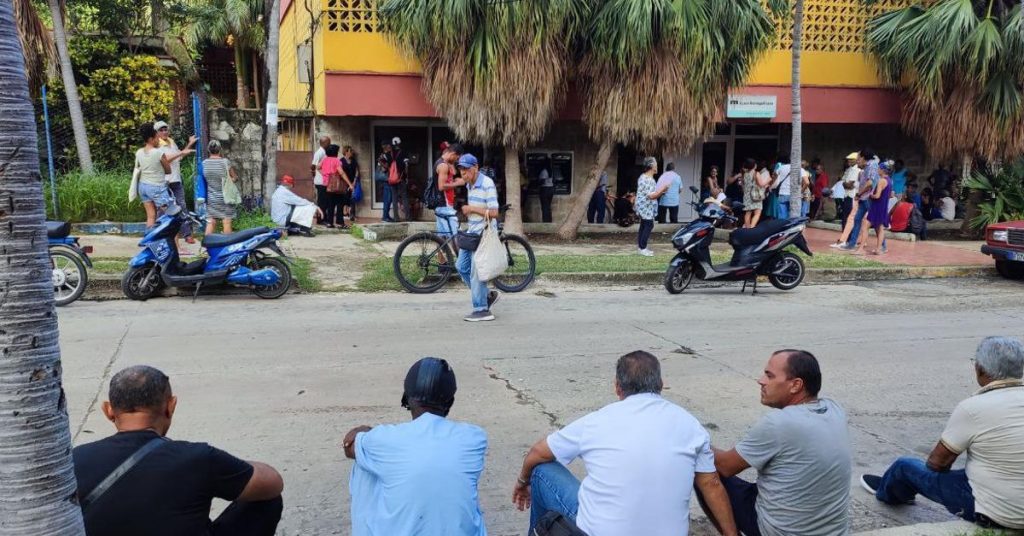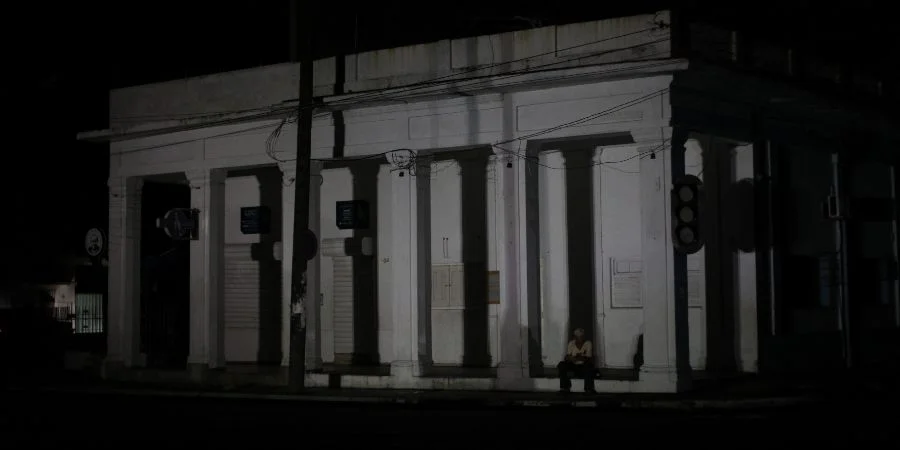
The temporary reduction in blackouts at the end of December has been perceived by many Cubans as a momentary relief.
LIMA, Peru – The energy crisis in Cuba continues to intensify this January 10. According to the daily report of the Electrical Union (UNE), the National Electrical System (SEN) once again faces a critical generation deficit that will cause prolonged and simultaneous outages in more than half of the country.
According to official information, for the hours of greatest demand—afternoon and night—an availability of only 1,605 MW is expected, compared to an estimated demand of 3,280 MW, which implies a deficit of 1,675 MW. Consequently, the UNE estimates an impact of up to 1,705 MW, which is equivalent to simultaneous blackouts in about 52% of the national territory.
The report indicates that six thermoelectric units They remain out of service due to breakdowns and maintenance, including key plants such as Felton, Mariel, Santa Cruz and Cienfuegos.
Added to this is the paralysis of 96 distributed generation plants due to lack of fuel, as well as the unavailability of electric plants due to lack of diesel and lubricants.
The temporary reduction in blackouts at the end of December was perceived by many citizens as a momentary relief. However, the almost immediate return of the cuts has reinforced the feeling that it was a temporary adjustment and not a structural improvement of the system.
This perception is reflected in the comments of Cuban users in the official publication of the UNE, where fatigue, indignation and distrust predominate. “The Maduro effect,” says Internet user Yuri Paneca in reference to the capture of the Venezuelan dictator and the loss of Chavista crude oil.

The energy crisis on the Island is serious. The Electrical Union has recognized that in Havana unscheduled outages often exceed nine hours a day, while in several provinces homes have only two to four hours of electricity each day. Added to this are successive failures of aging thermoelectric plants that have caused repeated national blackouts in less than a year, in the midst of the worst economic crisis in decades.