Havana/The recent capture of Nicolás Maduro has once again put the close and opaque relationship between Caracas and Havana in the spotlight. In this context, a source with access to the documents from the trial against Alejandro Gil Fernández – former deputy prime minister and former Minister of Economy of Cuba – has provided 14ymedio details of the provisional conclusions of the Attorney General’s Office (FGR), where Gil was accused, among other crimes, of espionage in favor of the United States intelligence services, with alleged strategic damage to the relationship with Venezuela.
According to the report signed by Edward Roberts Campbellchief prosecutor of the Directorate for Combating Corruption and Illegalities, Gil would have delivered to “an unidentified agent, but presumably belonging to the CIA,” classified information that compromised “Venezuelan national security.” The document maintains that it was sensitive data on political, economic and military cooperation between Cuba and the Maduro regime.
Among the leaked information are economic transactions between Cuba and Venezuela, the location of financial reserves, commercial agreements linked to oil exchange and the sending of Cuban medical brigades, as well as triangulation schemes of financial operations and names of foreign agencies involved in the final destination of Venezuelan crude oil.
The accusation also included the support of the Cuban Government in terms of cybersecurity and counterespionage to the Venezuelan intelligence services, and personal data of Nicolás Maduro himself. According to the source, Gil would have provided information about the president’s family, his home, his assets in Venezuela and abroad – including Cuba -, including very sensitive details about the Chavista leader’s security ring made up of several dozen Cuban soldiers belonging to the Ministry of the Interior and the Revolutionary Armed Forces.
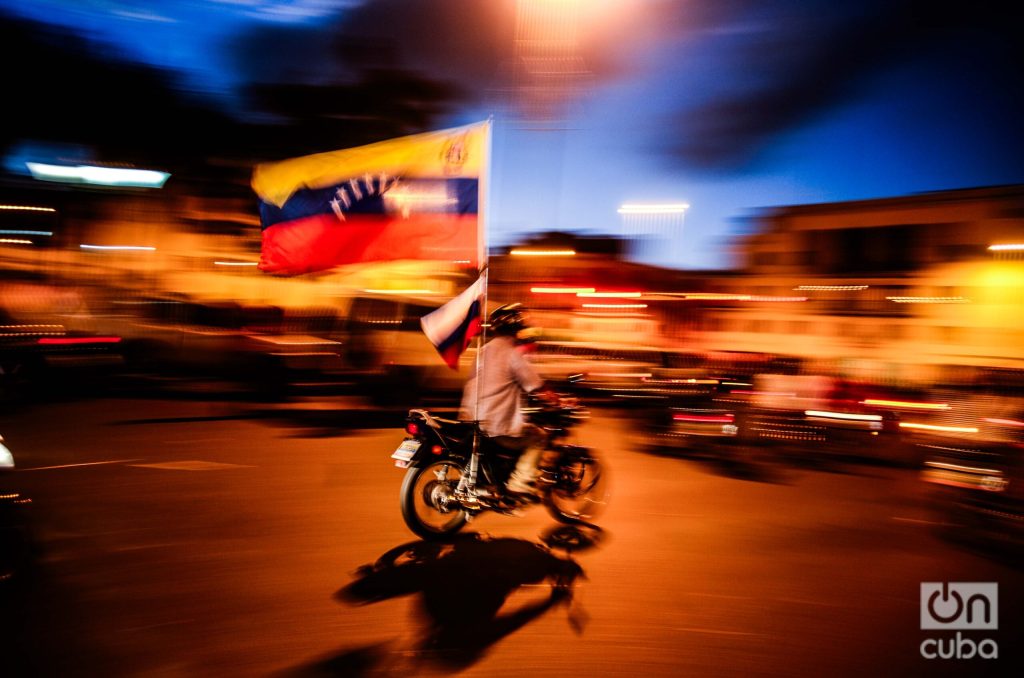
/ X / Nicolás Maduro
“These acts are considered a betrayal of the trust placed in him by the Cuban Government and, specifically, by State Security,” said the accusation, which describes the conduct as espionage in favor of the US intelligence services, with the aim of “undermining Venezuelan sovereignty and overthrowing its legitimate president through a coup d’état.”
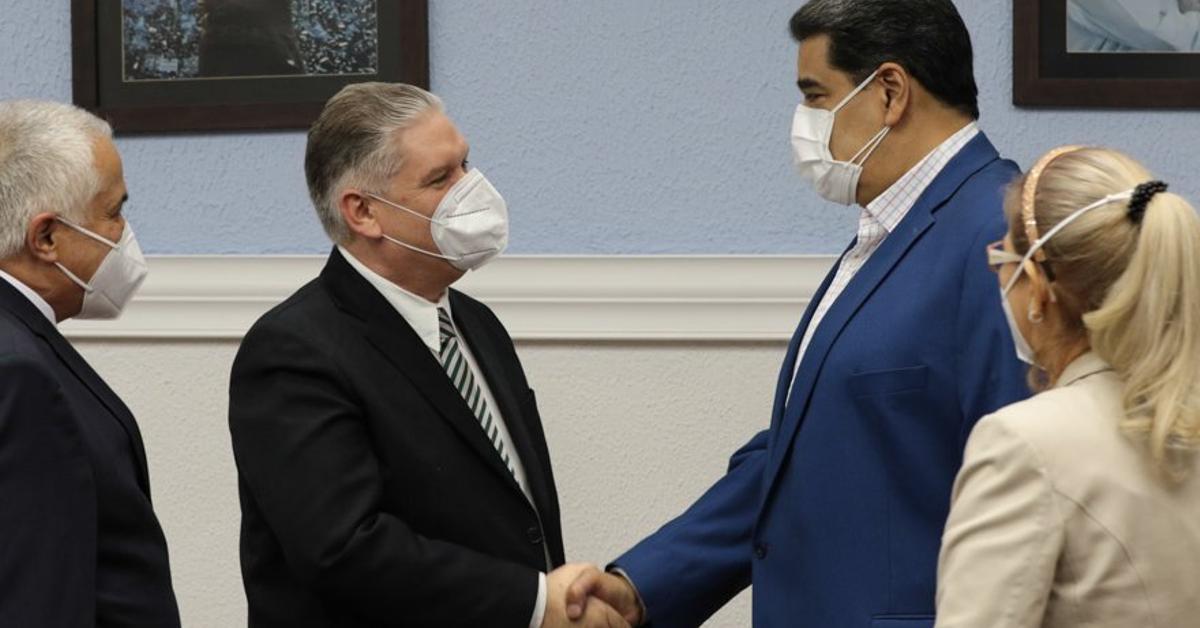
However, the very development of the case reveals contradictions that are difficult to ignore. According to the testimony to which he had access 14ymedioit was initially planned that it would be Miguel Díaz-Canel who would meet with Maduro in August 2022, as part of a presidential tour of several countries in Latin America and the Caribbean. However, it was State Security that recommended that Gil attend instead.
“It was argued that, due to his performance and the high trust placed in him as a cadre of the Revolution, he deserved that meeting,” explains the source, who adds that the visit should be used for meetings with other high-ranking Venezuelan officials, including the Minister of Economy. The decision is striking, given that a meeting between heads of state is not usually delegated to a sectoral minister.
State Security had been investigating Gil for at least four years, which would place suspicions since 2020
The source clarifies that he only had access to the prosecutor’s accusation and that he does not know if the alleged espionage on the Venezuelan matter was proven during the trial. “I cannot say whether these events were brought to trial with conclusive evidence or whether it was proven that Gil handed over sensitive information about Venezuela to the CIA,” he says. Nor does he have details on the basis of the sentence to life sentence issued by the Supreme Court.
The chronology of the case reinforces the doubts. Official programs such as Reasons for Cuba They have maintained that State Security had been investigating Gil for at least four years, which would place the suspicions since 2020. Even so, in August 2022 Gil met with Maduro at the Miraflores Palace, a meeting that was widely reported by the official Cuban and Venezuelan press, and publicly celebrated by the Chavista president himself on social networks.
Months later, in November of that same year, Gil accompanied Díaz-Canel on a tour of China, Algeria, Russia and Türkiye. In July 2023, he was also authorized to travel to New York as the sole representative of Cuba before the UN General Assembly. “If there were solid signs of espionage, these decisions do not hold up from a counterintelligence point of view,” the source points out.
The trial of Alejandro Gil, far from clarifying the facts, reveals a plot where Venezuela, Maduro and Cuban security are intertwined in a story full of gaps. Today, after the capture of the Chavista leader, these gaps weigh more than ever. Because if Gil was a spy, he was so with an inexplicable freedom; and if he was not, his conviction reveals how far a system can go when it needs a visible culprit to protect those who operate at the heights of power.