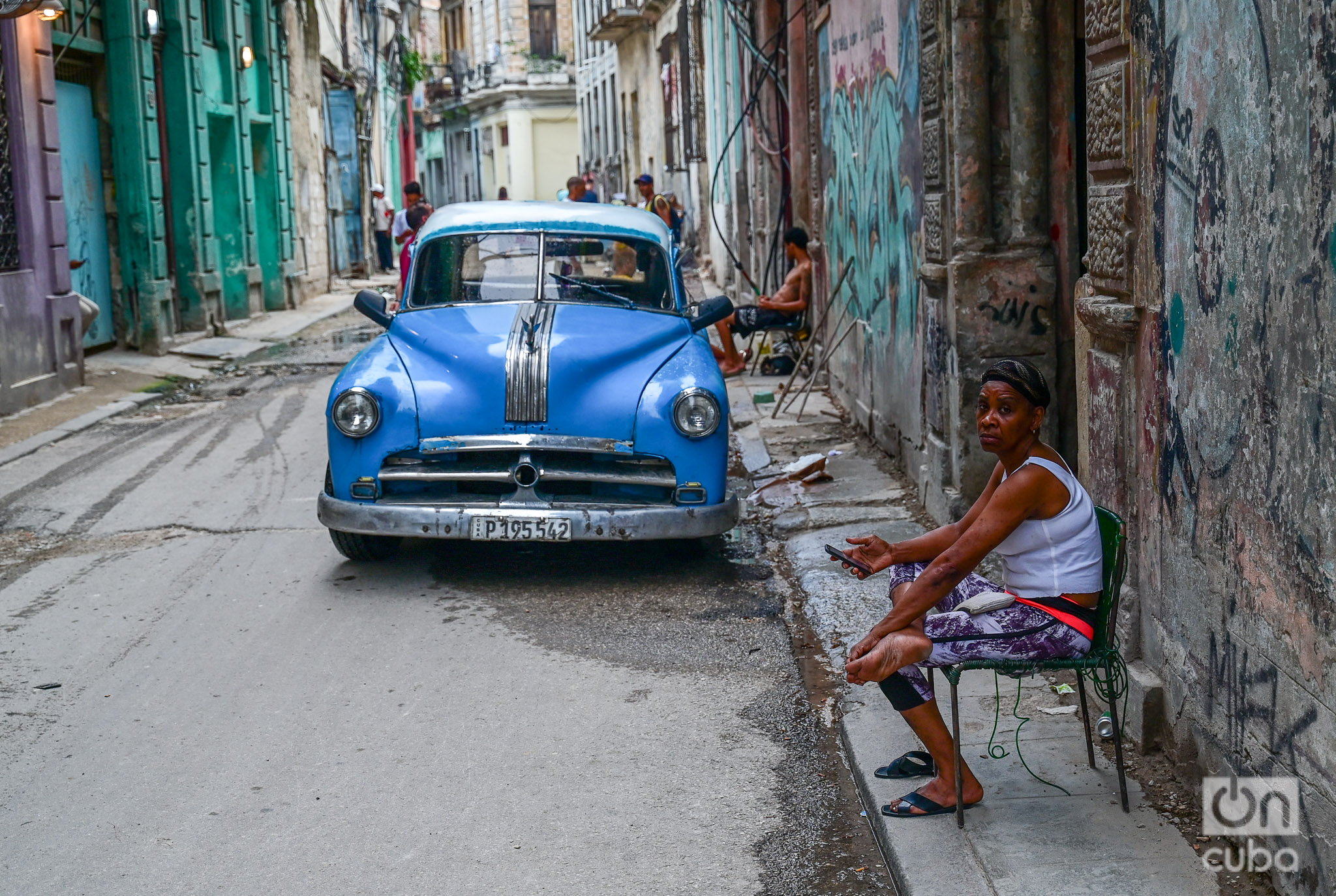
In light of recent events in Venezuela, Cuba today faces a clearer and more urgent dilemma than at any other time in recent decades: open itself decisively and credibly to economic reform, institutional modernization and broader civic participation, or continue down a path of managed deterioration that reduces, day after day, its margin of decision and exposes it to external dynamics that are increasingly less controllable. The real risk is not change; The real risk is to continue putting it off until its costs exceed any internal driving capacity.
What happened in Venezuela, beyond the accusations against the leadership and the widely questioned electoral results, responds to a prolonged accumulation of abuses of power, structural corruption and a conception of the State that confused authority with impunity. Governance was replaced by imposition and legitimacy by coercion, under the illusion that absolute control could replace institutions. None of this implies a validation of solutions imposed from outside, but rather a warning about the inevitable costs of ignoring the limits that even the most closed systems end up facing.
The Venezuelan experience demonstrates something essential: political systems rarely collapse suddenly; They empty slowly. First the real economy is eroded, then citizen trust and, finally, institutional capacity. When that deterioration reaches a certain threshold, the options narrow drastically. Decisions stop responding to a national roadmap and begin to be determined by external emergencies, accumulated pressures or humanitarian crises. At that point, sovereignty ceases to be an operating principle and becomes a defensive argument.
In the case of Cuba, the discussion no longer revolves solely around whether that threshold has been crossed, but rather around the consequences of continuing to act as if the debate could still be postponed indefinitely. For many, the signs of institutional exhaustion and the rupture between power and society indicate that this point was long behind us. For others, there are still increasingly narrow margins for a course correction from within.
What is truly decisive is that this margin is neither neutral nor reversible due to inertia. It erodes with each postponed reform, with each attempt to manage the crisis instead of transforming it and with each sign that paralysis can present itself as stability. The regional experience is clear: when this ambiguity continues, control stops being a decision and becomes an illusion, and the consequences end up being defined outside the internal political space.
This is where the Venezuelan mirror takes on a character of strategic urgency. It is not about extrapolating scenarios or predicting outcomes, but about understanding that the indefinite postponement of substantive reforms does not preserve control: it weakens it. Each year without credible changes reduces the ability to implement them on one’s own terms. Each cosmetic reform deepens distrust. Each institutional closure that prevents debate postpones a discussion that will inevitably return, but under more adverse conditions.
The institutional modernization that Cuba needs is not a rhetorical gesture or a formal concession, but rather the admission that the current institutional design is exhausted. More than a doctrinal discussion, the Cuban dilemma is practical: a model that does not solve the country’s central problems is no longer operational. Persisting in its defense as if time had not passed does not protect the country, it exposes it.
In this context, the Cuban diaspora is not an external actor or a political threat, but rather an intrinsic part of the nation and a strategic asset that is currently underutilized. Its human, economic and civic capital is decisive for an orderly institutional modernization. Persisting in ignoring their discontent, frustrations and sense of not belonging undermines any serious attempt at reform and reduces the country’s sustainability.
The international environment is not neutral either. Powers act according to interests, not according to affinities or historical nostalgia. When one country reduces its internal decision-making capacity, others fill the void. Venezuela clearly illustrates how the prolonged absence of timely reforms ends up shifting the center of gravity of decisions. The debate stops being what changes to make and becomes who manages them.
Times have changed. The strategic priority of the United States has retreated to the Western Hemisphere and Cuba is once again at the center of that attention. Ignoring that context is not a sign of firmness, but rather a sign of disconnection. Adapting to that reality, engaging in intelligent dialogue and deciding from within is today a governance necessity, not a political concession.
This is not gratuitous scaremongering, but rather recognizing that the context has changed substantially. Political time has been shortened and strategic opportunities are not renewed indefinitely. Cuba still retains the ability to influence the pace, scope and nature of its transformations, but that margin is rapidly narrowing. Every day of immobility, every week of delay and every month of postponed reforms increases the probability that events will be defined from outside and not from the country’s own institutions.
Cuba still has time to choose. But time, when it is managed instead of used, ends up imposing its own conditions. Venezuela demonstrated that ignoring reality and systematically deferring necessary decisions does not preserve autonomy or stability; It erodes them irreversibly. In politics, as in history, the greatest costs usually fall not on those who decide to change, but on those who decide not to.
No system retains indefinitely the ability to decide whether to confuse control with governability.