The trials of civilians and military personnel accused of the coup d’état plot that culminated on January 8, 2023, represent a historic milestone for Brazil. And the accountability of those who participated, both in the acts and in their planning, represents, according to jurists and historians, something relevant to the resumption of democracy, in a country with a history so full of coups.
Historian at the University of Brasília (UnB), professor Mateus Gamba Torres evaluates the trial of coup plotters as something unprecedented in the history of Brazil, a country full of not only attempts, but effective coups against the Democratic Rule of Law.
According to the professor, there is a question of political and legal practice in the Brazilian republic, in order to absolve attempts or executions of coups d’état. In many cases, recalls the historian, “the coup plotters did not even go to trial”.
According to Mateus Gamba, the recent case against those who attacked the country’s democracy therefore represents a break with a historical, political and legal practice, in a country with a long history of institutional disruptions.
“Coup attempts in Brazilian history are actually very common, and have been going on since the founding of our Republic, which was also a coup d’état, on November 15, 1889,” said the UnB professor.
Since then, he adds, the Brazilian military “holds the right to, when they consider it necessary, intervene in the country’s political life”.
“They do this as if they were a moderating power; a pendulum of the Republic. But there was never, in Brazilian legislation, any type of deliberation for this”, he says.
Historical landmark
Criminalist and professor at the Faculty of Law of São Bernardo do Campo, Fernando Hideo says he has no doubt that the trial of those who planned and carried out the coup acts that culminated on January 8, 2023 represents a historic milestone for the country.
According to the jurist, by prosecuting civilians and military personnel involved in the coup plot, Brazil broke the historical tradition of selective impunity that has always accompanied authoritarian episodes in the country.
“For the first time, in a clear and institutional way, the Brazilian State faced an organized attempt at democratic rupture. Without corporate concessions, without prior amnesties and without oblivion pacts”, says the professor.
He reiterates the position of historian Mateus Gamba, in the sense that Brazil is a country marked by coups, barracks and negotiated transitions. “But this judgment affirmed something essential: democracy is not just a speech, but a regime protected by the Federal Constitution and institutions,” said Hideo.
>> Listen to a special article on Radioagência Nacional
Military dictatorship

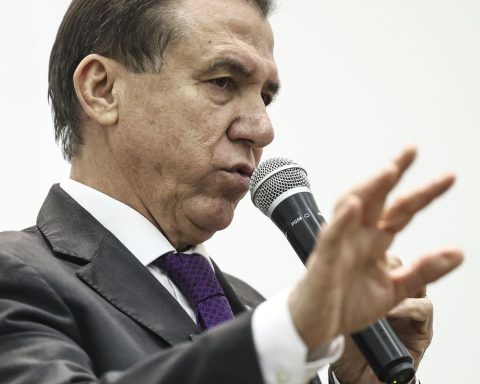
Jurist Lenio Sterck. Photo: Gabriel/Disclosure
Constitutionalist and Constitutional Law professor at Unisinos Lenio Streck recalls that “it wasn’t long ago that Brazil went through a military dictatorship”, adding that, in historical terms, 30 or 40 years is a very short time.
“Our country has already recorded 14 coups and attempted coups since the establishment of the Republic. The big question now is to see if we know how to interpret the past, understand it and, thus, look to the future”, he adds.
Learning from History is exactly the expertise of Gamba Torres, a researcher who has developed several works on civil and military dictatorships.
“We know that, when the military intervened, it was never for the good of Brazil. It would be very naive to say that this would have been done for the good of Brazil. It is just speech. It is not and was not for the good of Brazil, nor for the good of the country”, says the historian.
“In fact, every coup given in Brazil was to prevent a necessary change in some type of government, as was the case now after being defeated in the elections”, he explains, referring to the election that elected Luiz Inácio Lula da Silva president for the third time.
The result of the trial that condemned civilians and military personnel for the coup attempt strengthened, according to the historian, Brazilian institutions, in addition to showing that authorities or simple citizens who attack democracy will be punished.
“The importance of us taking military and civilian personnel to court is precisely to show that no one is above the Constitution. Be it a former president, general, minister or someone who has a lot of power, no one can violate the Constitution,” he told Brazil Agency the professor at UnB.
Accountability
For criminalist Fernando Hideo, the accountability of these people who “tried to subvert the democratic order and depose a legitimately elected government” is something that reaffirms two fundamental democratic pillars: equality before the law and the submission of the Armed Forces to civil power, a structuring principle of the Democratic Rule of Law.
“When armed agents, financiers, political organizers and material executors respond in court for their actions, the legal system sends an unequivocal message that institutional ruptures are not political divergences. They are crimes against democracy”, he assesses.

Criminalist Fernando Hideo. Photo: Marcos Silva/Disclosure
He adds that, by carrying out these trials, the Brazilian State “broke with the tradition of impunity that has always accompanied attacks on the democratic order, in addition to clearly stating that positions, ranks, political influence or economic power do not function as shields against accountability”.
“Perhaps the most important point is to understand that these judgments are not driven by revenge, but by institutional memory, responsibility and commitment to the future”, he added, remembering that democracies do not live only on elections, but survive and become stronger when they react institutionally to attempts at rupture and hold those who tried to destroy them accountable.
Message
According to Hideo, the conviction of those involved in the coup plot sends an unequivocal message to the current and future political classes: “Brazilian democracy is no longer a space for authoritarian experiments tolerated by time or institutional oblivion”.
For constitutionalist Lenio Streck, the message given to the political classes has not yet been finalized, despite the symbolic importance of this process against the coup adventures.
“The crossing is not complete. What I’m going to say is regrettable, but, looking at the behavior of the Brazilian Parliament in recent months, we see that we are living in a kind of permanent state of coupism”, warns the jurist.
“Every day there are new attempts to change legislation, whether with a reduction in sentences, dosimetry or amnesty, or with attempts to impeach STF ministers and things like that”, he added.
In this sense, according to him, the Supreme Court is being criticized much more for its successes than for its mistakes.
“When someone makes a strong criticism of the Supreme Court, one has to ask themselves whether Parliament has fulfilled its role in defending democracy. It is the STF who has defended democracy. As long as the STF has to play this role, as it did in relation to January 8, it will be criticized much more for its successes than for its mistakes”, he says.
Parliament
In the assessment of Mateus Gamba Torres, by enabling any reduction of sentences or amnesty for those convicted of January 8th, the National Congress will demonstrate the weakness of Brazilian institutions, including the Parliament itself.
“I really hope that the National Congress does not make the closed amnesty possible, especially for the leaders of the coup attempt, if President Lula vetoes the dosimetry project. I hope that the National Congress comes to its senses, especially because this attacks the National Congress itself, which is always one of the first to be shut down in anti-democratic adventures”, he told Brazil Agency the historian.
Judgment at the STM
For Lenio Streck, the big challenge, from now on, is to make the convicted soldiers lose their ranks. “This long journey is not over yet. The Superior Military Court’s judgment is still pending.”
The jurist says he is “very concerned” about the possibility of this trial being delayed until 2027. “This would make the population and civil society think about the possibility of there being a kind of arrego or ‘passapanismo’, sparing senior officers from losing their rank. I don’t want to believe that.”