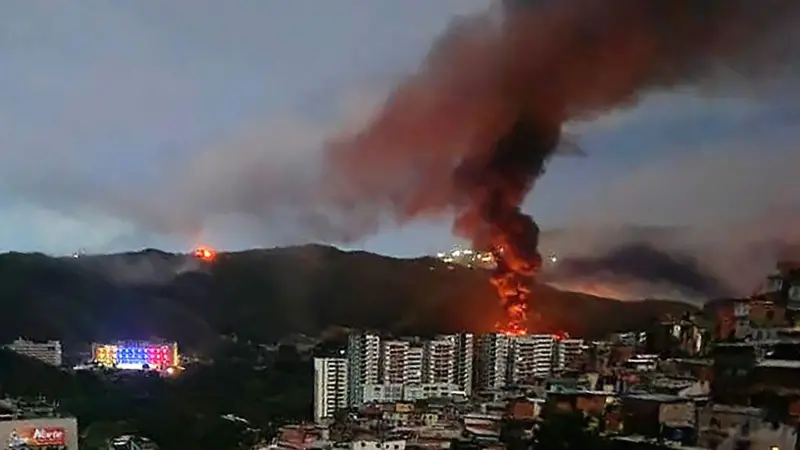
Four days after the attacks that the United States launched against Venezuela, the South American country still does not know how many victims and what material damage was left by the unprecedented military operation which ended with the capture of Nicolás Maduro and his wife, Cilia Flores.
In the last few hours, military authorities have reported that more than twenty Venezuelan soldiers died during the bombings that occurred in the early hours of January 3 against military and government positions in Caracas and at least three other states.
For her part, the president in charge, Delcy Rodríguez, decreed seven days of national mourning in honor “of the young martyrs who gave their lives in the defense of our country.”
“Honor and glory to the young people, women and men who died, who gave their lives defending Venezuela, defending President Nicolás Maduro,” the country’s new ruler declared this Tuesday to the public television station Venezolana de Televisión (VTV) in her first public act after her swearing-in.
Meanwhile, civil organizations raise the number of dead soldiers to 42, while local media also report two dead civilians and dozens of wounded.
Vacation interrupted
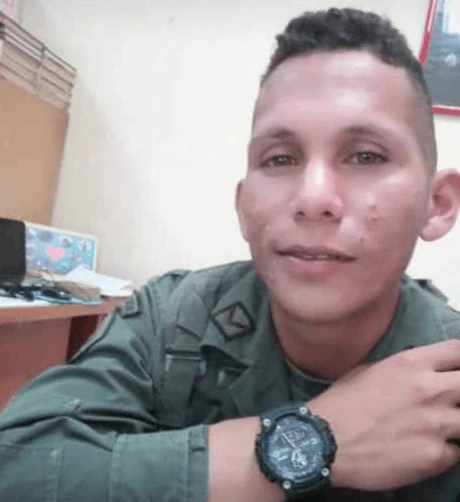
Sergeant (Aviation) Pedro Miguel González Escala, 27, was one of the uniformed men who lost their lives in the attacks.
The officer, a native of the plains town of Zaraza (Guárico), about 333 kilometers southeast of Caracas, was assigned to the 398 Portable Air Defense Missile Group Division General Carlos Luis Castelli, a unit belonging to the Comprehensive Aerospace Defense Command (Codai), according to the official Venezuelan newspaper Últimas Noticias.
On December 28, González received a call from his superiors asking him to interrupt his Christmas vacation and return to his duties.
“I hugged him that day and asked him when he was returning to Zaraza. ‘Suck him old man, I don’t know when he’ll be back,’ he told me (…) (on January 2) he arrived in Caracas in the afternoon and called his mother,” Pedro Antonio González, the officer’s father, told the newspaper.
The sergeant was immediately sent to Fort Guaicaipuro, about 60 kilometers south of the Venezuelan capital, which was also the target of US bombing.
“When we found out what was happening in Caracas, we started looking for information about Pedro Miguel and someone told us that a soldier named Escala had died. We started calling him on his cell phone and he didn’t answer,” his father continued.
Hours later, the family was notified of the death and were able to remove the body to take it to their homeland, where it was buried.
However, his son’s superiors did not offer him much information about what happened.
“They didn’t give me any explanation of how he died,” González Escala’s father told the Venezuelan newspaper.
“Never give up”
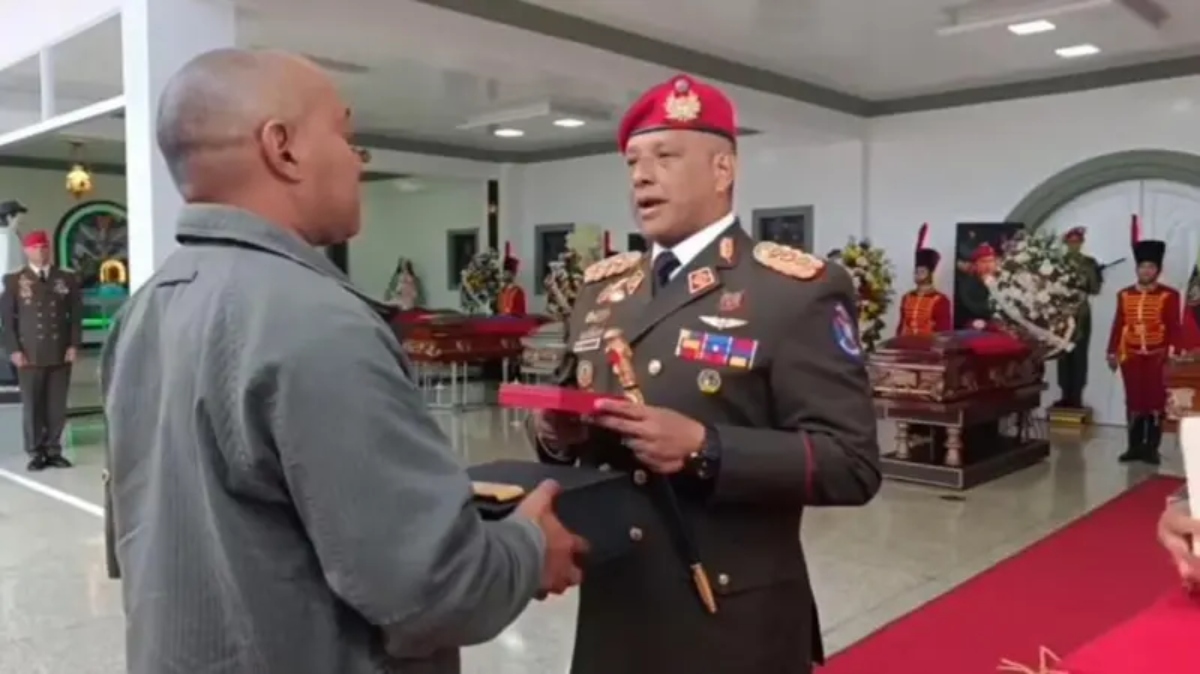
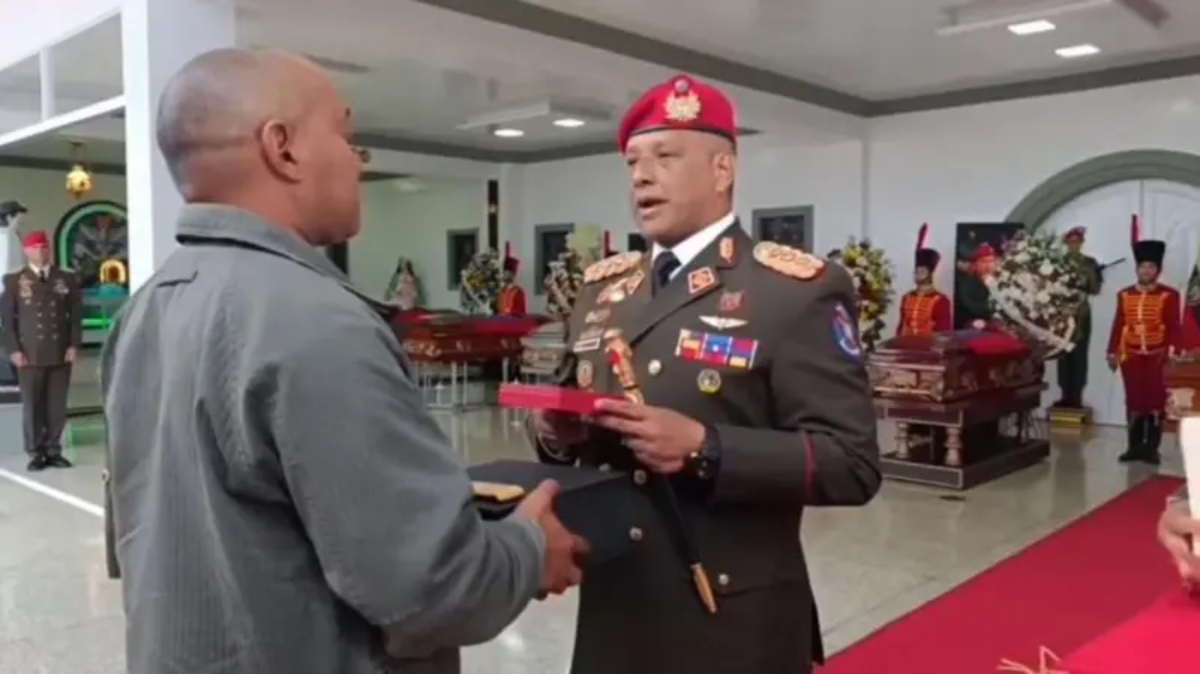
In the last few hours, the Ministry of Defense and the Strategic Operational Command of the Bolivarian National Armed Forces (Ceofanb) have published a series of videos and photographs of the funerals of the fallen soldiers, as well as their obituaries.
BBC Mundo reviewed the publications and found that, among the victims, 21 are men and five women, while 19 held the rank of sergeant, two were soldiers and five were students at the Military Academy. Likewise, 24 belonged to the army and two to the Military Aviation.
However, the organizations Monitor de Víctimas and La Hora de Venezuela indicate that, as of January 6, the number of Venezuelan soldiers killed during the US attacks amounted to 42.
“The majority of those who died were kids (very young),” he assured BBC World the Venezuelan journalist Eligio Rojas, who has been investigating the victims of the US attacks and obtained the testimony of Sergeant González Escala’s father.
The bulk of the victims were recorded in Fuerte Tiuna, the most important military installation in the Venezuelan capital and where not only the headquarters of the Ministry of Defense and the General Command of the Army are located, but also several tank units as well as one of the residences of Maduro and other high-ranking Venezuelan officials.
To these deaths we must add the 32 Cuban agents who provided protection to the Venezuelan ruler and who also died in the attacks.
The Venezuelan military authorities have taken advantage of the soldiers’ funerals to praise their performance.
“In the face of a disproportionate attack in volume of fire, in technology and in surgical precision, they never bowed,” said General Javier Marcano Tábata, former head of the Military House and the Presidential Honor Guard Regiment in a video shared by Ceofanb on its Instagram account.
Next, the officer gave as an example the case of Sergeant Anaís Molina, a member of the unit in charge of protecting Maduro and his family.
“She was going to be evacuated and she said: ‘Never! I want to die like the brave, seeing the face of the helicopter that wants to tear me apart,’ and she fired one last shot,” Marcano said in the speech he gave at the funeral, held on Tuesday.
About civilians
Although more than 24 hours have passed since the Attorney General of Venezuela, Tarek William Saab, announced that he appointed three prosecutors to investigate “the dozens of casualties of innocent civilians and military personnel” that occurred on January 3, so far his office has not presented any information.
Venezuelan media, however, report at least two deaths so far.
The first is an 80-year-old woman, who died after a missile hit the building where she lived in Catia La Mar, about 31 kilometers north of Caracas, reported the digital media Comunicación Cocuyo.
The other victim is another woman, 45 years old and of Colombian nationality, who lived in the El Volcán sector, southeast of Caracas, which was the target of the US rockets, because both civil and military communication antennas were located there.
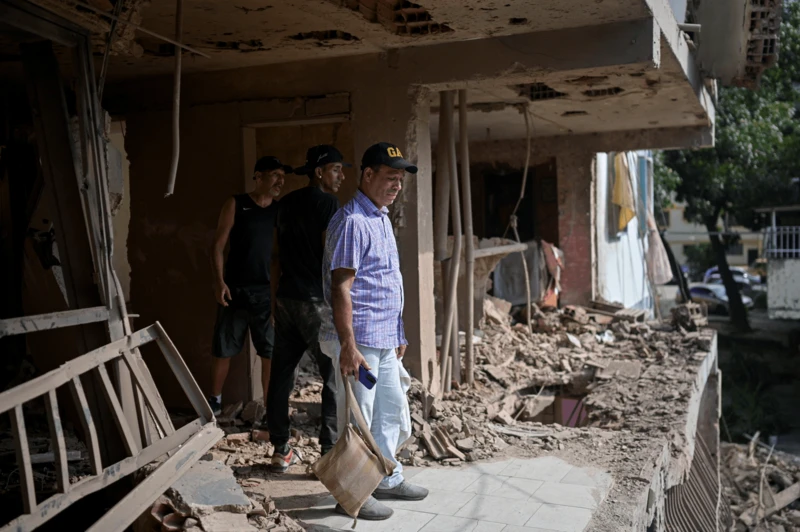
In the same area, Arturo Berti, his wife, Antonieta, and his sister Elena miraculously saved their lives, because an American rocket fell by mistake in the garden of their house, causing serious damage to the property.
“The bed moved. All the glass in the room broke. I felt as if the house had moved,” Berti told Estudio Cocuyo.
The authorities have also not presented an assessment of the material damage.
However, sources consulted by BBC Mundo assure that the facilities of the Ayala and Ribas battalions, located within Fuerte Tiuna, as well as the communications antennas of El Volcán and several mobile anti-aircraft batteries were destroyed.
For their part, local media have reported that several civilian homes were affected both in the city of Caracas and in La Guaira, as well as part of the facilities of the seaport closest to the Venezuelan capital.