The recent capture of dictator Nicolás Maduro, former ruler of one of the countries with the largest oil reserves in the world, would have no short-term implications on the price of the resource.
Currently, Caracas has the largest proven oil reserves in the world, with 303.221 million barrels, according to the Organization of Petroleum Exporting Countries (OPEC), of which Venezuela is a member, ahead of Saudi Arabia (267.2 billion) and Iran.
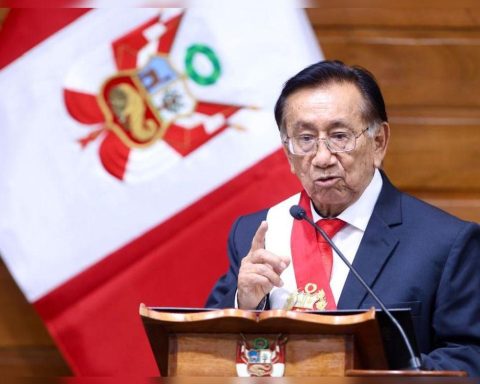
However, it only produces 800,000 barrels and the world consumes 100 million. It only participates with 0.8% of what the world consumes. Worse still, crude oil prices have been slowly declining due to an increase in renewable energy consumption. Given this situation, an increase in prices would not necessarily be expected, stated former Minister of Energy and Mines Herrera Descalzi.
“So, in terms of supply and demand, I don’t think it is very significant. I think the effect could come from politics,” Descalzi told Perú21.
Hugo Perea, the economist for Peru at BBVA Research, reached a similar conclusion. He argued that Venezuela is not a large supplier of oil in the world and, in addition, there are countries with large oil surpluses. Therefore, if there were an increase, it would be very small and more linked to the incorporation of a political risk premium.
Perea stated that in the medium term there could even be a drop in the price of crude oil if the restrictions on Venezuela to operate in the oil market are eliminated because this would allow supply to increase.
“It is still a little premature. In the medium term, depending on how the situation in Venezuela develops, it could even imply a structural decline in prices,” the economist commented to Perú21.
Geopolitical repercussions
On the other hand, the main risk of US intervention in Venezuela would not be in the immediate oil supply, but in the eventual repercussions.
geopolitics.
For Descalzi, a larger scale action by the United States could bring political problems worldwide and that could have an impact on oil prices. Although he specified that, for now, we are facing “a fairly significant but small fire.”
“But (if there is) a new intervention (by the US) we do not know what will happen. Furthermore, it has taken China and Russia by surprise,” he commented.
For Perea, taking into account that the United States is one of the main oil producers in the world and the intentions expressed by Trump for North American companies to return to Venezuela, Washington’s interest is more aimed at making clear what its main areas of influence are.
“The United States clearly seems to express a particular interest in delimiting a very specific area of influence over Latin America,” Perea said.
“My reading is a little more the political issue. The United States feels that China has gotten quite involved in South America. And I don’t particularly see Trump’s concern about Russia, I see concern about China,” Descalzi concluded.
Receive your Perú21 by email or WhatsApp. Subscribe to our enriched digital newspaper. Take advantage of the discounts here.
RECOMMENDED VIDEO