One of the first tasks of the new parliament will be the swearing-in as “president in charge” of Delcy Rodríguez. This was under an order from the Constitutional Chamber of the Supreme Court of Justice that declared that, in the “forced absence” of Maduro, a “protection measure was necessary to guarantee the administrative continuity of the State and the defense of the Nation.”
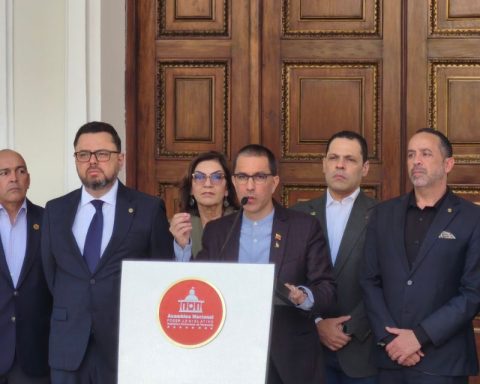
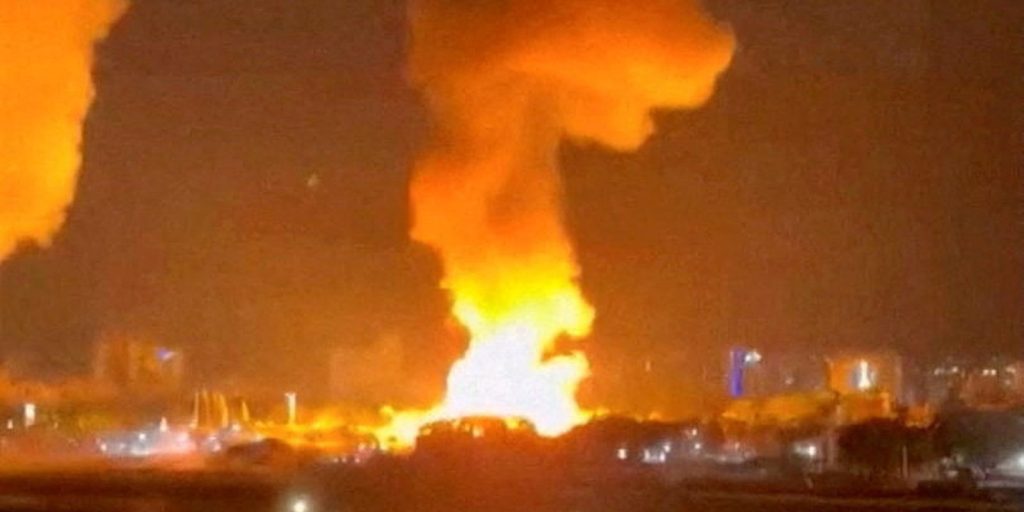
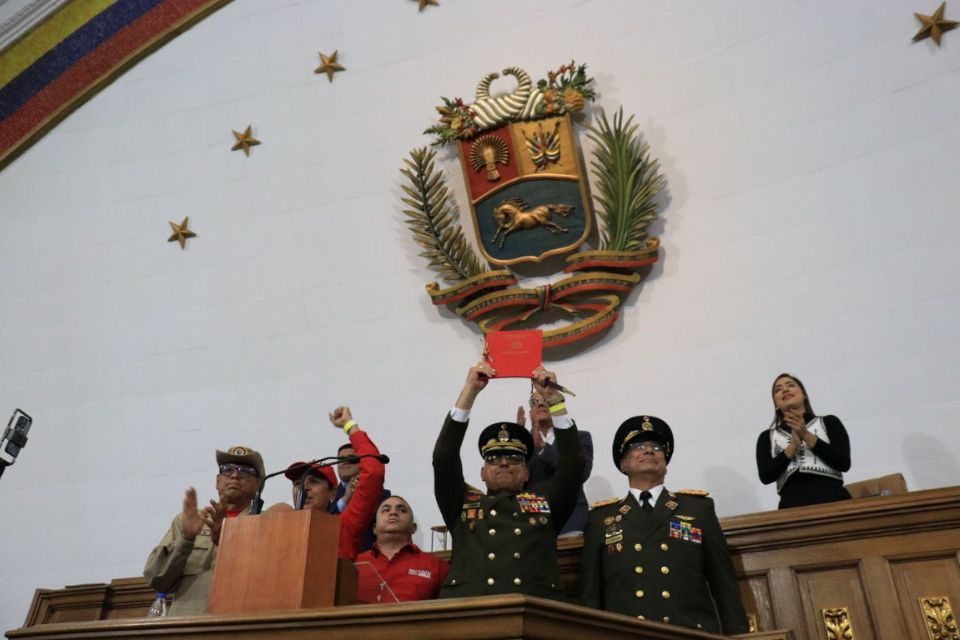
This January 5, a new period of the Venezuelan parliament will begin, after the recent attacks by the United States in Caracas, a few kilometers from the headquarters of the National Assembly, and the capture of Nicolás Maduro and his wife Cilia Flores. In these hypothetical five years of legislature, there are only a few dissident voices against Chavismo, all of them distancing themselves from the actions and statements of the opposition leader María Corina Machado.
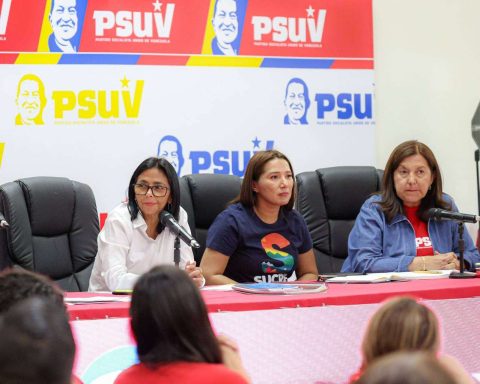
As a result of the May 25 elections, the parliamentary majority was – no surprise – in the hands of the United Socialist Party of Venezuela (PSUV). What was “extraordinary” was the incorporation of politicians such as Henrique Capriles, Tomás Guanipa, Stalin González, Luis Emilio Rondón, Henri Falcón, Pablo Pérez or Antonio Ecarri.
On the side of the Democratic Alliance, leaders such as José Brito, Luis Augusto Romero and José Gregorio Correa repeat.
Electoral experts such as Andrés Caleca have said that this sector of the opposition, according to the D’ Hondt method, was only entitled to three deputies based on the vote obtained on May 25; However, the CNE awarded them six.
In any case, a bench that can stop PSUV decisions based on its number of deputies is non-existent. Despite the limitations, figures such as Capriles or Stalin González have said that their first actions will be to raise “the people’s problems.”
Since mid-November, Capriles promoted the increase in the minimum wage and a series of bonuses for public administration workers. Their requests were not taken into account by the official sector.
A parliament in figures
According to the data provided by the president of the National Assembly, Jorge Rodríguez, since 2021, 100 laws and 28 reforms have been approved. Last year, only 10 new instruments were approved, most of them related to the situation marked by the United States and only one law reform.
The reason? The self-imposed “strike” of parliament due to the election campaign. The last session held by the AN before the elections was on Thursday, April 10, 2025, when the state of economic emergency decree signed by Nicolás Maduro was approved in response to the “impact of the global trade war initiated by the Government” of the United States, which imposed 15% tariffs on Venezuela.
After the elections, and with important figures such as Jorge Rodríguez or Pedro Infante with their seat secured, the pulse of American actions remained until the end of the period: on December 23, the legislative period was formally concluded with the approval of the Law for the Protection of Freedoms of Navigation and Commerce against Piracy, Blockade and other International Illegal Acts. The regulations respond to the blockade ordered by the president of the United States, Donald Trump, on sanctioned ships leaving or heading to Venezuela.
Article 10 of this Law stipulates severe sanctions for those who promote, finance or invoke “acts of piracy against persons or companies that trade with the Republic.” The penalties include prison terms of 15 to 20 years and fines equivalent to between 100,000 and 1,000,000 times the highest exchange rate published by the Central Bank of Venezuela (BCV).
Days before, a rule repealing the Rome Statute had also been approved, which governs the function of the International Criminal Court, whose Prosecutor’s Office has maintained an investigation into crimes against humanity committed in the country since at least 2014. The instrument passed into the hands of Maduro for its promulgation, but official confirmation of the fact was never recorded.
These regulations barely represent part of the legislative framework that the National Assembly promoted to contribute to the closure of civic space, as proposed by various national and international organizations, as well as the Office of the High Commissioner for Human Rights and the Fact-Finding Mission on Venezuela.
One of the relevant laws of this “authoritarian legalism”, as it is called Peace Laboratory It is the Law on Supervision, Regularization, Performance and Financing of NGOs and Non-Profit Social Organizations or “Anti-Society Law.”
Sanctioned on August 15, 2024 and proposed by Diosdado Cabello, it contemplates several assumptions under which an NGO can be dissolved or sanctioned, all under the discretion of the Chavista government. In his speech, the minister accused several NGOs of generating destabilization in the country, promoting terrorist actions or hatred, with money from the United States.
The regulations led several organizations dedicated to humanitarian work, human rights defenders or social oversight, such as Transparencia Venezuela, to close or operate from abroad.
The Liberator Simón Bolívar Organic Law against the Imperialist Blockade was also one of the regulations created, in the opinion of the Peace Laboratory, to support “the government without legitimacy of origin.” The penalties provided for in this instrument are prison between 25 and 30 years – without alternative formulas for serving the sentence -; political disqualification up to 60 years; the seizure of assets according to the forfeiture procedure.
These laws, together with the reform of the Communal Justice of the Peace Law, were graded by Peace Laboratory as the point of conjunction to generate “the almost total closure of civic space in the country, as well as the prohibition of the exercise of the civil and political rights of the population.”
What’s coming
One of the first tasks of the new parliament will be the swearing-in as “president in charge” of Delcy Rodríguez. This was under an order from the Constitutional Chamber of the Supreme Court of Justice that declared that, given the “forced absence” of Maduro, a “protection measure was necessary to guarantee the administrative continuity of the State and the defense of the Nation.” However, it was noted that this does not imply a decision on whether the Chavista leader’s absence is temporary or absolute.
An capture by a third country is not among the causes provided for by the Constitution to declare the president’s absence, a figure that is itself controversial for the international community.
Nicolás Maduro was not recognized by several countries as “president” due to the claim of fraud made by the opposition in the 2024 presidential elections. Opposition leader María Corina Machado maintains, based on the voting records collected, that Edmundo González Urrutia won on July 28 with a wide margin.
President Donald Trump warned that Delcy Rodríguez could face “probably higher” consequences than Nicolás Maduro “if she does not do the right thing.” Trump had praised her on Saturday, January 3, hours after US forces captured Maduro and his wife Cilia Flores in Caracas. However, the tone changed after the vice president declared that Venezuela would defend its natural resources.
The constitutional reform that Maduro promoted to definitively incorporate the “communal State” could also remain on hold. This reform was a campaign and commissions and discussions were even carried out within parliament to address each of the thematic axes, but the work remained secret after it was decided to suspend a first draft for the consideration of the deputies to wait for the installation of the new National Assembly in 2026. Now everything will depend on the actions of Delcy Rodríguez as “president in charge.”
*Journalism in Venezuela is carried out in a hostile environment for the press with dozens of legal instruments in place to punish the word, especially the laws “against hate”, “against fascism” and “against the blockade.” This content was written taking into consideration the threats and limits that, consequently, have been imposed on the dissemination of information from within the country.
Post Views: 95