The United States attack that resulted in the capture of the president of Venezuela, Nicolás Maduro, in the early hours of Saturday (3), brought protesters to the streets in several cities around the world this weekend, including Venezuelans who migrated to other countries in search of better living conditions. 
In addition to taking Maduro and the first lady, Cilia Flores, to stand trial in the United Statesfor alleged involvement in international drug trafficking, the American government announced that it intends to administer Venezuela “until a safe, adequate and judicious transition can be carried out”.
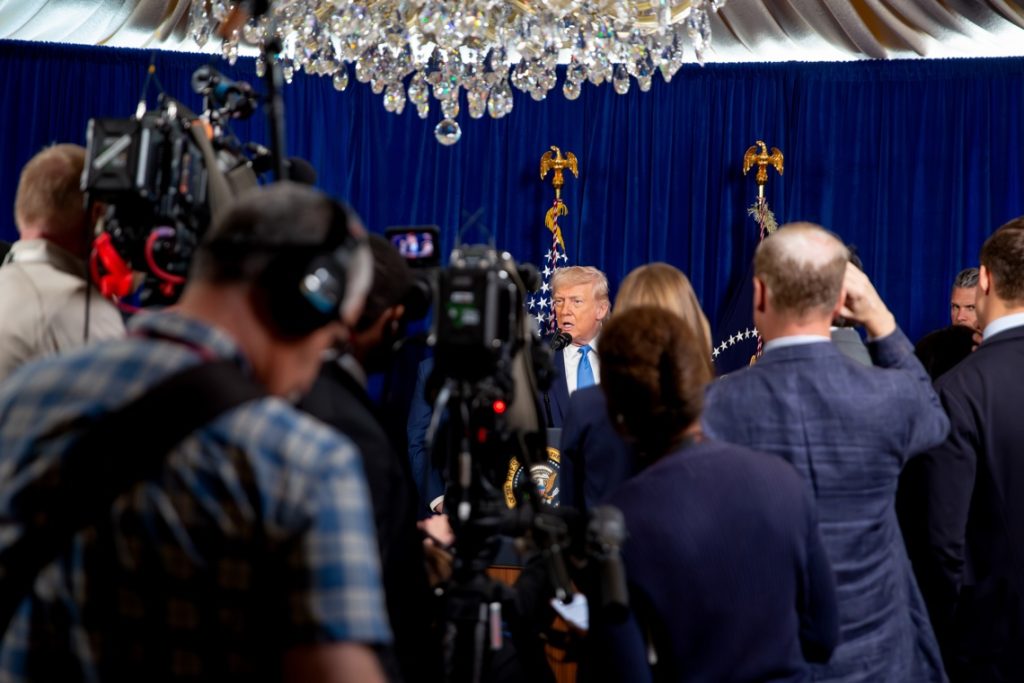
United States President Donald Trump also stated that American companies will control the country’s oil sector, which has the largest confirmed reserves of oil and gas in the world.
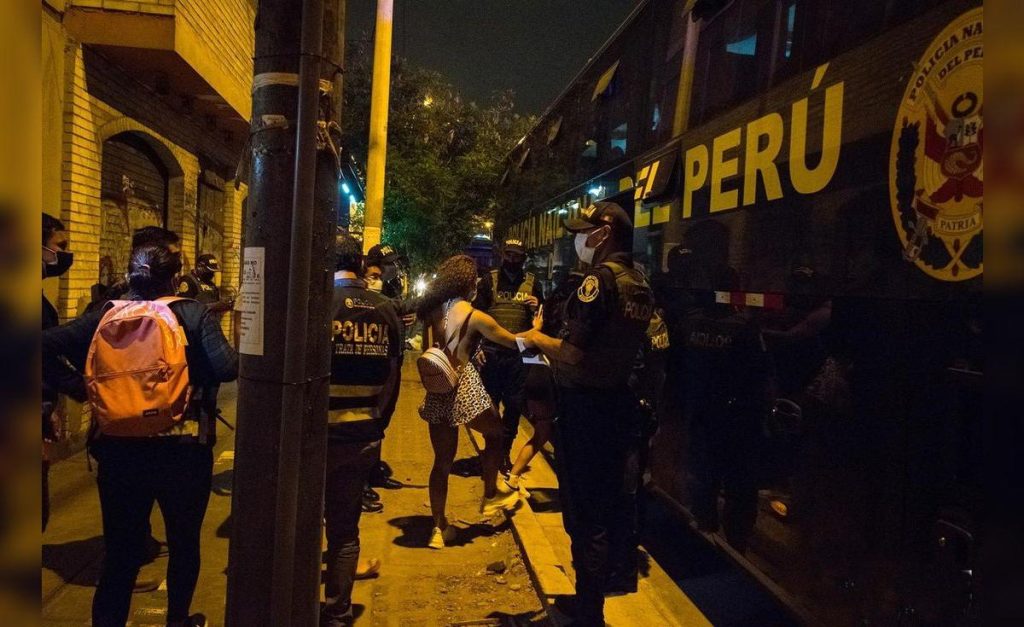
According to the Reuters news agency, there were acts of Venezuelans this weekend celebrating the action of the United States in a series of Latin American countries and also in Spainin cities such as Bogotá, Lima, Quito and Madrid.
In Mexico City, Venezuelans and Mexicans for and against US military action organized demonstrations in front of the Venezuelan and United States embassies, criticizing interventionism or celebrating that the country was free from Maduro. The police had to intervene to prevent tension between the groups from increasing.
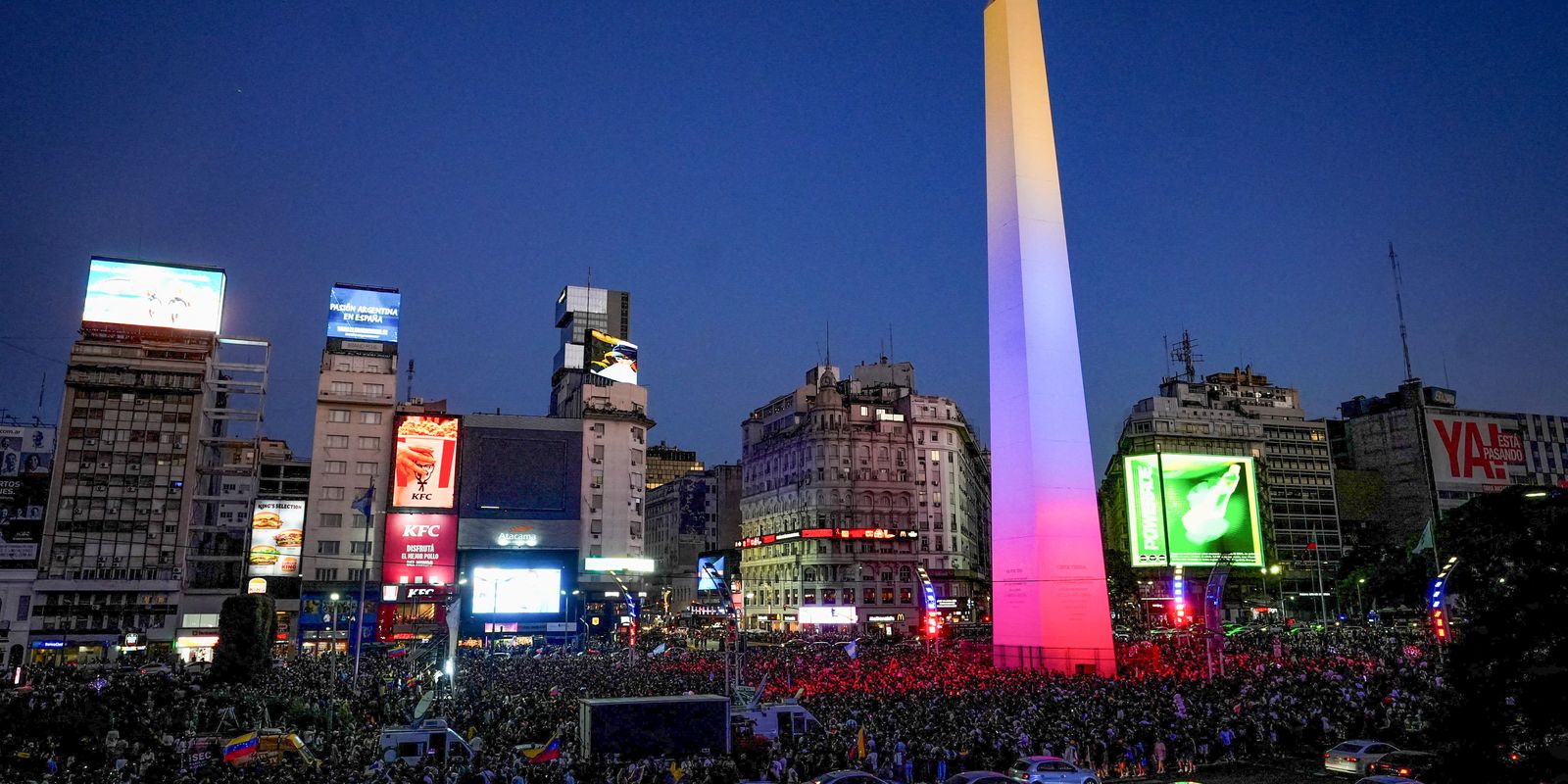
In Buenos Aires, Argentina, social and Venezuelan movements opposed to the action protested on Saturday, in front of the United States embassy, while another group gathered at the Obelisk to celebrate Maduro’s capture.
There were also protests against the attack in the United States, in cities such as San Francisco and New York, in addition to the registration of groups of Venezuelans who celebrated the action.
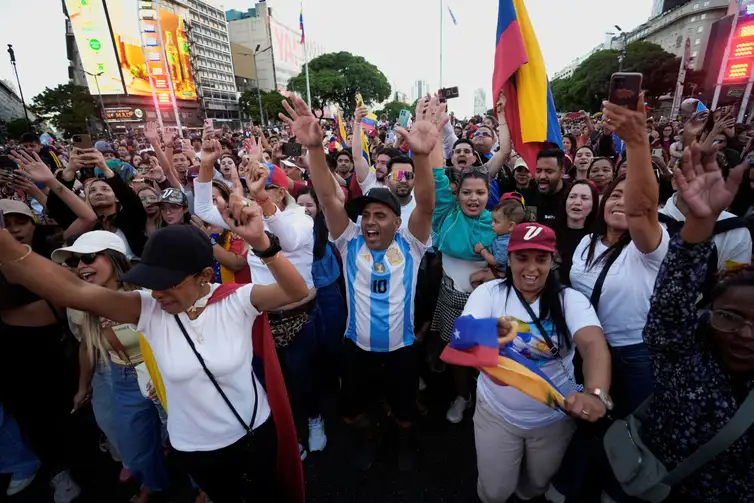
People celebrate action by the United States in protest in Buenos Aires, Argentina REUTERS/Mariana Nedelcu
Diaspora
Around 20% of Venezuela’s population has left the country since 2014and the main destinations were Colombia, which received 2.8 million Venezuelans, and Peru, which received 1.7 million, according to the R4V platform, a group of regional NGOs that provide assistance to migrants and refugees from Venezuela, created by the UN migration agency.
Three years ago in Spain, a country that received 400,000 Venezuelans, Andrés Losada told Reuters that he is struggling between concern and joy about the situation in Venezuela.
“Although what people are going through in Caracas is difficult, I believe that beyond that, there is a light that will lead us to freedom,” he added.
In Quito, the capital of Ecuador, Venezuelan Maria Fernanda Monsilva said she hopes that Edmundo González, the main candidate of the Venezuelan opposition in the 2024 presidential election, can take power.
“Many of us who are abroad want to come back,” said Monsilva.
Despite the American government’s declaration that it intends to control Venezuela, the Supreme Court of Justice of Venezuela (TSJ, in its Spanish acronym) decided that executive vice-president Delcy Rodríguez should assume the interim presidency of the country.
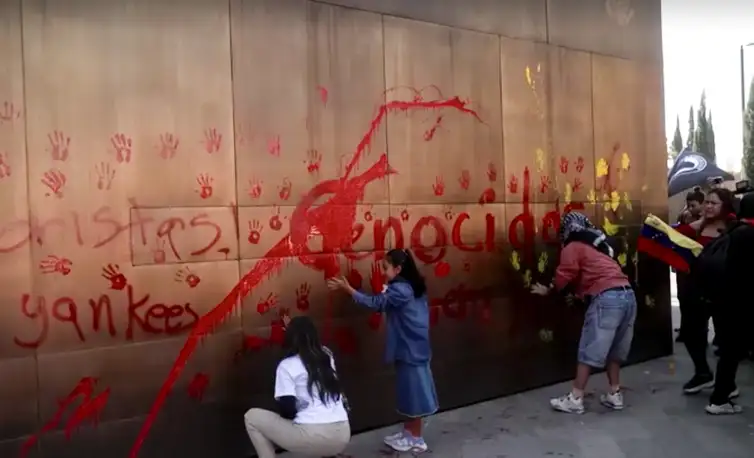
Protesters against the attack protest in Mexico City. Frame Reuters/Reproduction prohibited
In Caracas, the capital of Venezuela and the city that was the target of the attack, a demonstration repudiated the American intervention. Venezuelan José Hernandez participated in the protest and classified the foreign operation in his country as criminal.
“Other countries in the world need to be very clear about the completely criminal way in which the United States is acting. This is extracting, or rather stealing, resources from other countries that have energy and minerals”, he criticized.
*With information from Reuters