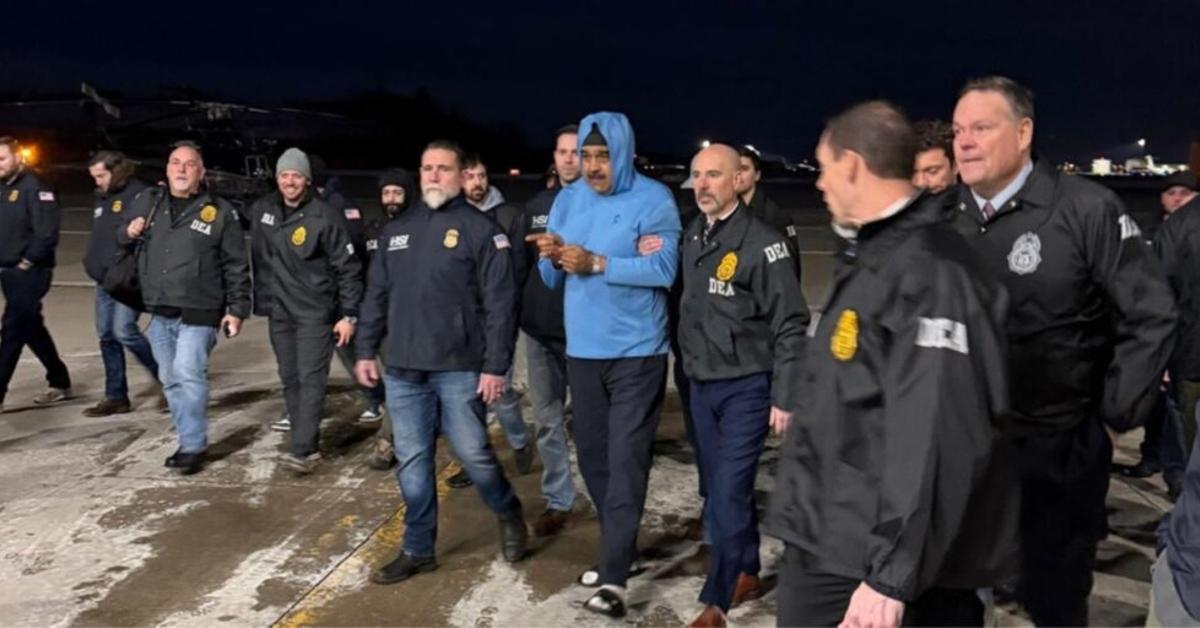
Havana/Following the capture of Nicolás Maduro by US troops, President Donald Trump stated this Saturday that Washington will administer Venezuela “until a safe, adequate and sensible transition can be carried out.” The president also assured that numerous Cubans, members of the Venezuelan ruler’s security ring, died during the attacks, although he did not offer additional figures or details.
“Cuba always depended a lot on Venezuela. That’s where they got their money and protected it, but in this case that didn’t work very well,” he declared at his press conference in Mar-a-Lago, Florida. “Many Cubans lost their lives last night… they were protecting Maduro. That was not a good decision,” he added.
The US president also dedicated harsh words to the island’s regime: “that system is not good for Cuba, we will end up talking about Cuba, because it is a failed nation.” Trump announced that he intended to “help the people in Cuba” and “the people who were forced to leave Cuba and [que están] living in this country”, in reference to the almost three million people of Cuban origin who reside in the United States.
Secretary of State Marco Rubio, who accompanied the president during the press conference, expressed that Cuba was “a poor island that Venezuela took over.” “Cuba is a disaster, it is run by incompetent and senile men, there is no economy, it is a total collapse,” he said. He even added: “If I lived in Havana and were in the Government, I would be at least a little worried.”
The deaths of Cuban troops, about which the official party has not said a word, would confirm the deep degree of infiltration of Havana in the power structure of Chavismo
For his part, Trump assured that no US military personnel died during the operation to capture Maduro, although he acknowledged that two of them were injured, without risk to their lives. The deaths of Cuban troops, about which the official party has not said a word, would confirm the deep degree of Havana’s infiltration into the power structure of Chavismo. According to The New York Times, at the beginning of December Maduro had reinforced the presence of bodyguards from the Island in his personal security and added Cuban counterintelligence officers to the Venezuelan Army.
This movement deepened the deep level of interference by Havana in the structure of the Chavista regime and fueled the thesis, supported by analysts and politicians, that the real key to an eventual fall of Maduro would be in the hands of the Cuban Government. Senior US officials then told the specialized media Axios that the Venezuelan ruler knew “too much” about secret agreements between both regimes, which would include drug trafficking, irregular finances and regional intelligence operations.
Sources close to the Miraflores palace indicated The New York Times that Maduro had tried to shield himself from a possible attack by frequently changing his resting place and mobile phone, a strategy that ultimately did not prevent his capture. According to Trump, the US forces did not encounter significant resistance during the operation and the president was not able to get into the security room of the house where he was that morning in time.
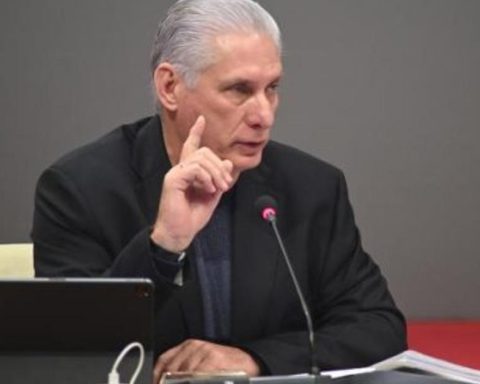
In Havana, meanwhile, the spokespersons for the ruling party took advantage of a rally led this Saturday by Miguel Díaz-Canel and Prime Minister Manuel Marrero to insist that “the aggression was against Venezuela today, but tomorrow it could be against Cuba, Nicaragua or any country that has resources.” In an exalted and somewhat lackluster speech, Díaz-Canel once again chanted slogans such as “Down with imperialism!” and assured that “outdated kings and emperors” are not accepted in the region, assuring that Cuba is willing to “give its own life for Venezuela.” Judging by Trump’s statements, the first Cubans would have already done so on behalf of the Caracas regime.