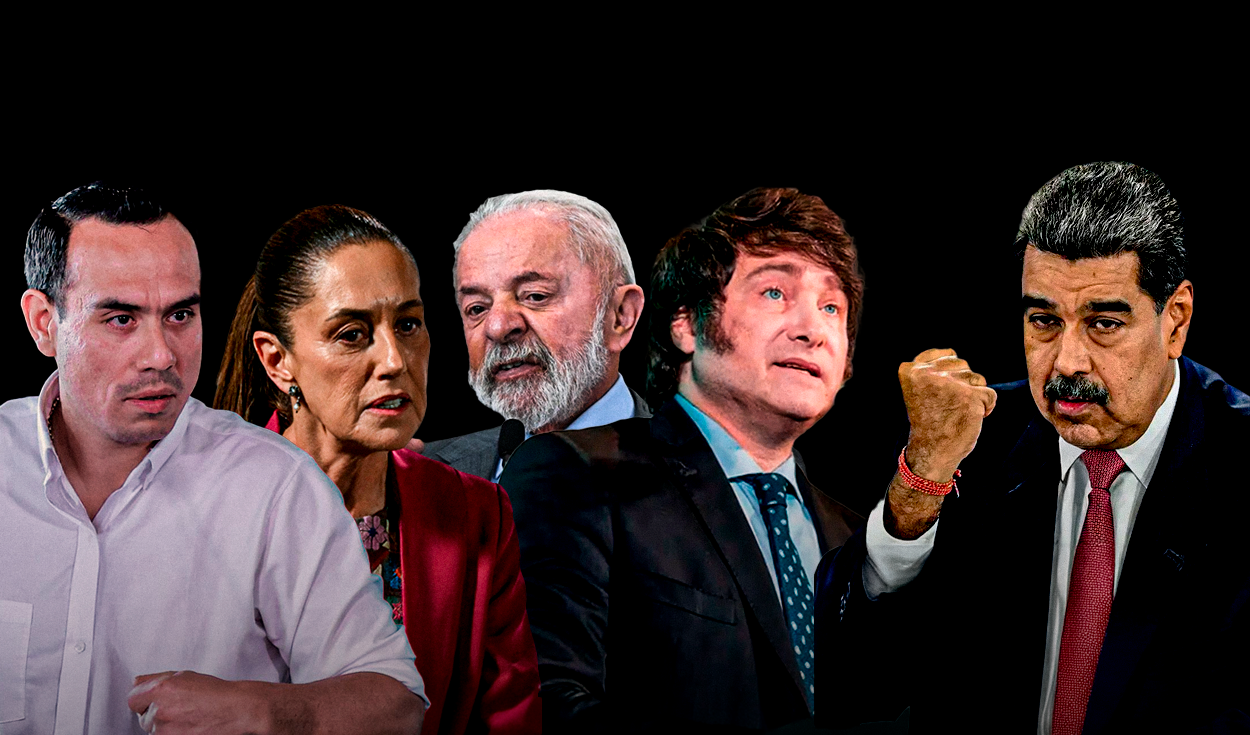
The capture of Nicolás Maduro after a military intervention of USA in Venezuela It unleashed an immediate and profound international reaction, with divided opinions on the legitimacy of the action or the attack on the sovereignty of a country.
The operation, carried out in the early hours of January 3, culminated in the arrest of Ripe and his wife in Caracas. According to US President Donald Trump, this was a response to decades of corruption, electoral manipulation and links with criminal structures that, according to Washington, They include drug trafficking and narco-terrorism networks.
trump He maintained that the Chavista regime is responsible for sending drugs to USA through criminal networks. In addition to justifying the attack with these accusations, Trump announced that the United States will assume temporary control of Venezuela to ensure a “safe and proper transition” of power, and indicated that Washington will manage strategic resources, particularly the Venezuelan oil sector, during that process.
Reactions in Latin America
Reactions on the continent reflect a deep political division. The president of Costa Rica, Rodrigo Chavesdefended the fall of Maduro as a moment of liberation for Venezuela. “My government declared from the beginning that Maduro committed electoral fraud – therefore, he was never a legitimate president… Let us celebrate this new opportunity for our Venezuelan brothers,” his post reads.
The president of Paraguay, Santiago Penastressed that Maduro’s fall can only be considered positive as long as a democratic path is prioritized: “His fall can only be good news… we urge you to prioritize democratic paths and the well-being of Venezuelans above all,” he said.
From Colombia, the president Gustavo Petro He rejected military intervention in firm terms. “The Government of the Republic of Colombia… rejects any unilateral military action that could aggravate the situation or put the civilian population at risk,” said the president.
In this context, Latin American governments, such as those of Brazil, Chile, Mexico and Uruguay, They expressed their concern about the violation of international law and called for a peaceful and multilateral solution.
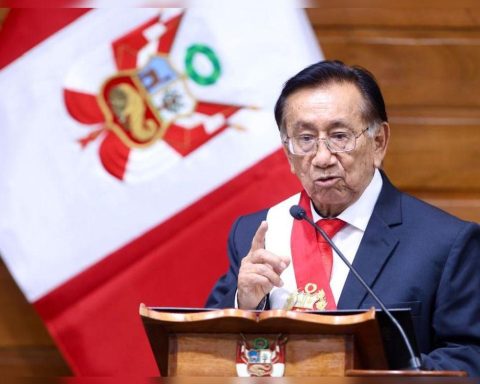
The president of Ecuador, Daniel Noboawas more confrontational with Chavismo and expressed his support for Venezuelan opposition forces, while the president of Peru celebrated what he considered a new beginning for Venezuela and announced facilities for Venezuelan migrants returning to their country.
YOU CAN SEE: Government of José Jerí calls for a peaceful solution in Venezuela after the capture of Maduro by the United States
Visions from other continents
From Europe, the Spanish president Pedro Sanchez he rejected both the Venezuelan regime and the military intervention. “Spain did not recognize the Maduro regime. But neither did an intervention that violates international law…” he said and advocated a transition through dialogue.
China, for its part, strongly condemned the United States’ action, which it described as hegemonic and a violation of Venezuelan sovereignty.
In turn, the French representative Marine Le Pen He agreed that state sovereignty is not negotiable, despite his criticism of Chavismo prioritizing the principle of non-intervention.