The first big unknown regarding the tensions that have grown in recent months between the United States and Venezuela was cleared up early this Saturday with the military operation ordered by the government of Donald Trump in various parts of the South American countryduring which the Venezuelan president, Nicolás Maduro, and his wife, Cilia Flores, were apparently detained.
The fact that Trump defines himself as a negotiator, his frequent changes of position on different issues and the very fact that in his first term – despite his veiled threats – he did not act militarily against the Maduro government, which he already considered illegitimate, are factors that raised doubts about his willingness to use force.
That equation has already been solved.
However, the military operation this Saturday seems to be far from having provided a solution to the Venezuelan political crisis and leaves many questions that still need answers.
BBC Mundo addresses four of the most important unknowns.
1.- What is happening now with Maduro?
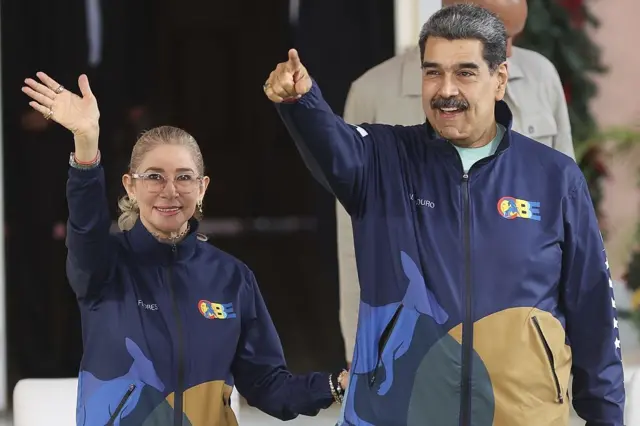
“The United States of America has successfully carried out a large-scale attack against Venezuela and its leader, President Nicolás Maduro, who, along with his wife, has been captured and transferred out of the country.”
Those words published by Trump early this Saturday morning (local time) in a message on the Truth Social network were the first to show the scope of the operation by US forces.
Until that moment, it was known that attacks and bombings had occurred in different parts of Caracas and in nearby states, but not if anything had occurred beyond the destruction of some military objectives.
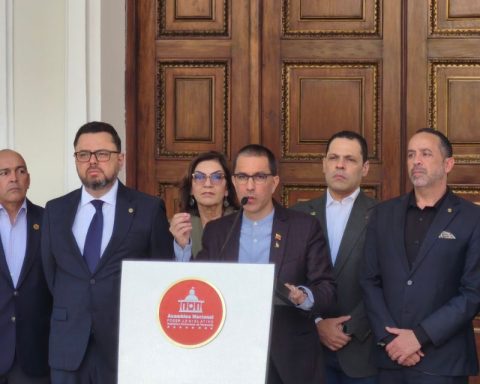
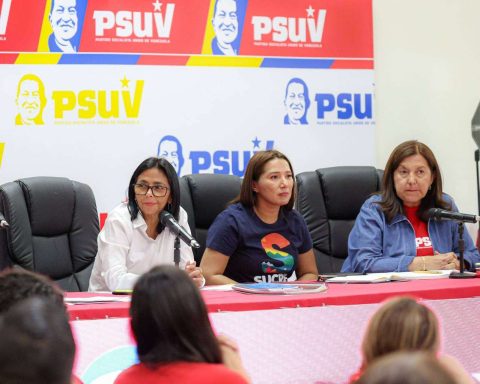
Shortly after Trump’s message was released, Venezuelan Vice President Delcy Rodríguez seemed to confirm Maduro’s arrest when she stated that the whereabouts of the president and his wife were unknown, and demanded “proof of life” for both.
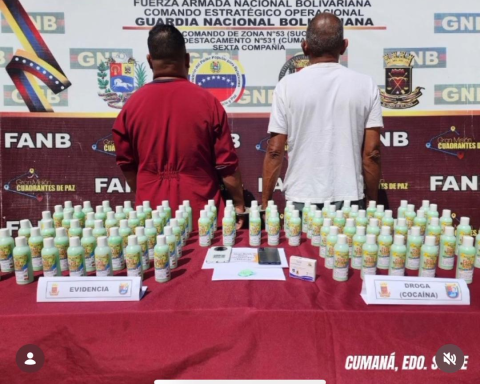
In principle, if Maduro is in the power of the US authorities, his prospects would not seem very favorable, since the Trump government accuses him of being the leader of El Cartel de los Soles, an alleged narco-terrorist organization that would have participated in the export of drugs to the US.
At least since 2020, Maduro has faced drug trafficking charges before the US justice system, to which are added accusations of torture and other violations of the human rights of US citizens.
In fact, the US government had offered a million-dollar reward for Maduro since 2020, which was increased to US$50 million last August, when the attorney general of that country, Pam Bondi, accused the Venezuelan ruler of being “one of the biggest drug traffickers in the world.”
During all these years, Maduro has rejected these charges and has accused the US of wanting to overthrow him to gain control of Venezuela’s natural wealth.
2.-Who governs Venezuela?
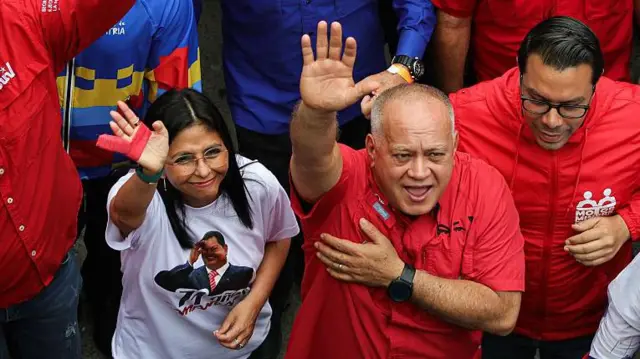
Maduro’s apparent departure from power does not solve the political crisis that country is experiencing and, in fact, generates new doubts.
The Venezuelan Constitution establishes in its article 233 that when there is an absolute absence of the President of the Republic during the first four years of the period, it is up to the vice president or executive vice president to take charge of power while a new election is held within 30 days following the absence.
But there are several problems with this reading. One of them is that it is not clear that the cause of Maduro’s vacancy (being captured by a foreign government) is one of the assumptions under which Article 233 can be applied.
Another drawback is that the United States, a large part of the countries of the European Union and Latin America, as well as millions of Venezuelan opponents, do not consider Maduro to be a legitimate president, so – in that case – if the vice president or someone else replaces him, he would not be recognized either.
Those who question Maduro’s legitimacy maintain that the true winner of the presidential elections of July 28, 2024 was the opposition candidate, Edmundo González Urrutia, and that – therefore – it is his responsibility to govern.
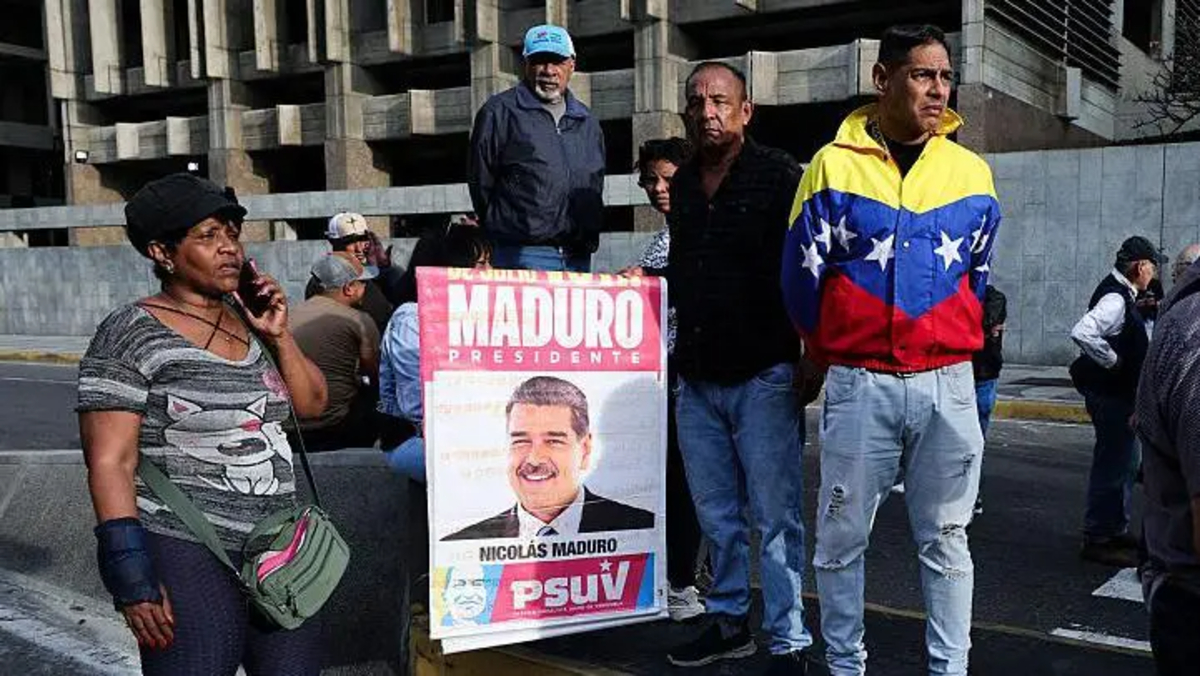
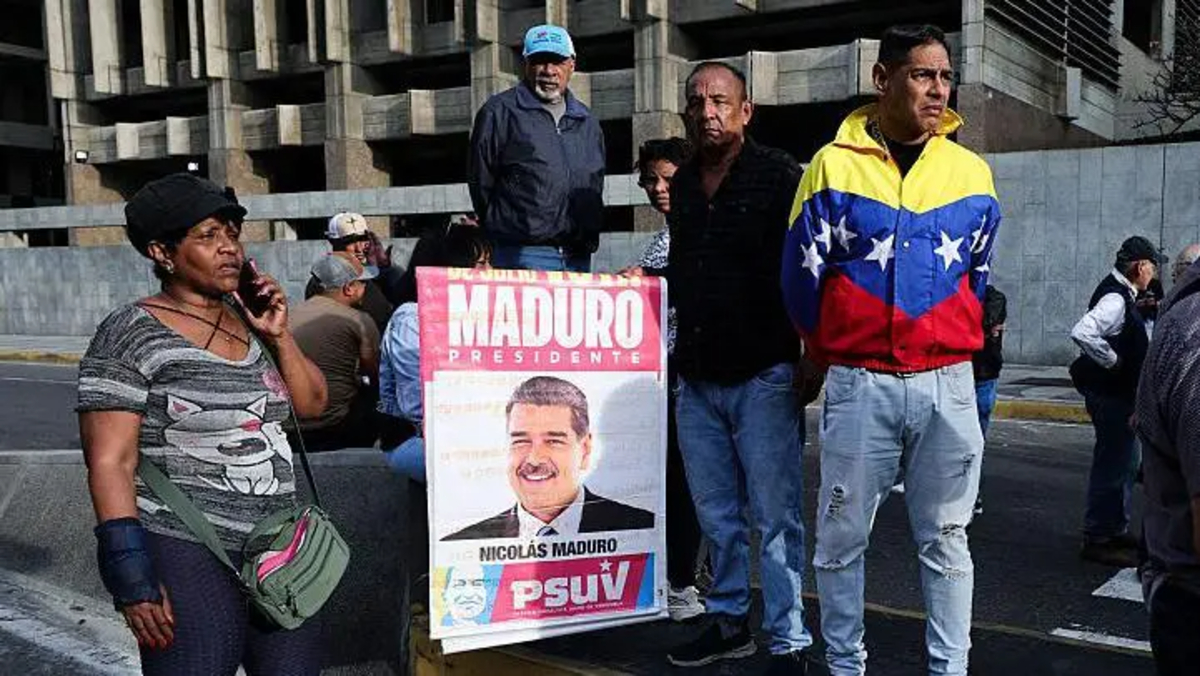
The problem with this reading is that, despite the absence of Maduro, Chavismo is the one who maintains control of real power in Venezuela and in its ranks the legitimacy of the Venezuelan ruler continues to be defended.
Within this scenario, it would seem likely that Chavismo would bet on giving continuity to the government by putting Vice President Rodríguez at the helm.
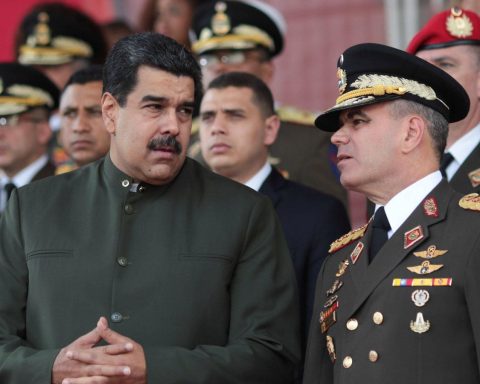
The question in that case would be in terms of the power play within Chavismo, where there are other figures as powerful or more powerful than the vice president, in terms of their ascendancy over the Armed Forces, such as the Minister of the Interior, Diosdado Cabello, and the Minister of Defense himself, Vladimir Padrino.
When Maduro was in charge, all these figures – at least publicly – seemed to be aligned around his presidency, but in his absence it is likely that there will be a redistribution of power within Chavismo, with a result that is difficult to predict.
3.-What will the opposition do?
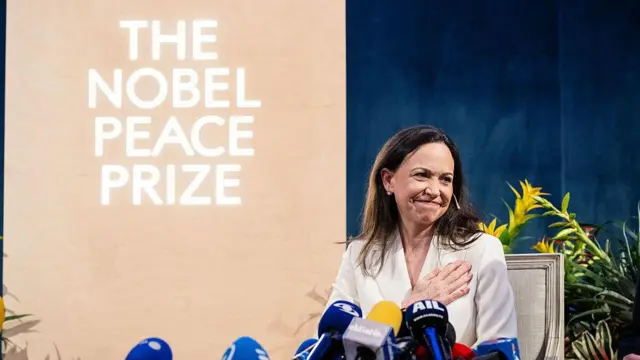
Led by the 2025 Nobel Peace Prize winner, María Corina Machado, and Edmundo González Urrutia, the Venezuelan opposition has been very aligned with Trump’s strategy of maximum pressure against Maduro.
But the fight of this opposition is focused on the search for a fundamental change in Venezuela, which would imply enforcing the results of the presidential elections of July 28, 2024 and, consequently, installing González Urrutia as president.
Maduro’s departure is not enough to achieve that objective, but it is not clear that the opposition has the real strength necessary to force a regime change since Chavismo continues to control the security organizations and the armed forces; and none of the main spokespersons for Chavismo – neither Rodríguez, nor Cabello, nor Padrino – have given public signs of being interested in negotiating a political transition.
That, of course, does not deny that they may be contemplating that possibility, especially after what happened this Saturday with Maduro.
4.-Is this enough for Trump?
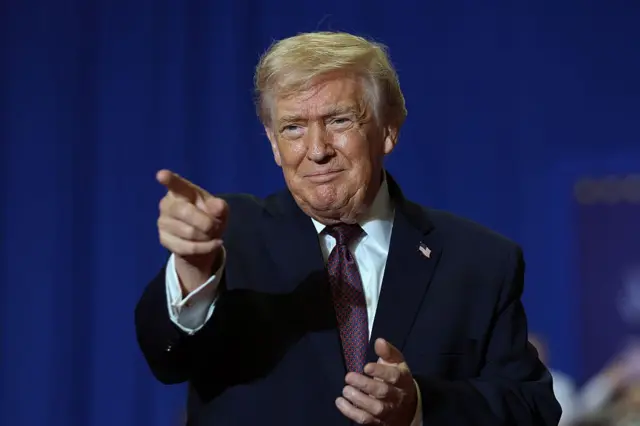
The capture of Maduro in a high-level military operation constitutes a clear triumph for the Trump government.
The US president has accused the Venezuelan ruler of being the leader of a narco-terrorist gang and of having sent thousands of undocumented migrants to the US, including members of the dangerous criminal gang Tren de Aragua.
In recent months, Trump had said that Maduro’s days were numbered and, now, he is proving it.
This opens the opportunity for the US president to declare victory and end his campaign of military pressure on the Caribbean, considering the criticism inside and outside the US for the attacks against alleged drug trafficking boats, with the death of dozens of crew members.
To this we must add the fact that, after this Saturday’s operation, voices like that of the president of Chile, Gabriel Boric, who, despite being a critic of Maduro, question the way in which he has been removed from power, are already emerging – and will foreseeably continue to appear.
For Trump, however, the underlying issue is that his “victory” over Maduro will be useless if a regime change does not end up taking place in Venezuela, since those who remain at the head of the Chavista government are – for the most part – accused of participating in the same alleged crimes that the Venezuelan president is accused of.