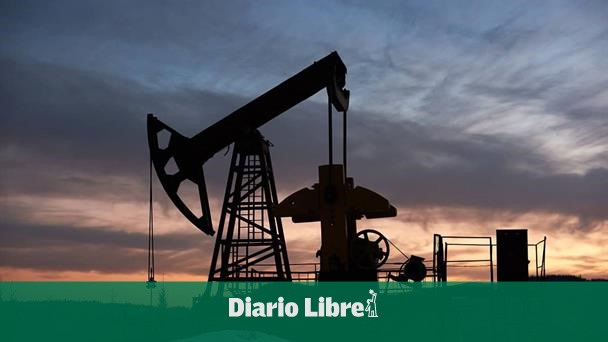
eight ministers of the alliance OPEC+, led by Saudi Arabia and Russia, will evaluate tomorrow, Sunday, if they maintain their decision not to alter the level of their oil supply during the first three months of this year, as they decided last November.
The decision must be made in a teleconference by the holders of Energy and Oil from Saudi Arabia, Russia, Iraq, the United Arab Emirates, Kuwait, Kazakhstan, Algeria and Oman, as announced by the Organization of Exporting Countries of Oil (OPEC), based in Vienna.
The meeting will take place at a time when the sector is shaken by the military intervention of USA this Saturday in Venezuela, one of the five founding members of OPECand the kidnapping of the president of the Latin American nation, Nicolas Maduroas well as other geopolitical conflicts and tensions.
However, are not expected nor comments on political events nor substantial changes in the oil policy of the aforementioned countries, the eight that between April and December 2025 reversed a large part of the voluntary cuts of the pumping that they had applied in 2023 to support ‘petroprices’, with monthly increases that represented a strategic shift of 2.8% of the world production.
In total, they decided to increase their supplies by about 2.9 million barrels of crude oil per day (mbd), a volume equivalent to about 2.8% of the world production.
The group would still have a little more than a million of barrels per day to reverse its voluntary reductions, one of 2.2 mbd and another of 1.65 mbd), but in November it decided to stop the increments in January, February and March 2026, a measure that is expected to be confirmed tomorrow.
According to analysts, the quarterly break The new policy of opening the taps is due to the widespread perception that the market is oversaturated with crude oil, a factor that has contributed to a clear downward trend in ‘petroprices’, counteracting the upward pressure derived from the multiple geopolitical conflicts that directly affect several members of the OPEC+ (OPEC and allies).
Both the barrel of Brent crude oil, the benchmark in Europe, and that of oil Texas Intermediate (WTI), a benchmark in America, closed 2025 with its greater losses percentages from 2020around 20% annually.
In its first price of 2026, the barrel of Brent ended on Friday at $60.75, more than $20 below the $82.03 it reached on January 15, while the WTI It stood at $57.32.
Conflict with USA
After intensifying his campaign against Venezuela’s oil exports, the president of USA, donald trumpgave the green light to a military intervention in Venezuela with bombings in various places in the country and the capture of Maduro, whom he intends to try for drug trafficking.
- The impact of today’s attack on the country caribbean holder of the largest reserves of oil of the world will be seen especially from Monday, as well as the reaction of the markets to the decision of ‘the Eight’ of the OPEC+.
Other tensions, such as a recent American intervention in Nigeria (also a partner of the OPEC) and the threat to also attack Iran (another founding country of the oil organization), as well as Russia’s persistent aggression against Ukraine and the rivalry between Saudi Arabia and the United Arab Emirates over Yemen have had a very moderate effect on oil prices. oil.