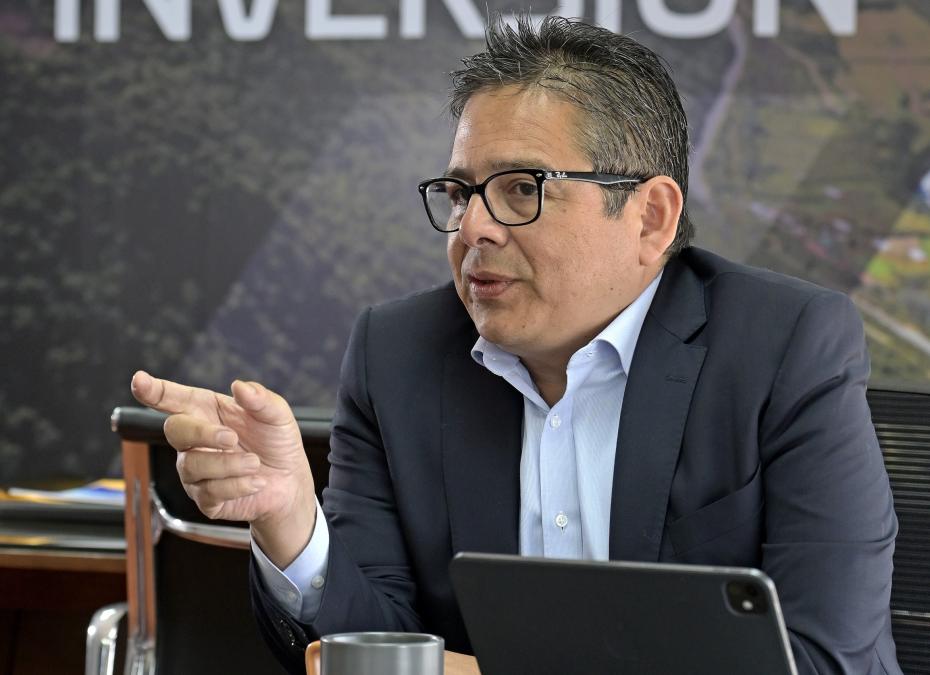
The Executive delegated to Proinvestment the task of reorganizing Petroperu by productive units (asset reorganization) in order to find a solution to the company’s crisis. The highest authority of the private investment agency provides the details of what this work will be.
What will the plan for the patrimonial reorganization of Petroperú consist of?
The first task is to prepare the plan. For this we have 60 days to prepare it and submit it for approval. This will indicate how and when we are going to do it. It is a list of activities that we are going to carry out, which has to be approved, and then comes the execution phase. This promotion plan proposes working in heritage blocks. The idea of the blocks is, given the economic and financial situation of Petroperú, to ensure the continuity of its operations.
How will asset reorganization help resolve the company’s financial crisis?
Petroperú has several business units that today are integrated into a single management. This implies shared risks, commitments and cross obligations, in addition to oversized activities, which ends up putting the entire operations at risk.
Talking about heritage blocks means isolating each operational unit. For example, there could be a block corresponding to refineries, with their own risks and obligations, which would not have to be linked to pipeline risks or other areas that could be managed differently within Petroperú.
And how does that impact the financial sustainability of the oil company?
This equity block, like the one in the example I give you, will have the capacity to generate flows. These flows must first serve to ensure the operation of this heritage block. Then, to contribute to meeting Petroperú’s financial obligations and labor obligations. The plan is to incorporate management models in each of these blocks. To do this, Petroperú has to be governed by private rules, which is what we all expect.
Legislative Decree 674, which was used for the patrimonial reorganization of Petroperú in the 90s, served to privatize public companies. Is Petroperú going to be privatized?
This is not privatization. What we are proposing are various promotion modalities for these business units. In some cases, what we will try is to strengthen them, clean them up so that they are attractive and have the capacity to incorporate private capital.
It is good for a business unit to attract private capital and we will work in that way, thereby improving the governance of that asset. This will continue to be a strategic business unit of the State, but with the capacity to attract private investment and a better management model.
Perhaps in some cases, due to the size of the risks that may exist, the suggestion is a public-private partnership in order to share risks and improve the management of that asset. Perhaps, in some cases we identify a block that we consider non-strategic or where the State does not need to operate it, and in that case we do propose the sale of some assets.
What is the expected end result of your plan?
I believe that President Jerí’s government is going to outline and mark this route. It will have left each business unit capable of attracting private investment. And, of course, you will also have made complicated decisions, such as resizing the size of the company. It is likely that the number of workers exceeds the needs for efficient operation of business units of this size, so decisions will have to be made responsibly in this regard.
It is the first time that they are going to carry out this type of order. How will they resolve this lack of experience in this type of operations?
Obviously, as in any large-scale project, a world-class investment bank will be hired. Proinversión will count on the investment bank to make strategic decisions that generate trust in Peru, in the world and in investors, and in order to carry out this process that will take a lot of responsibility. Proinversión has the knowledge, it has the experience and it has done it before.
Do you have any idea how many production units could be separated into blocks?
That is exactly the work we have to do in these weeks. We have different estimates, of course, but given that it is an issue that we have to discuss first with the Shareholders’ Meeting, we would like to take concrete steps. But I think it can be estimated. The oil pipeline, for example, is a particular unit that concentrates many risks, some of which transcend its own operation and are transferred to the general management of Petroperú. This must be worked on to better isolate those risks. There is also the case of refineries. The modernization of one of them implies technical and operational risks, in addition to important investment needs.
What is going to happen to the current administration of the company in a context of productive units separated by blocks?
When talking about heritage blocks, an organizational restructuring must necessarily occur. This is a process that will be carried out in parallel. It is clear that Petroperú’s current size exceeds the company’s operational needs. That will involve changes and a reorganization aimed at efficiency. For this we have the support of the Shareholders’ Meeting, which appoints the board of directors, and the board of directors, which appoints management.
After those 60 days in which they will finish the plan, will this government have enough time to execute it?
We are aware that time is limited. The promotion plan will be approved, which defines the actions to follow. Then, in the following months, with the support of Cofide, administration trusts will be established to advance the formation of the heritage blocks. We will try to advance as much as possible and, if the schedule allows, at least the definition of one of these blocks will be on track in terms of attracting private capital.
It will be up to the next government to deepen management models and make international calls to attract private capital. This is a state solution that compromises both this government and the next.
Are Petroperú’s creditors going to have to wait for the next government to be paid?
All of that is guaranteed. The participation of Proinversión and the leadership of the Ministry of Economy and Finance, together with the shareholders, seeks precisely to give peace of mind to creditors. The first objective is to ensure the continuity of Petroperú’s operations. The second is to meet financial obligations with creditors and guarantee, of course, all the social benefits that correspond to workers.
Receive your Perú21 by email or WhatsApp. Subscribe to our enriched digital newspaper. Take advantage of the discounts here.