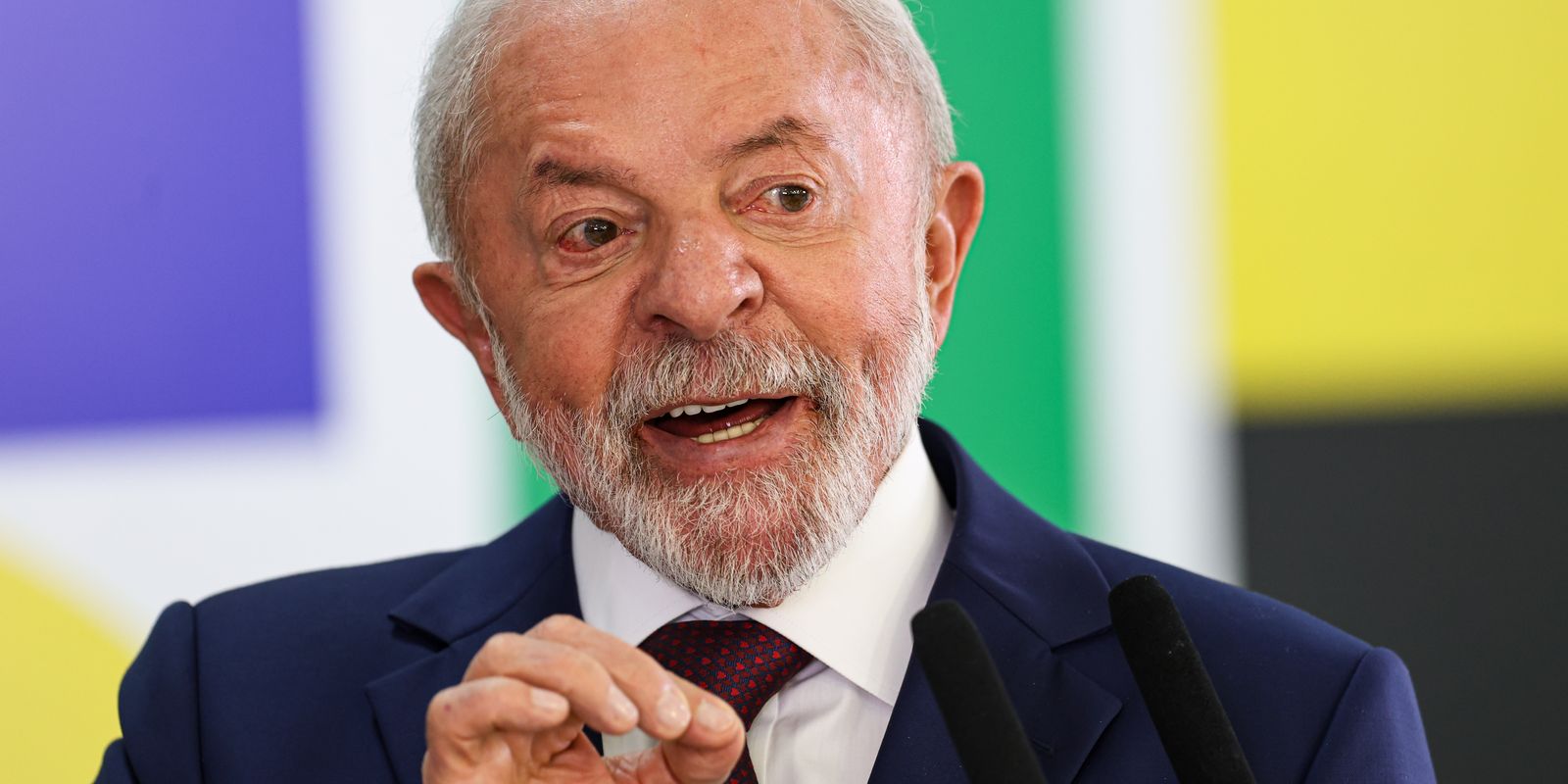
President Luiz Inácio Lula da Silva sanctioned the 2026 Budget with 26 vetoes, approved by the National Congress in December. The Budget Guidelines Law (LDO) was published in extra edition of Official Gazette of the Union (GIVE) on Wednesday (31).
The total Union Budget for 2026 is around R$6.5 trillion. The text also highlights that 28% of the fiscal and social security budgets (OFSS) will be allocated exclusively to the payment of interest on public debt, which is equivalent to R$1.82 trillion.
The global spending limit for the Three Powers was set at approximately R$2.4 trillion.
For 2026, the sanctioned Budget foresees a primary surplus of R$ R$34.26 billionpotentially reaching a surplus of up to R$68.52 billion. According to the fiscal framework legislation, the target will be met even with zero results.
The fiscal target for 2026, set in the LDO, allows for a primary deficit of up to R$6.75 billion.
Investment expenses earmarked for the Growth Acceleration Program – New PAC, limited to R$5 billion, will not be considered in the primary deficit target.
The text guarantees that the annual review of the value of the minimum wage defined in the budget law is compatible with the calculated inflation (variation in the Consumer Price Index – INPC) and with the valuation rule. In the case of 2026, a minimum wage is equivalent to R$1,621starting January 1st.
The LDO also explains that it is prohibited to readjust, in 2026, the benefits of food assistance or meals and pre-school assistance in a percentage higher than the accumulated variation in the Broad Consumer Price Index (IPCA), since the last review of each benefit by the Three Powers, the Federal Public Ministry and the Federal Public Defender’s Office.
Parliamentary amendments
The text provides for around R$61 billion in parliamentary amendments for deputies and senators to allocate to works, programs and projects in their states and municipalities. Of this total, around R$37.8 billion will be allocated to mandatory amendments, with mandatory payment. Individual amendments, from deputies and senators, total R$26.6 billion; those for benches, allocated to state benches, received R$ 11.2 billion.
Vetoes
On Wednesday, also was published in extra edition of GIVE the text in which the president legally explains why he vetoed each of the 26 sections of the bill approved by the National Congress.
In the presidential message, one of the vetoes described is the section that increases the value of the Party Fundused by subtitles to finance campaigns and cover activities. In the order, the president justifies that the measure would reduce the amount allocated to the payment of other Electoral Justice expenses and would exceed the limit established by law for the government’s primary expenses.
Another section vetoed by the government would allow the payment of amendments even for projects without a prior environmental license or engineering project. The Executive explains that these procedures are requirements for starting project execution and that identifying technical or legal impediments would enable the reallocation of resources to other viable projects.
The president also vetoed an excerpt that allowed unpaid amendments to be resurrected from 2019 to 2023, the so-called “remains to be paid”. The government understands that resources not released between 2019 and 2023 would be “in disagreement with the validity period of unpaid outstanding amounts, established by Decree No. 93,872, of December 23, 1986”.
Regarding expenses that could not be contingency, the order lists those arising from inspections by regulatory agencies, costs with agricultural defense, programs to include women in the energy transition and expenses with supporting the education of people with high skills. In the message, the president defends that these expenses cannot be contingent because they “reduce the flexibility and freedom of bodies in managing their own budgetary expenses.”