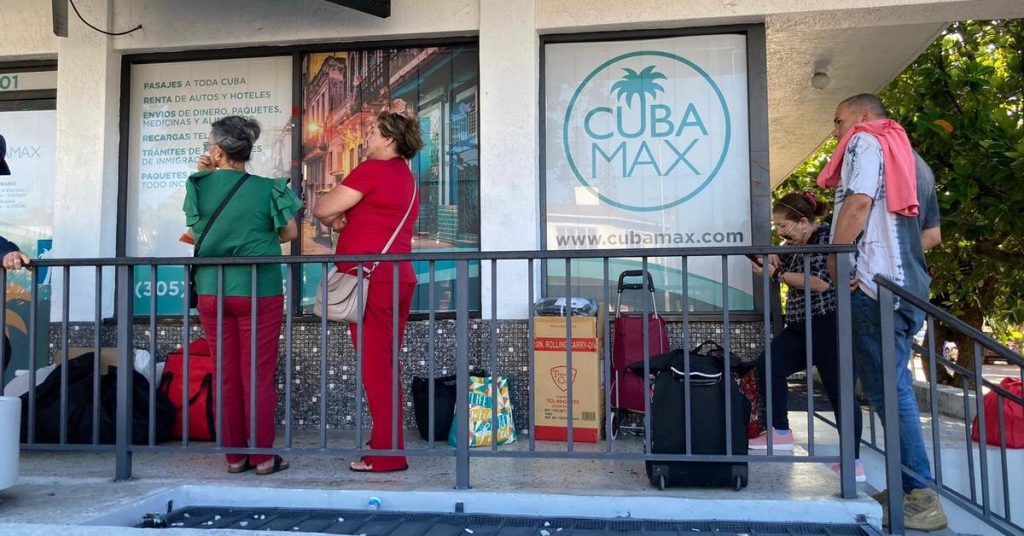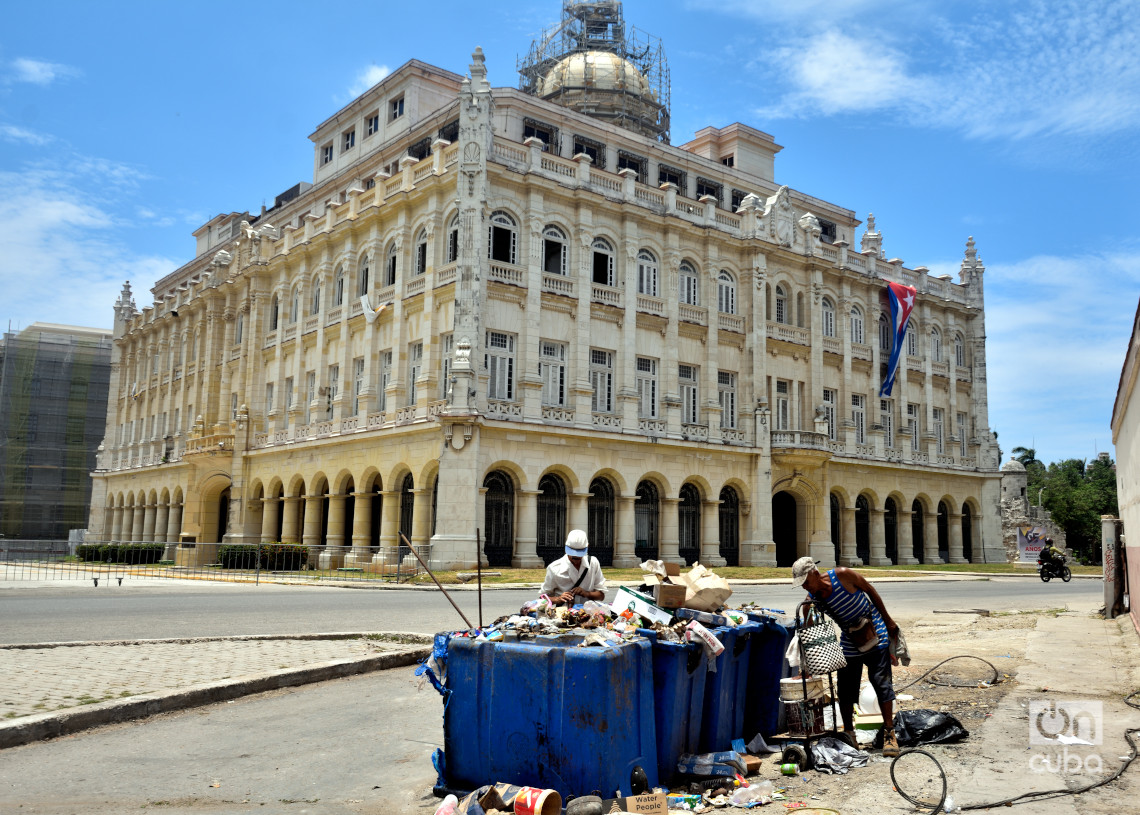
We no longer talk about the rates of ETECSA. Time and the continuity of the same scenario lead us down the sad path of normalization.
The decision—almost always surprising—is made; People react and, in some cases, the explanation comes: “you have to understand”; “it’s the only way”; “It will be provisional.” The echo of resistance lasts a few days, until adapting becomes the syrup that alleviates survival.
One begins to forget what it was like before, and it seems that the new price lists were always there. It seems that citizens without family abroad have always been third category.
We no longer talk about the stores in MLC. Those that appeared to collect the foreign currency that the State needs, among other things, to supply the basic basket and the stores in national currency, where we would have access to the essentials.
Food passed to MLC and shortages arrived to make way for rampant private property. Today, the MLC loses its value, dollar stores grow, the Classic card is welcomed and prices are determined by an unofficial rate on the informal currency market.
It seems that citizens without dollars have always been third class.
We are no longer talking about a functional electrical system. The families adapted their routine: they cook, wash, charge their equipment when the electricity comes on, for three or four hours, at any time of the day.
It seems that it was always like this: the ladies sitting in the doorways with their lost gaze at the sky; the streets, dark and silent, because the fear of being assaulted grows.
It seems that citizens without their own means to generate electricity have always been third category.
What is people talking about in Cuba, if not this? Baseball? Seven inning games and too many runs? From the blockade? To leave the country? From the times when life was better? From those college years with squid and boiled sweet potatoes? Of the visits of foreign leaders to the country? Of the next president? Of art? Of “the situation“, of the Special Period? Of the El Toque rate?
There was speculation about Gil and his sentencesbecause the official notes are no longer enough. We survived another hurricane and suffered from a new virus that stiffens the body’s joints, and when it seems to end, it returns with stronger pain. And the medicines?
At least three generations of Cubans do not know their country without crisis. They have floated between the “emerging measures” that end up being “definitive” and the natural and epidemiological conditions, which are increasingly adverse.
Faced with this permanence, why does one write? Who are the words addressed to? It is not the past, which is blurred in the fog of selective forgetting that survival imposes. Nor is it to the future, which for so many has ceased to be a national project and has become an individual path, a destination towards the second or first category.
To the present? On an island where problems are the constant landscape, it is like describing the sea to fish. We all know and suffer reality; some more than others, depending on the category.
Perhaps, deep down, one writes for oneself. To not give up on normalization; to recognize and remember that things were not always this way, or that they should not be. To create an intimate testimony, a campaign diary in this silent war that we wage against resignation.
Writing becomes an act of faith: naming reality, even if it does not change it, is a way of denying it the ultimate victory.
No, ETECSA measures did not always exist, nor the stores in MLC nor this absolute darkness.
We did not always have former economy ministers accused of espionage or a former Minister of Labor and Social Security blaming the poor for their povertyand the issue treated as if it were a breach of a municipal agricultural plan. Medicines for urgent needs did not always have to be found on the black market.
There was a time when the dollar was penalized; There was a time of CUC, of rice in the warehouse, of beans at ten pesos a pound. There was a National Baseball Series with stadiums full and lit at night, and nine-inning games. There were entire families in front of the television enjoying those soap operas.
There was a frontal fight against the “categories” of people; There was an idea of “with everyone and for the good of all.”
The act of saying it, of pronouncing it, in itself, represents a tiny territory of freedom.