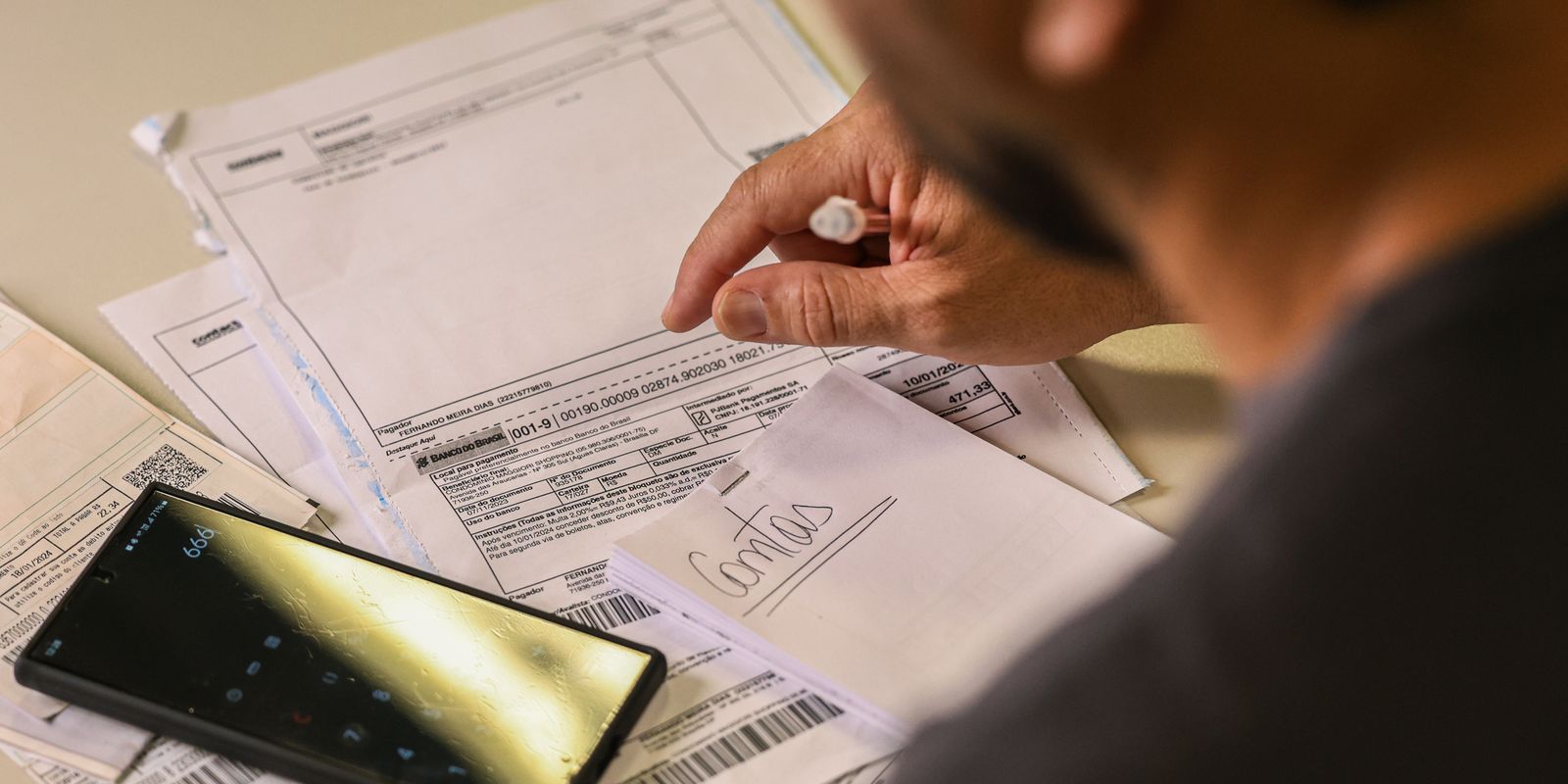
The new minimum wage, in the amount of R$ 1,621comes into effect from this Thursday (1st). The adjustment, of 6.79% or R$103, was confirmed by the Ministry of Planning and Budget on the 10th. The previous minimum wage was R$1,518.
The new value was informed after the publication of the National Consumer Price Index (INPC), used to calculate the annual minimum wage adjustment. The indicator registered 0.03% in November and accumulates 4.18% in 12 months.
According to the estimate of the Inter-Union Department of Statistics and Socioeconomic Studies (Dieese), the new minimum wage will inject R$81.7 billion into the economy. The calculation considers the effects on income, consumption and collection, even in a scenario of stricter fiscal restrictions.
Understand
The minimum wage adjustment rule determines that the value has two corrections: one for the 12-month INPC accumulated until November of the previous year, that is, 4.18%, and another for the two-year economic growth.
On December 4, the Brazilian Institute of Geography and Statistics (IBGE) reviewed the data on the Gross Domestic Product (GDP, sum of goods and services produced in the country) for 2024, confirming expansion of 3.4%.
However, the fiscal framework, the mechanism that controls the evolution of public spending, determines that the gain above inflation is limited to a range of 0.6% to 2.5%.
According to the rule, the minimum wage in 2026 would be R$1,620.99 and, with the rounding provided by law, it becomes R$1,621, an adjustment of 6.79%.