When the Dominican Republic close this 2025 with close to 12 million visitors, the data will be read as a new record. But, beyond the headline, the figure will confirm something deeper: the dominican tourism It stopped being an expanding sector to become a mature industrywith structural weight in the economy, stable rules and a proven ability to attract global investment.
That arrival point is the result of a quarter of a century of transformation, in which hotel expansionair connectivity, continuity of public policies and a public-private alliance which, with tensions and adjustments, has been functional. The country went from selling sun and beach on a large scale to competing for higher value segments, without giving up the volume that made him the leader of the Caribbean.
Of the emerging tourism to the consolidated system
At the beginning of the century, the tourism It was already important, but it still did not order the national economy. The hotel offer was around 45,000–50,000 roomsconcentrated in a few poles, with strong dependence on European tour operators and limited air connectivity.
Twenty-five years later, the map is different. Today the country exceeds 85,000 rooms formal hotel companies, according to sectoral data, with Punta Cana–Bavaro concentrating close to 60%, but with new poles that have gained prominence: Samaná, michesthe South coast and the tourism urban in Santo Domingo.
That growth was not linear, but it was sustained. Even the pandemic —the biggest global shock in the sector— ended up functioning as stress test surpassed
The pandemic as a turning point
The year 2020 paralyzed the world tourism. In the Dominican Republicthe blow was immediate. Hotels closed, flights suspended, employment at risk. But the institutional reaction made the difference.
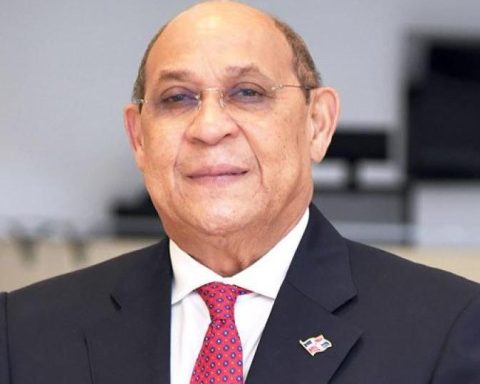
The early responsethe health protocols agreed upon with the private sector and an aggressive promotion strategy allowed a faster recovery than the regional average. In this process, the Ministry of Tourism of the Dominican Republicwith David Collado at the head and the president Luis Abinaderpushing in unison with the private sectorceased to be just a promoting entity to assume a coordinating and strategic role, aligning public and private decisions at a critical moment.
The signal sent to market was clear: the country was betting on tourism not as a situation, but as national priority.
The public-private alliance like spine
One of the less visible—but most determining—factors of Dominican tourism success has been the continuity of the public-private alliance. The model, based on consultation and consensus, has worked.
He State It has guaranteed international promotion, incentives, regulatory stability, exchange transparency and institutional support. He private sector has responded with sustained investment, hotel expansion and improvement of standards. This relationship explains why, across five different governments, the tourism policy He has not suffered traumatic ruptures.
The recent arrival of great North American chains of luxury —W, St. Regis, Ritz-Carlton, Four Seasons— is a direct consequence of an environment perceived as predictable, something rare in emerging economies.
The airport that ordered the destination
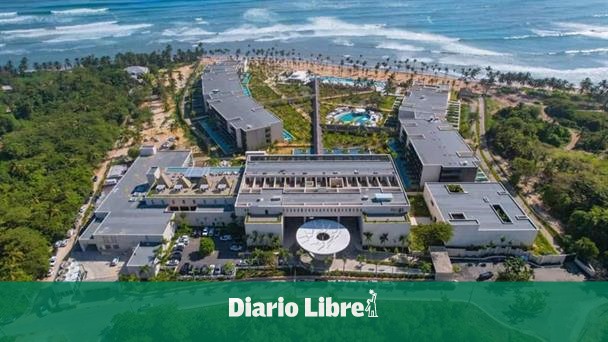
If there is an infrastructure that symbolizes this transition, it is the Punta Cana International Airport (AIPC). Operated under a private modelthe airport became the country’s main air entry point, today handling more than 60% of international traffic.
Its growth accompanied—and in many cases promoted—hotel development. More routes, more frequencies, more issuing markets. Punta Cana stopped depending on regional hubs and connected directly with dozens of cities in the United States, Latin America, the Caribbean, Canada and Europe.
He AIPC It transports tourists, structures the tourism model, reduces logistics costs and makes the entry of segments with greater purchasing power viable. It is a concrete example of how private investmentaligned with a country strategy, may have systemic impact.
From counting visitors to measuring value
For years, tourism success was measured almost exclusively by volume. Today, without abandoning that strength, the focus begins to shift towards the value per visitor.
Before massiveness, the new brands of luxury search differentiated experienceslonger stays and average expense higher. This development forces us to raise standards, diversify the offer and rethink the traditional all-inclusive model.
That bet is about complementing one scheme with another, superimposing layers: mass tourismYeah; but also premium tourismurban, nature and events. The country tests the good practice of destinations that have surpassed the initial growth phase.
rooms, employment and chains
The increase of rooms —from less than 50,000 to more than 85,000—has had a direct effect on the employment. He tourismwith a contribution to GDP close to 15%, is today one of the main generators of direct and indirect work, impacting transportation, construction, food, professional services and commerce.
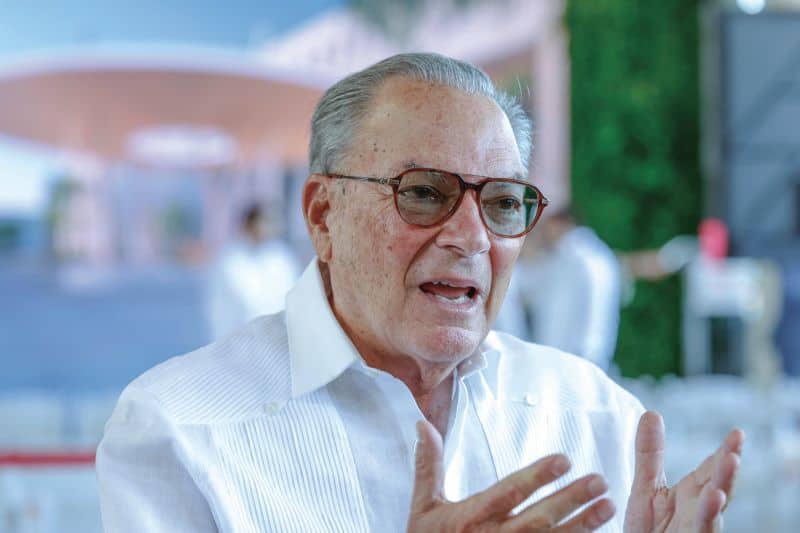
Frank Rainierifounder of the Puntacana Group, has warned that the challenge persists, and reminds us of the need to deepen the productive chains local and continue the diversification of the offer. Although there has been progress, the debate about how much of the value generated remains in the national economy is still open. A tourism consolidated, Rainieri points out, now requires greater integration with agriculture, local industry and regional economies.
The new tourist map
In the last five years, the tourism policy has tried to deconcentrate growth. Projects in michesSamaná and the South coast aim to reduce pressure on traditional poles and better distribute territorial benefits.
Experts admit that it is not a quick process, but the simple fact that it is on the agenda indicates a change of stage: he tourism It is no longer discussed as a bet, but as a system that must improve.
Dominican tourism today is unrecognizable from that of the late nineties. It changed scale, complexity and ambition. The combination of private investment, state promotion, efficient airport infrastructure and continuity of public policies turned the sector into an economic pillar and the country’s international presentation letter.
The challenge, from now on and for the next 25 years, is not to grow more – although it will continue to grow – but, Rainieri points out, it is to grow better: with more added value, greater environmental sustainability and a more equitable distribution of benefits.
Source link
Related Posts