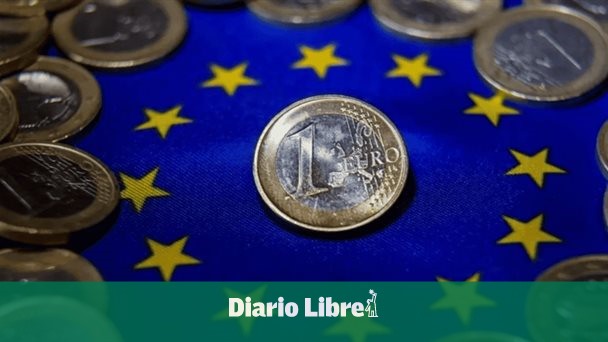
The euro closed this Wednesday a year 2025 revalued against the dollar, with estimates that see the single currency with an annual rise of 14%, something that owes much to the weakening of the greenback, which complicates the exports of the euro zonewhich as of January 1 will have a new member: Bulgaria.
The single currency began the year that ends with this New Year’s Eve with a bad record against the dollar, since it fell last January 2 at a value never seen since November 2022: $1,027.
That fall was justified at the time by the divergent progress of the US and the economy. euro zone.
Although the US GDP would end in 2024 with an increase of 2.8%, the expansion in the ‘Old Continent’ was 0.7%.
The president’s return to the White House as president donald trumpwhich took office on January 20 of this year, however, marked the beginning of a revaluation of the euro against the greenback until its value this Wednesday, in which the single currency was trading at $1.1732 around 16:00 GMT.
A high at $1.1807
The 1.1807 dollars that it was worth the euro the past July 1 It was the maximum this year.
This rise, which placed the single currency in a position never seen since 2021, occurred in a context of rapprochement between Washington and Brussels on trade matters, after Trump launched a international offensive of imposition of charges on imported products.
This approach resulted in a framework agreement between the US and the European Union (EU) by which Washington committed to applying an average tariff of 15% to most goods from the Old Continent, while Brussels committed to eliminate tariffs for American products.
“The negotiated outcome avoids a harmful escalation and lays the foundations for continuing dialogue and developing transatlantic relations,” the parties noted in the joint statement issued by the US and the EU on August 21.
Since that month, the euro has moved between $1,159 and $1,173 this Wednesday, values that, as explained to EFE Hubertus Bardteconomist at the Institute for Economics Germany (IW), is fundamentally due to the current weaknesses of the US economy.
Trump weakens the dollar
“Overall, the economic outlook in the US has worsened,” said Bardt, alluding to the negative effects of tariff policy of Trump and also to an unfavorable American situation.
“In reality, what has happened is that the dollar is the one that has weakened” for a fragile economic situation in the US, something that adds to Trump’s “pressure on the Federal Reserve” to lower interest rates, Bardt added.
For him, the strength of the euro, “which is at levels of 2014 or 2015″it is noticeable “in that our export prices are becoming more expensive”, something that harms European products.
Bulgaria joins the euro
According to Bardt, the situation will remain stable for the euro in 2026, since there is no hint of change in the large European economies, with Germany whose GDP appears stagnant while France has become at the level of financial policy a “central risk for Europe”.
Not in vain, the French treasure reported on Tuesday that it plans to issue 310 billion euros of debt to medium and long term during the next year.
This amount represents a new record, although this amount may be adjusted if necessary based on the budget law for 2026, which could not be approved so far.
In this context, Bulgaria will become the country number 21 of the euro zonesomething that, regardless of the immediate future of the performance of the single currency against the dollar, will be celebrated, among other things, with the lighting of the European Central Bank (ECB) headquarters building in Frankfurt in January.