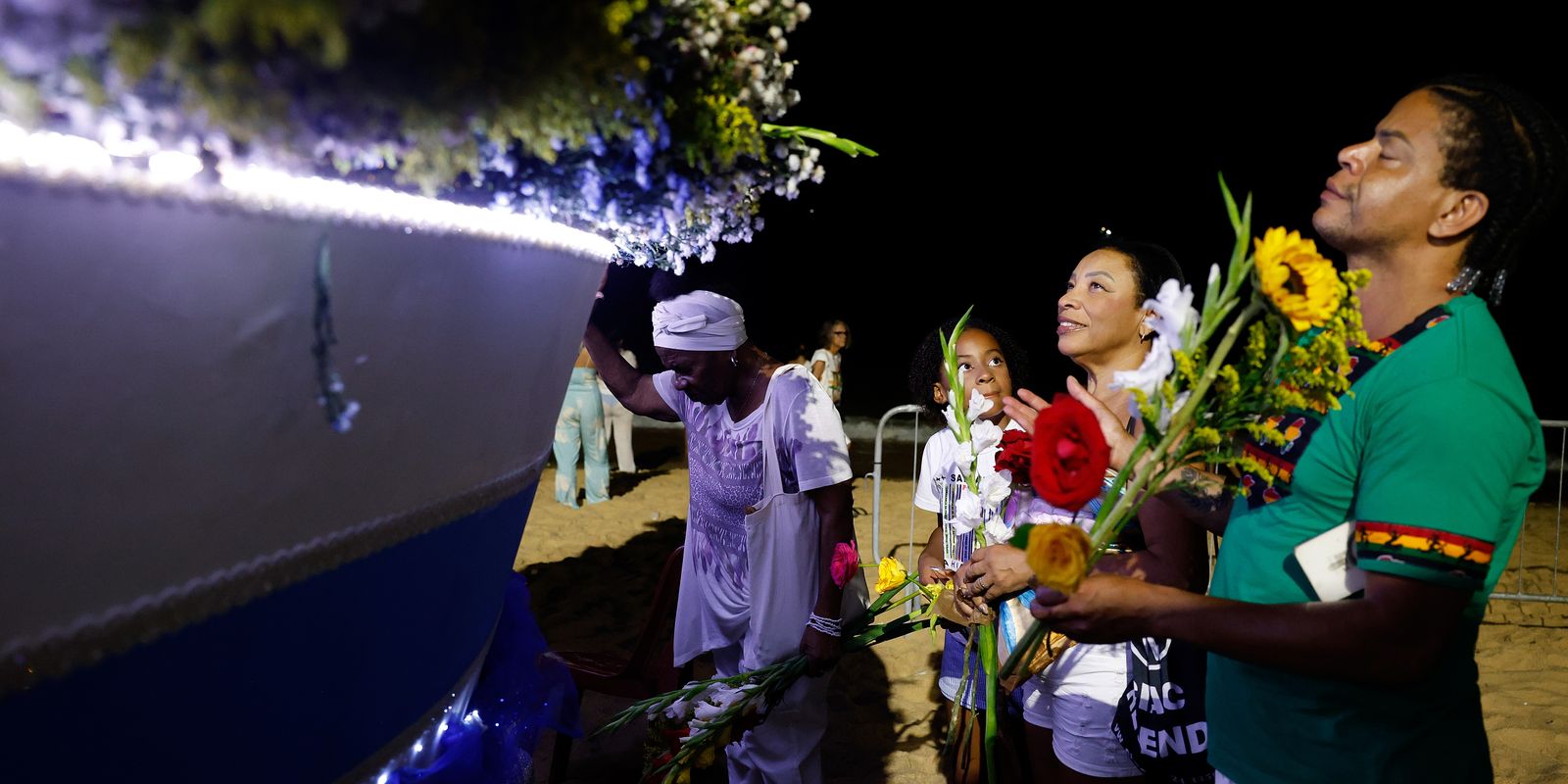
Ana Beatriz de Oliveira, 23 years old, was the first to arrive at Praia Vermelha, in the south of Rio de Janeiro, to watch and participate last night (30), the eve of New Year’s Eve, in the ritual in devotion to Iemanjá, a female orixá that in Afro-Brazilian religions, such as Candomblé and Umbanda, represents the waters, whether in the seas or rivers.
The young woman brought yellow roses to present to the entity, generally revered in the colors blue and white. “I went to buy a white rose, but there weren’t any. All I had was a white palm, but it was withered.”
The yellow roses were offerings from Ana Beatriz in gratitude to Iemanjá.
“I came to thank you for the year. I came to thank you for being able to graduate [em arquitetura]because it was very difficult”, she says, also saying that she is employed in the last office where she interned before graduating.
Washington Bueno, 58 years old, hairdresser and makeup artist, managed to buy white palm trees that were still in bloom for Iemanjá. I wanted to ask her for work, health and love. He, however, had a special demand: less gender-based violence.
“We Brazilians are a little conflicted. There are questions of [falta de] respect for others, right? We had this year 2025 with so many attacks on women”, he recalls. “We talk so much that our country is a kind place. Where is this kindness? I’m here to ask for another year of awareness of each other’s well-being and care.”
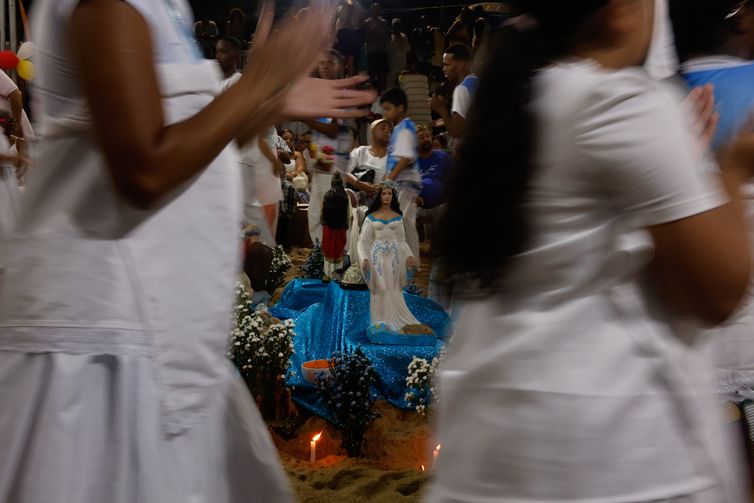
People gather to celebrate, give thanks and bring offerings to Iemanjá, mixing Yoruba traditions, religious syncretism and cultural preservation, at Praia Vermelha, in Urca, south of Rio. Photo: Tânia Rêgo/Agência Brasil
The white palms, yellow roses and other flowers taken to Praia Vermelha could be deposited, along with letters, perfumes and champagne, in a blue and white boat, about two meters long, with the image of Iemanjá, and which decorated the space for the tour on the beach sand organized by the Associação Umbanda e Cultos Afros (Auca).
The cult, called “Iemanjá’s Gift”was the fifth event to take place in the last week of the year in devotion to the entity, and which received support from the City of Rio de Janeiro (Coordination of Religious Diversity).
>> New Year’s Eve 2026: see where to welcome the new year <<
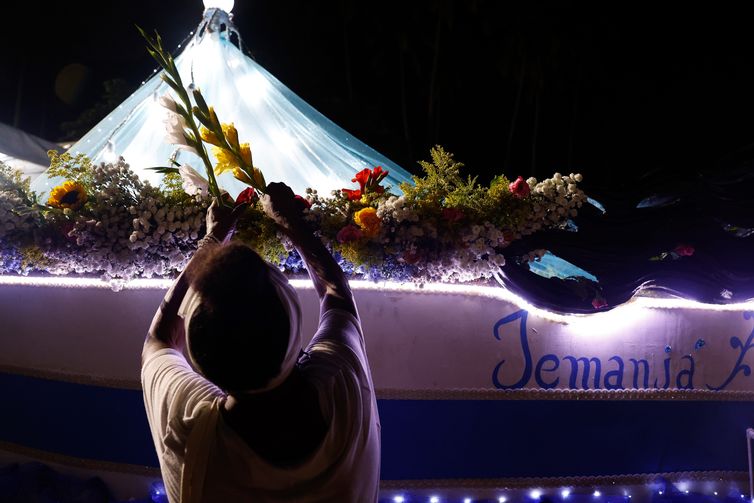
Celebration mixes Yoruba traditions, religious syncretism and cultural preservation, at Praia Vermelha, in Urca, south of Rio. Photo: Tânia Rêgo/Agência Brasil
Gospel stage
Despite the city hall’s logistical and security support for African-based religious events, there are Umbanda leaders who see different treatment from other religions in end-of-year events.
Babalawô Ivanir dos Santos, researcher and doctor in Comparative History from the Federal University of Rio de Janeiro (UFRJ), was surprised by the city hall’s sponsorship of a stage dedicated entirely to evangelical music in Copacabana on New Year’s Eve (today, the 31st). “Why this privilege?” he asks in an interview with Brazil Agency.
“It’s not about being against the gospel stage, it’s not that debate. The debate is about having a stage for just one religious song”, he ponders when saying that Catholics, Muslims, Buddhists, as well as the people of Candomblé and Umbanda produce religious music for their rites and praises.
He fears that the erasure of cultural and religious traditions will end up imposing a “hegemonic” spiritual culture that is not very tolerant of other forms of faith.
In a press conference yesterday, after hearing about the criticism of support for gospel music, the mayor of Rio, Eduardo Paes, highlighted that “there is a very significant portion of our city who like gospel music and who want — and can — have their space”
“This audience didn’t come to Copacabana and now they’re going to come, they’re going to hang out with people making offerings to Iemanjá. This is the religious syncretism of Brazil and our city.”