Roberto Caballero Grande denied having proposed removing rice and potatoes from the popular diet, but rather that a healthy diet should not be concentrated in one or two products.
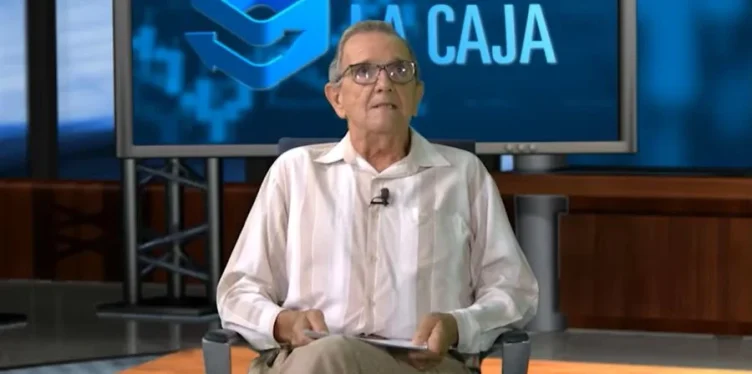
MADRID, Spain.- After several days of controversy, criticism, ridicule and memes on social networks, Roberto Caballero Grande, former member of the National Executive Committee of the Cuban Association of Agricultural and Forestry Technicians, reacted publicly this Monday, December 29, to the controversy generated by his statements broadcast on Cuban state television about eating habits on the Island.
In one Facebook post, Caballero assured that he had stayed out of the debate, but decided to intervene in the face of what he described as “such a repetitive error,” with the objective—as he stated—of making clarifications.
Among the first points, the official specified that he has not belonged to the Ministry of Agriculture or any state entity for more than 20 years, and added that he does not consider that official institutions coincide with the criteria that he recently expressed on television.
“I exercised the sacrosanct right to express my opinion,” he wrote, emphasizing that his statements can be discussed and that he is open to debate “in an ethical and respectful manner.”
Caballero denied having proposed eliminating rice or potatoes from the population’s diet. “I NEVER said that rice and potatoes should be taken away from the people,” he stated, and clarified that his argument focused on “a healthy and balanced diet should not be unbalanced towards one or two products.”
In his message, he recognized the chronic lack of inputs for agricultural production, although he noted that this situation has been going on for years without it having translated into concrete solutions or improvements in the availability of food. In this context, he defended the need to prioritize crops “more adapted to our conditions and therefore less demanding of these inputs.”
Likewise, he maintained that the historical emphasis on achieving large volumes of rice has caused the neglect of other crops, which, as he expressed, has led to widespread shortages. “We are left without one or the other,” he wrote, while suggesting that real diversification would allow volumes to be offset between different foods.
Regarding potatoes, he indicated that he preferred not to delve deeper, considering that “more than 50% of the country barely ate potatoes, even in the years of greatest production,” and noted that their distribution was concentrated mainly in Havana and some provincial capitals.
Finally, Caballero responded to those who speculated about a possible dismissal, stating that he was removed from office since the beginning of this century “for saying what he thinks.” As he wrote, since then his goal has been to help Cuba achieve food self-sufficiency, although he acknowledged that the policies applied so far have only led to “extreme shortages and inflation.”
The statements come after his words on national television generated a strong public reaction, in the midst of the current food crisis that the country is going through.
Despite the official’s statements, millions of Cubans consider potatoes and rice not only as basic foods, but as symbols of food security in a context of chronic shortages, inflation and deterioration of purchasing power.