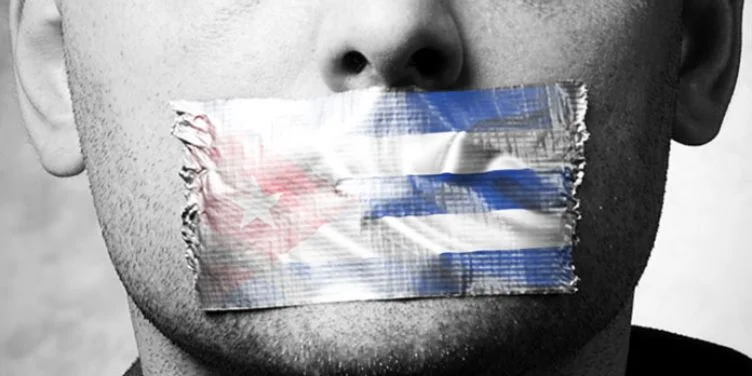
Cubalex denounces a new case of criminalization of dissent in Cuba, with eight people prosecuted for expressing themselves on Facebook and other digital platforms.
MADRID, Spain.- The Prosecutor’s Office of the province of Las Tunas has requested sentences of between six and nine years in prison against eight Cuban citizens accused of expressing political opinions on social networks, according to denounced the Cubalex Legal Advice Center. The defendants face the charge of “propaganda against the constitutional order”, a figure included in article 124 of the current Penal Code.
According to the complaint, the alleged facts are based on publications, comments, live broadcasts and videos broadcast on digital platforms, mainly Facebook. The accusation does not describe acts of violence or explicit calls for the use of force, but rather expressions critical of the Cuban political system, valued by the Prosecutor’s Office as a threat to the constitutional order.
The eight citizens remain in provisional prison since March and April 2024 in the Las Tunas Provincial Prison. The judicial process is located in the Chamber of Crimes against State Security of the Popular Provincial Court of Santiago de Cuba, a body that concentrates this type of cases considered sensitive by the regime.
Cubalex warns that the tax file includes assessments of the social conduct, personal environment and ideological position of the accused as aggravating elements, which, in the opinion of the organization, evidences a use of criminal law to punish ideas and not specific criminal conduct. It also points out procedural irregularities, including the lack of clarity in the alleged facts, limitations on access to evidence and the unjustified extension of preventive detention.
Among those prosecuted is Carlos Alberto McDonald Ennis, 52, whose health status has generated special concern. He suffers from several chronic diseases, including diabetes, hypertension and a malignant tumor, without having received adequate medical care during his detention.
Cubalex maintains that these cases are part of a systematic pattern of criminalization of dissent in Cuba, where the authorities resort to broad and ambiguous criminal offenses to punish the exercise of freedom of expression, especially in the digital space.
The organization announced that it will continue documenting the process and denouncing possible violations of international human rights standards.