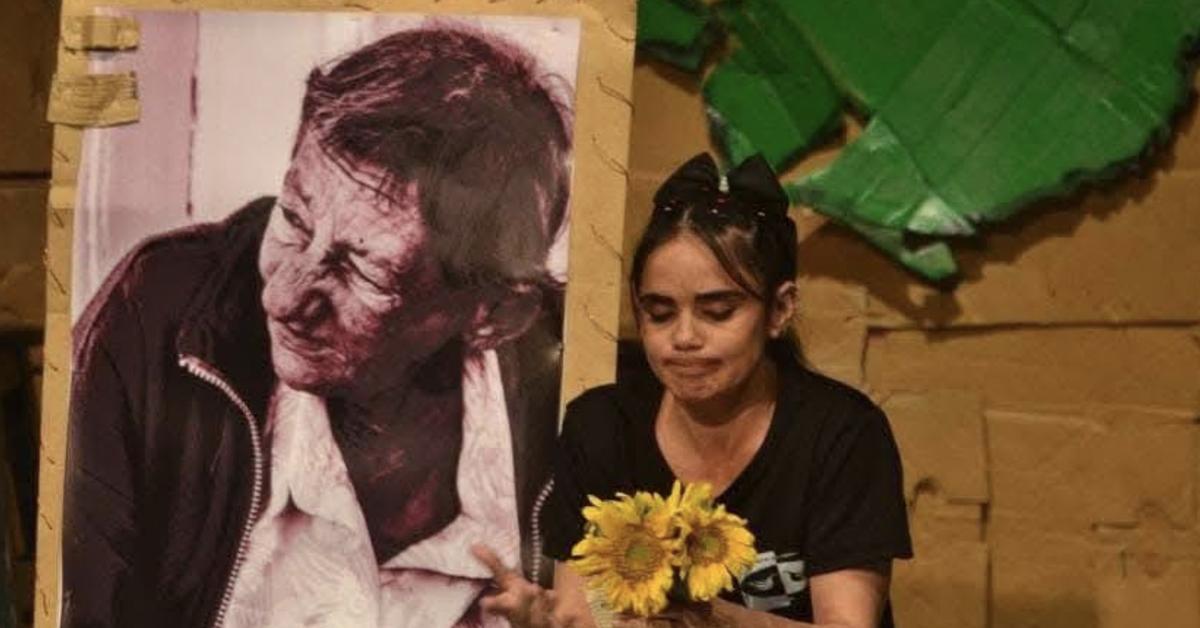
Havana/The Camagüey theater woke up in mourning with the news of the death of Anaisys Rodríguez Bermúdez, founding actress of the Teatro del Viento group, who died last Sunday after suffering from cancer. Her departure marks goodbye to an essential performer and one of the figures who fought for the consolidation of one of the most recognized theater groups in Camagüey.
His death confirmed it Freddys Núñez Estenozdirector of the group, who shared an affectionate farewell message on social networks. “Rest in peace, beautiful girl… you did not deserve to suffer more,” he wrote, in reference to a process lived discreetly, far from the stage, but accompanied by those who loved and admired her.
Anaisys Rodríguez – known artistically as Ana Rodbers – remained linked to Wind Theater since its beginnings. Her acting and pedagogical work constantly accompanied the development of the group, even in recent years, when she was already noticeably ill.
His last appearance on stage occurred a year ago in the play Moira Criolla. By then, the physical wear and tear was visible, although a contained energy and a presence sustained by the experience persisted on stage. “Five seconds after entering the scene, my body vibrates with an energy that is not mine,” the actress herself had written in a Facebook post.
His last appearance on stage occurred a year ago in the play Moira Criolla
In that text, Rodríguez described acting as a vital commitment. “I didn’t choose it, it was an agreement with the Universe,” said the actress.
After the news of his death became known, social networks were filled with farewell messages from artists, colleagues and former students. The actress Darlin Cruz she wrote on Facebook: “Rest in peace, Ana. You were a wonderful actress. You were my teacher and I also had the pleasure of working together and living together. May God have you in glory, because the wind will always remember you.”
Days before his death, his theater group carried out a gesture that today acquires a particular symbolic weight. In a rehearsal open to the public of a still untitled work, the group worked on a scene marked by the wait for a character who never arrived. Rodríguez was not physically present, but his absence occupied the entire space. While the director pointed out doors, windows and objects that did not yet exist, the actors inhabited the stage as if everything were there. The rehearsal became an act of recognition: a tribute from the place she always inhabited, the stage.
“The wind is everywhere,” proclaims the group’s slogan. Today that phrase takes on a special meaning. Anaisys Rodríguez is no longer here, but she lives on in the characters, in the shared teaching and in the history of Camagüey theater.