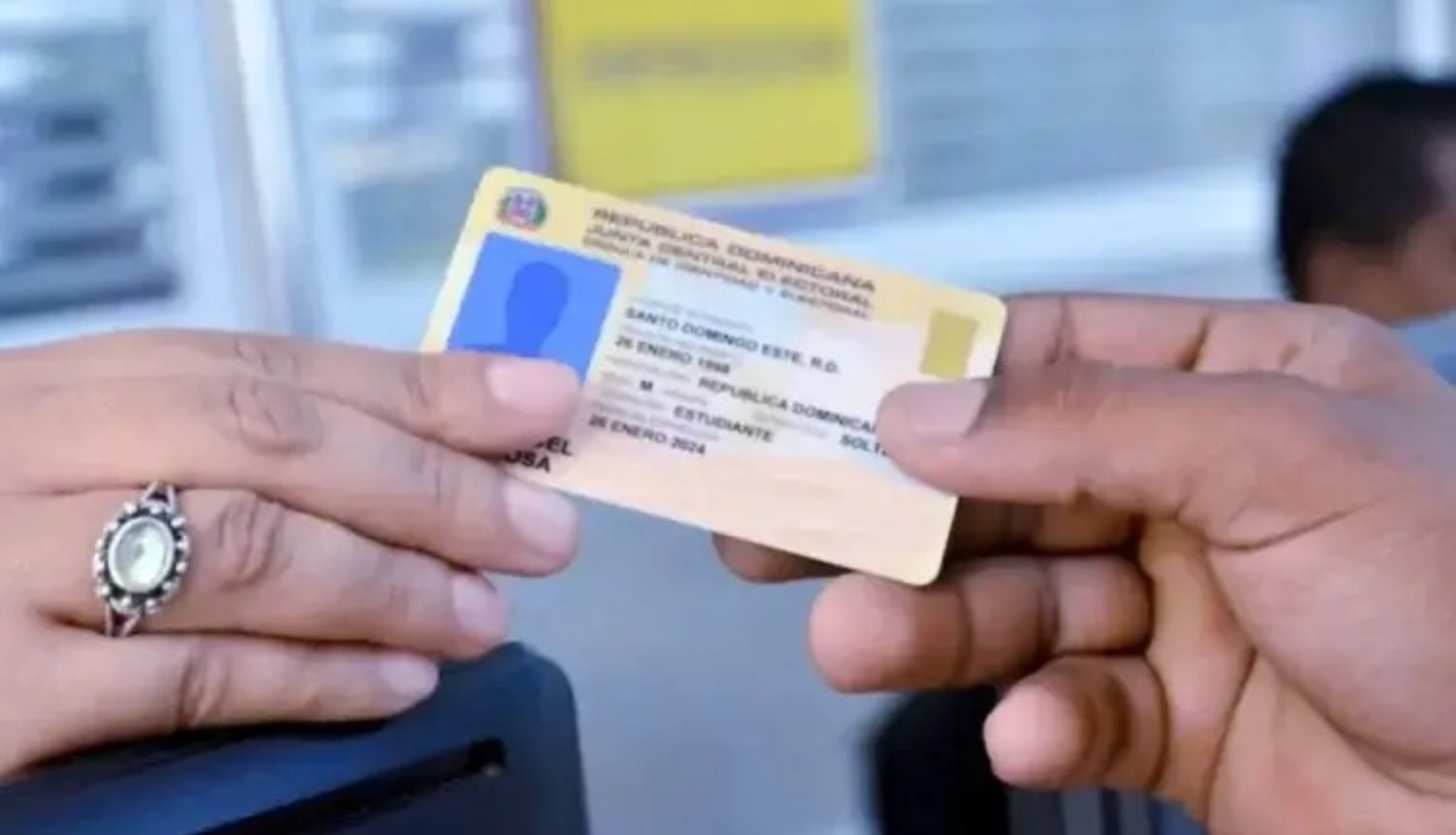
HOLY SUNDAY.-The Central Electoral Board (JCE) has had to deal in a systematic and sustained manner with attempts to fraud the Civil Registry.
During the first ten months of 2025, the plenary session of the organization approved the cancellation of 38,000 identity cards, most linked to reports of deaths, but also to identity theft schemes, data falsification and document duplication.
Official data collected between January and October reveal that 36,106 cancellations were made after the death of the holders was confirmed, a routine process. However, beyond the administrative component, the JCE was also forced to act against direct attempts at fraud while working on the preparations for a new ID.
Impersonation
Among the most critical cases are 340 cancellations due to identity theft, that is, situations in which a second person tried to withdraw, use or validate another person’s ID. The JCE reports indicate in almost all of these cases that it was a second person who withdrew the document.
Added to this are 90 additional cases of impersonation of deceased persons, in which individuals sought to benefit from documents belonging to already deceased citizens. Another sensitive area is that of cancellations due to false data, which reached a significant number of 1,239 cases, the result of investigations that detected irregularities in the information provided to obtain the birth certificate.
Many of these falsehoods relate to fraudulently reported births. The agency also canceled 196 identification cards due to double registration, situations in which a citizen has two different identity numbers due to errors in the identification process or due to improper use of similar records. Although these cases usually have administrative origin.
Finally, 21 cancellations were recorded due to duplicity in the birth declaration, a less common anomaly, but equally important, since it affects the uniqueness of civil identity from its origin. In global terms, although the majority of cancellations are associated with natural purges of the registry – such as deaths – the number of fraud attempts remains considerable.
The evaluated period also coincided with the implementation of new verification systems, audits of the Civil Registry, and the massive review of documents in the context of the ID renewal project.
Verification
It is not surprising that one of the greatest emphasis that the president of the JCE placed in the presentations he made to political parties and civil society entities about the new ID project, was on security measures.
In these presentations, the obsolescence of current plastic was indicated, highlighting that it is easy to manipulate because the machines used to configure it can be easily purchased in digital markets.
According to the JCE’s explanations, the new document will have extreme security measures, similar to those used on banknotes, in addition to other novelties, such as the incorporation of a chip.
New ID
— The plans
The JCE plans to begin with the delivery of the new identity and electoral card for January 26, 2026, starting with the President of the Republic and then extending it in stages to the rest of the population.