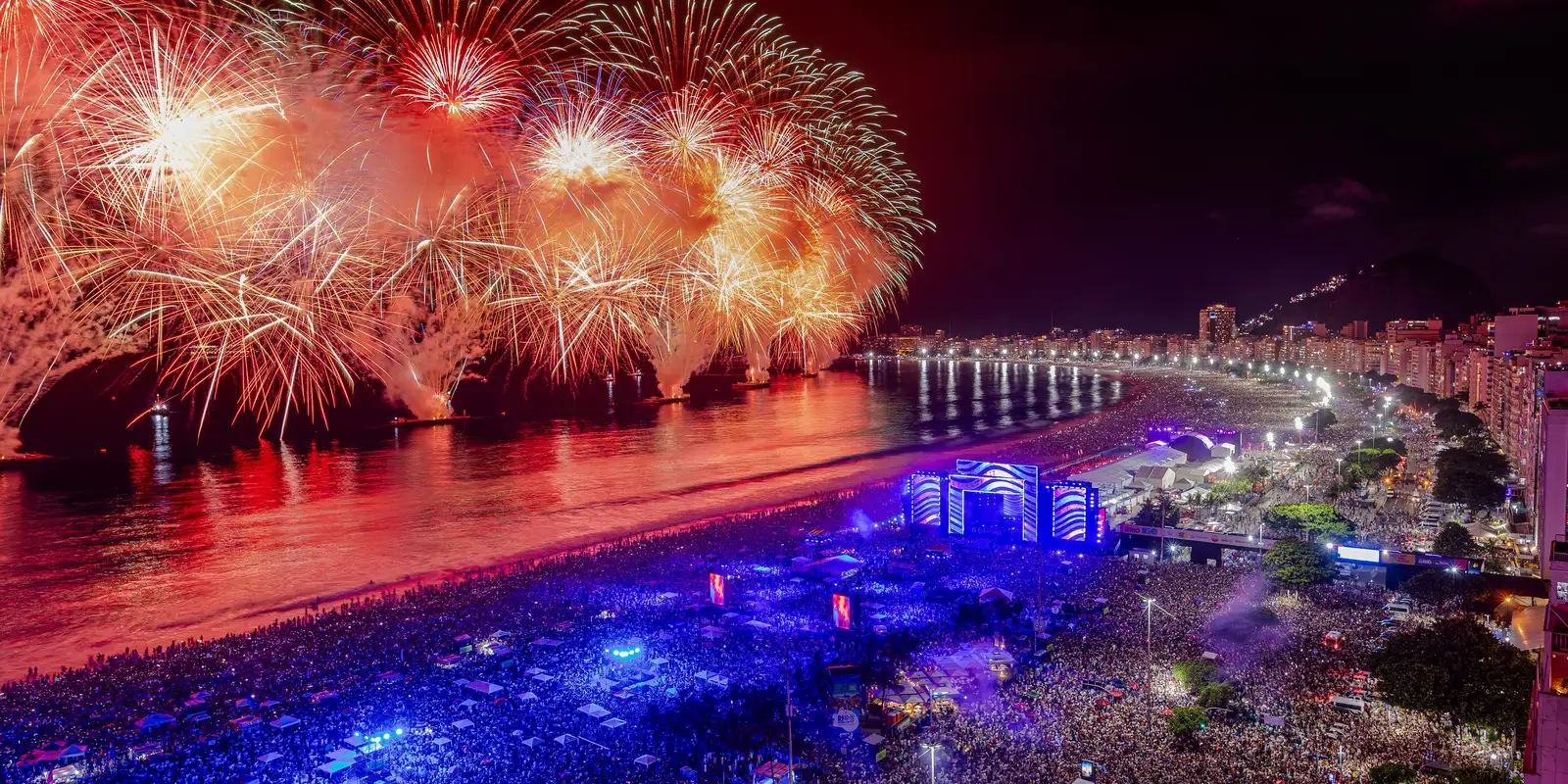
Data released this Monday (29) by the Lodging Union of the Municipality of Rio de Janeiro (HotéisRIO) show that hotel occupancy is on the rise for the New Year’s Eve in the capital of Rio de Janeiro. In the city, the average for the period from December 31, 2025 to January 3, 2026 is 87.01%.
The most sought after regions are Copacabana/Leme, with 91.83%, then Ipanema/Leblon (89.06%), Barra/Recreio/São Conrado (86.14%), Flamengo/Botafogo (84.55%) and Centro (82.45%).
For the president of HotéisRIO, Alfredo Lopes, the difference this year is the profile of the public. He estimates that this will be a new New Year’s Eve, due to the volume of international guests in the city.
“We will certainly break all records for the arrival of foreign tourists, especially from Mercosur, followed by North Americans, Europeans and Canadians, the latter benefiting from the new direct flights.”
In Lopes’ assessment, this is fundamental for the growth of local tourism. “Also because this visitor profile stays longer and spends more, injecting resources into Rio de Janeiro’s economy.”
Interior
Hotels in the interior of the state also register high demand. Research released this Monday (29) by the Brazilian Association of the Hotel Industry of Rio de Janeiro (ABIH-RJ) reveals that occupancy for New Year’s Eve, covering the period from December 30, 2025 to January 3, 2026, has an average of 88.05%.
The most popular municipalities are Arraial do Cabo (98.60%), Miguel Pereira (95.10%), Angra dos Reis (94.60%), Armação dos Búzios (91.90%), Rio das Ostras (91.80%), Itatiaia/ Penedo (90.40%), Vassouras (87.50%), Valença/ Conservatória (87.10%), Cabo Frio (87%), Paraty (86.60%), Nova Friburgo (86.20%), Barra do Piraí/ Ipiabas (82.70%), Macaé (82.30%), Petrópolis (79.70%) and Teresópolis (79.20%).