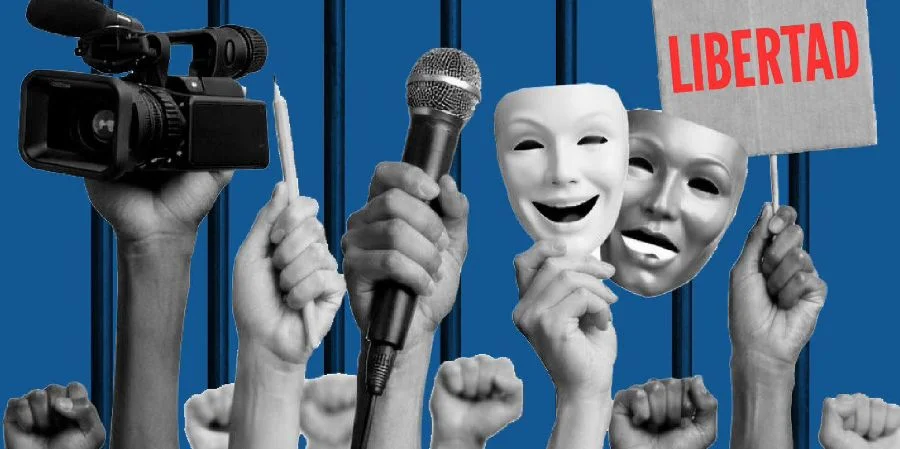
The Cultural Rights Observatory described the imprisonment of artists as one of “the most serious and persistent expressions of repression in Cuba.”
MIAMI, United States. – The Observatory of Cultural Rights (ODC) reported this Monday that, at the end of 2025, at least 27 Cuban artists and creators continue to be punished by the State because of their creative work, their civic participation or their refusal to “give up their own voice”: 17 remain imprisoned and another 10 are serving sentences “without internment or under restrictive regimes.”
On Facebook, the ODC described the imprisonment of artists as one of “the most serious and persistent expressions of repression in Cuba” and stated that young people detained or sanctioned have suffered “institutional violence, medical negligence, isolation, threats and arbitrary punishments” within the prison system.
The Observatory added that “these numbers are not abstract statistics” and underlined the impact on families and trajectories interrupted by confinement, “fear” or “forced exile,” while promising to continue “naming each artist, recording each abuse and sustaining the memory” of those who resist imprisoned or under harassment in semi-freedom.
The ODC’s report on mistreatment, isolation and lack of medical care in prison coincides with complaints collected throughout the year by Human Rights Watch about abuses against detainees in Cuba, including beatings, punishments with isolation and lack of health care, in addition to unsanitary conditions and restrictions after conditional releases.
In another report from last Augustthe Observatory described a process of releases announced by the State without transparency regarding criteria and with results, according to its documentation, lower than expected, and pointed out the physical and psychological deterioration observed in some released. He also mentioned by name several imprisoned or sanctioned artists, including Luis Manuel Otero Alcántara, José Alejandro Rodríguez Gelin and Yasmany González Valdés (“El Libre”), and stated that in these files the prison system operated arbitrarily and with a logic of “revictimization.”
The situation of Otero Alcántara, one of the best-known faces of Cuban protest art, was highlighted as one of the emblematic cases. At the beginning of December, the artivist declared himself on “voluntary fasting” to denounce his imprisonment and the human rights crisis on the Island.
According to Prisoners DefendersUntil November 30, there were a total of 1,192 political and prisoners of conscience in Cuba.
Beyond the specific count, the ODC maintains that its campaign seeks to document how the Cuban State punishes creation and dissent using the penal and penitentiary system, including sanctions without internment, surveillance, threats and mobility restrictions. Previously, the Observatory had already reported episodes of illness, beatings and hunger strikes in specific cases, and had warned about the use of accusations and files without clear procedural advances.
In that report, the ODC put the detention of reporter and artist Luis Ángel Cuza Alfonso in the spotlight and cited a letter from him from prison in which he stated: “I am willing to even stop eating food until I am free. If I have to lose the most valuable thing that is life, I only ask that it not go unpunished.” The same piece summarized complaints about alleged beatings, controversial medical diagnoses and diseases such as tuberculosis in other files followed by the campaign.
The ODC insists that its work is not limited to an annual “balance sheet,” but rather functions as a registry of cases and alleged abuses, with the explicit objective of sustaining public pressure and memory about cultural repression. “The Imprisoned Artists Campaign exists to remember that creation is not a crime and that culture cannot be imprisoned without consequences. As long as there is a single Cuban artist punished for exercising his right to express himself, our work will continue.”